

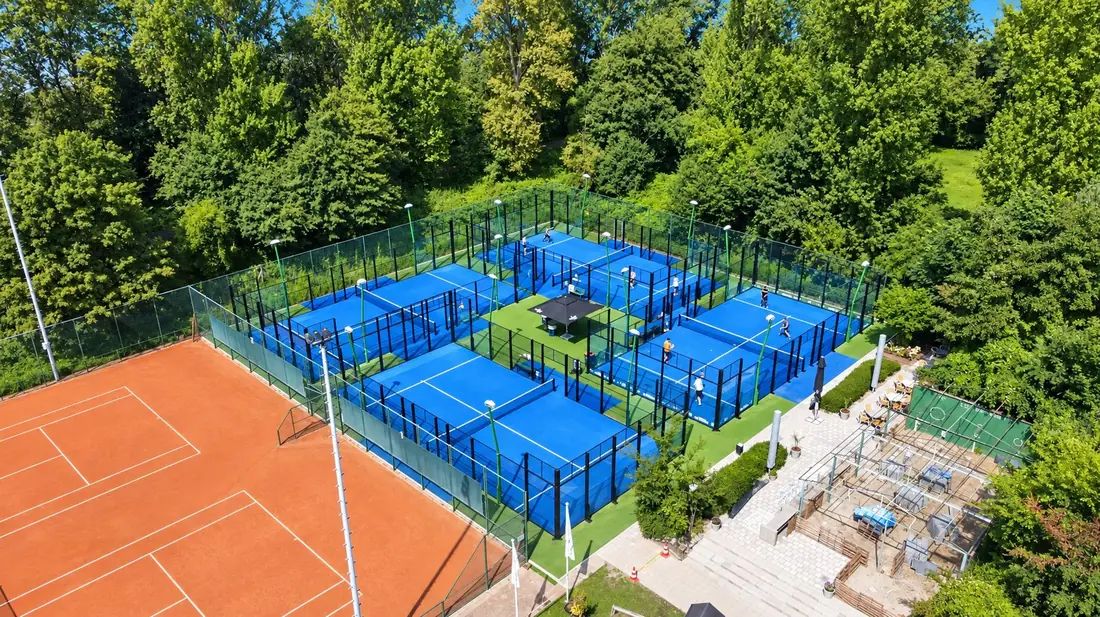
How a padel court is built
This is how webuild a padel court
A padel court is more than steel and glass. Beneath the artificial turf sit a foundation and a sports floor that determine how long the court lasts, how it plays and how much noise it makes. That is why we guide the whole process: from the first survey of the subsoil to handover, always tailored and technically substantiated.
- Soil tests and foundation advice first
- Not tied to a single foundation method
- 15-year warranty on the steel structure
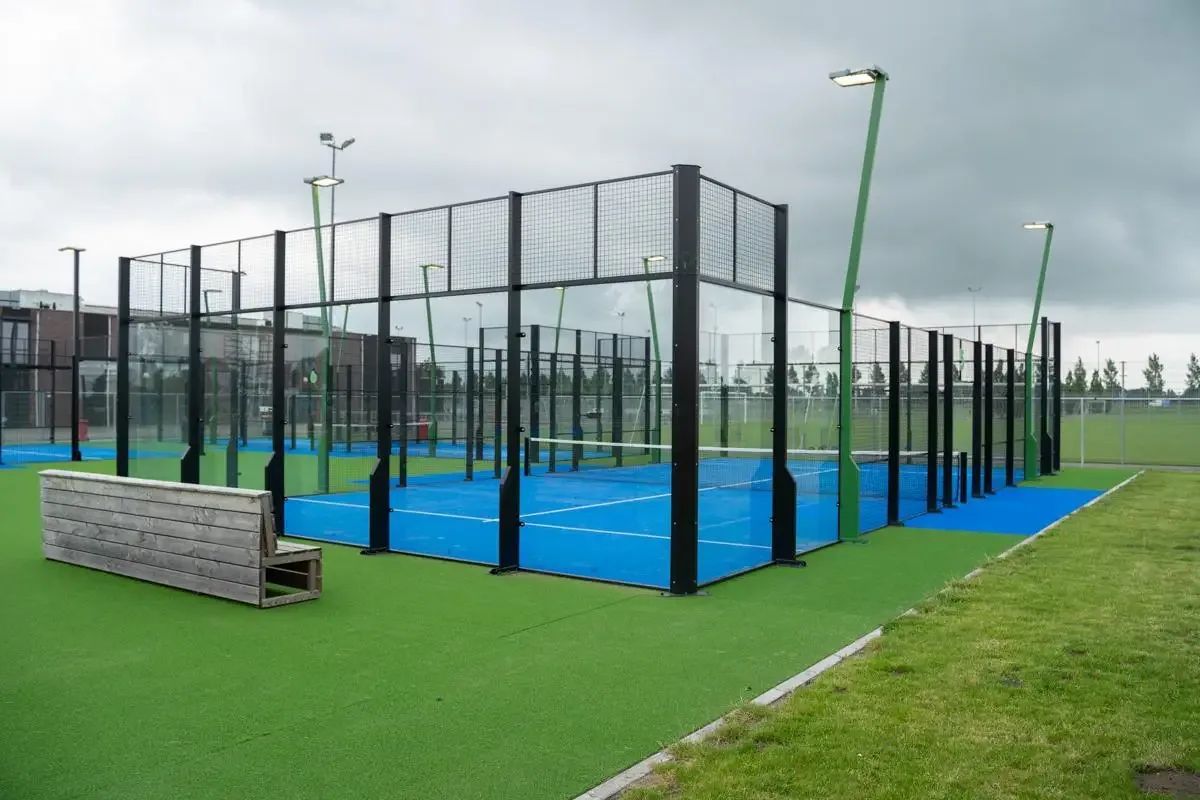
From the bottom up
This is how the build-up goes, from subsoil to playing surface
Every location is different. That is why we always work in this order and match each phase to the soil, the use and the technical requirements.
- One point of contact from A to Z
- Production in 8 to 10 weeks
- Installation in 2 days per court
- Up front
Survey of the subsoil
Before a spade goes into the ground, we map the soil with soil tests, ourselves or through a specialised firm. That tells us the bearing capacity and the structure of the soil layers.
- After the soil tests
Foundation advice
Based on the tests we draw up foundation advice. It determines whether piles are needed, or whether a solution such as Supersub or drainage concrete is enough. Without this advice a durable court cannot be built.
- Groundwork
Site preparation, foundation and sports floor
The site is excavated, levelled and prepared for the chosen foundation. On top comes the sports floor, the layer that determines playing comfort and drainage.
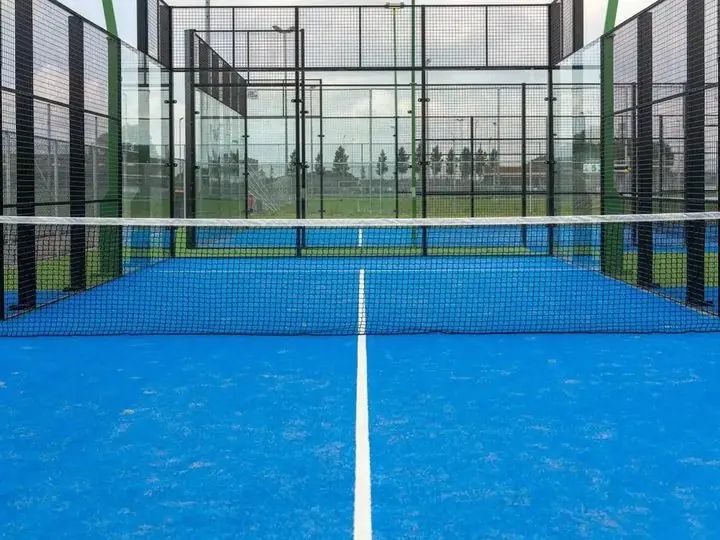 2 days per court
Installation of the structure
Our installation team places the steel structure, the glass and the fencing on the prepared foundation, exactly according to the technical specifications and calculations. That makes the court stable, safe and straight.
- Finally
Turf, lighting and noise
The artificial turf is laid and sand-filled, and the LED masts are switched on. If sound-absorbing panels are needed, they are already part of the design and the structural calculation.
The base
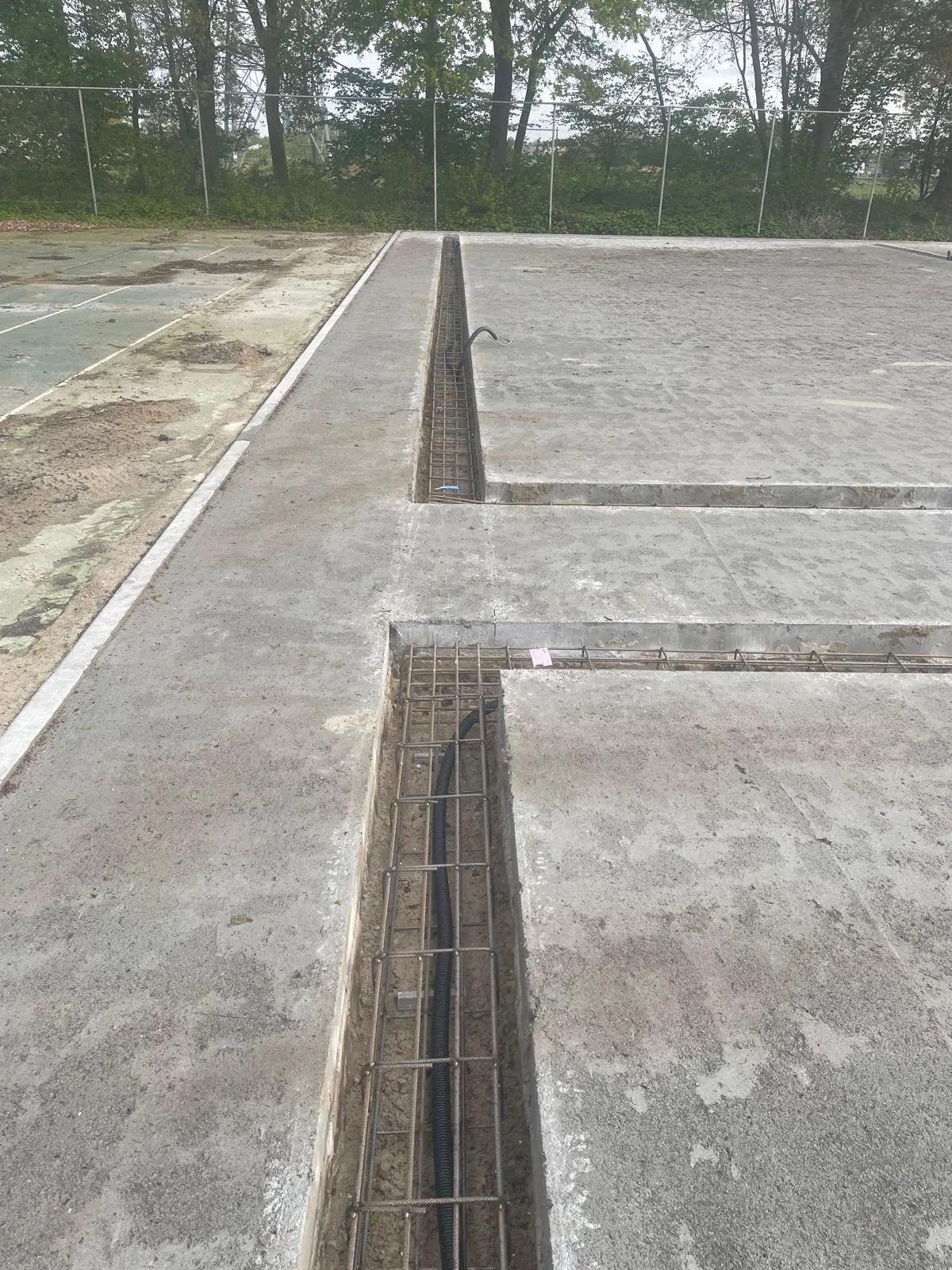
Foundation and sports floor: the base beneath the court
Outdoor padel courts always need foundation work. Weather, wind and intensive use load the court for years; the foundation keeps it from subsiding and keeps it stable.
We are not tied to a single foundation contractor or method. Depending on the location and the foundation advice we work with a ring foundation, Stelcon slabs, Supersub, drainage concrete or porous asphalt. That way we choose the technically most suitable and durable solution for each project.
On top of the foundation comes the sports floor. That layer largely determines playing comfort and drainage. Count on € 20,000 to € 40,000 excluding VAT for the foundation, depending on the soil.
- Ring foundation, Stelcon slabs or Supersub
- Drainage concrete or porous asphalt as base layer
- Piles only if the soil tests call for them
The structure
Steel structure, glass and fencing from our own production
We make the skeleton of the court ourselves, together with Jonkers Bouwmetaal, from S350 structural steel. Posts and base plates are hot-dip galvanised as standard and then powder-coated twice. The structure is calculated for all wind zones and comes with a 15-year warranty.
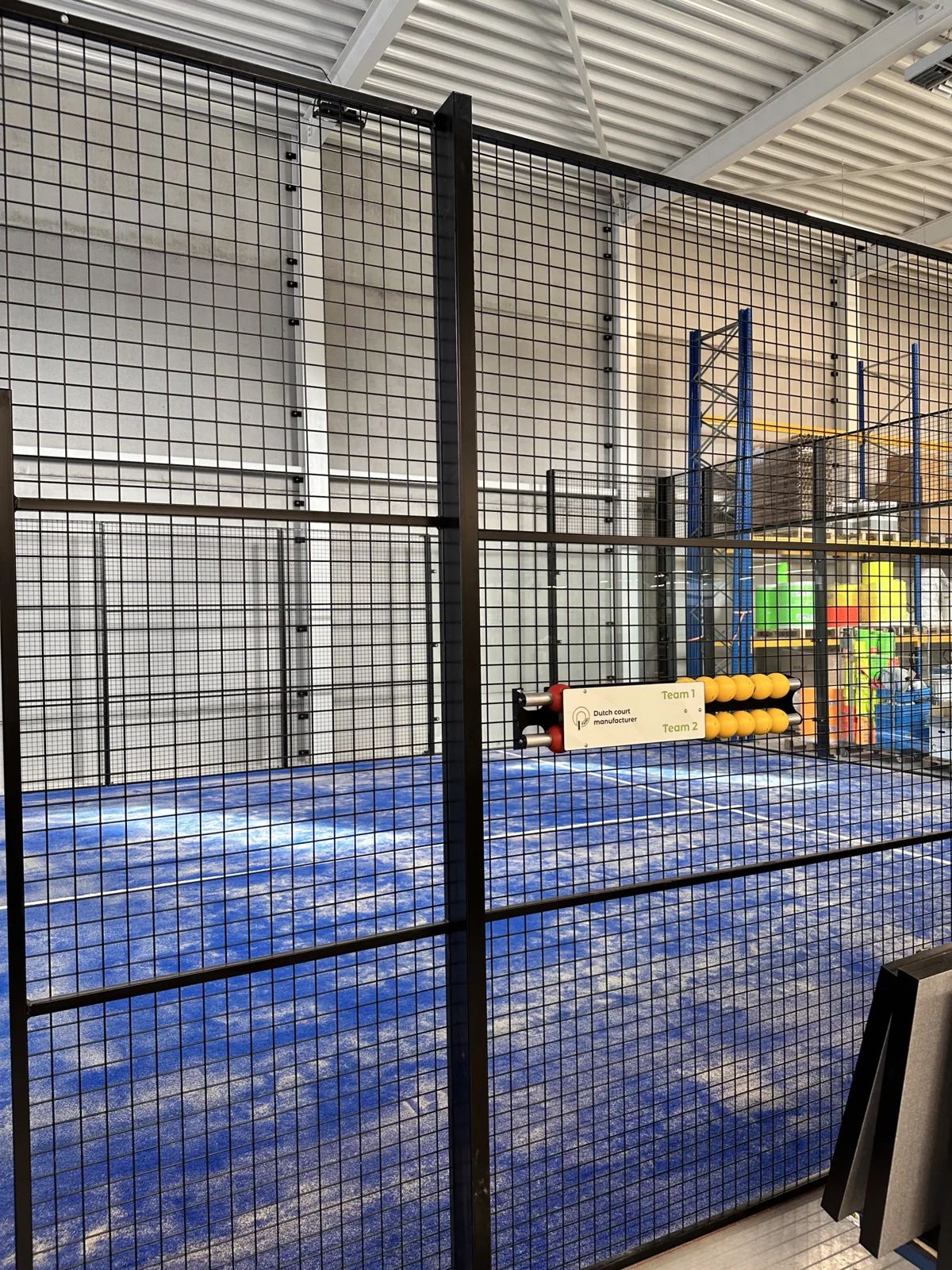
The structure is fitted with 10 or 12 mm toughened safety glass. The glass does not touch the ground, so less moss grows and it dries faster. The mesh panels sit in an injury-safe fence and hook into the posts, without self-tapping screws. This applies to our indoor and outdoor courts alike, in Panorama, Pro or Single version.
- S350structural steel
- 10 or 12 mmtoughened safety glass
- 15 yearswarranty on the steel
All layers at a glance
What an I-Padel padel court consists of
From the bottom up. The exact build-up depends on your location and the foundation advice; this is the standard we start from.
| Layer | Type | Size or feature |
|---|---|---|
| Subsoil | Soil tests and foundation advice | Piles or a foundation without piles |
| Foundation | Ring foundation, Stelcon slabs, Supersub, drainage concrete or porous asphalt | € 20,000 to € 40,000 excl. VAT |
| Sports floor | Supersub, drainage concrete or porous asphalt | Determines playing comfort and drainage |
| Steel structure | S350 steel, hot-dip galvanised, powder-coated twice | Calculated for all wind zones, 15-year warranty |
| Glass | Toughened safety glass, does not touch the ground | 10 or 12 mm thick |
| Fencing | Mesh panels in an injury-safe fence | Hook-in system in the posts, no self-tapping screws |
| Artificial turf | Monofilament, texturised or curled fibres, with sand infill | UV-resistant, colour of your choice |
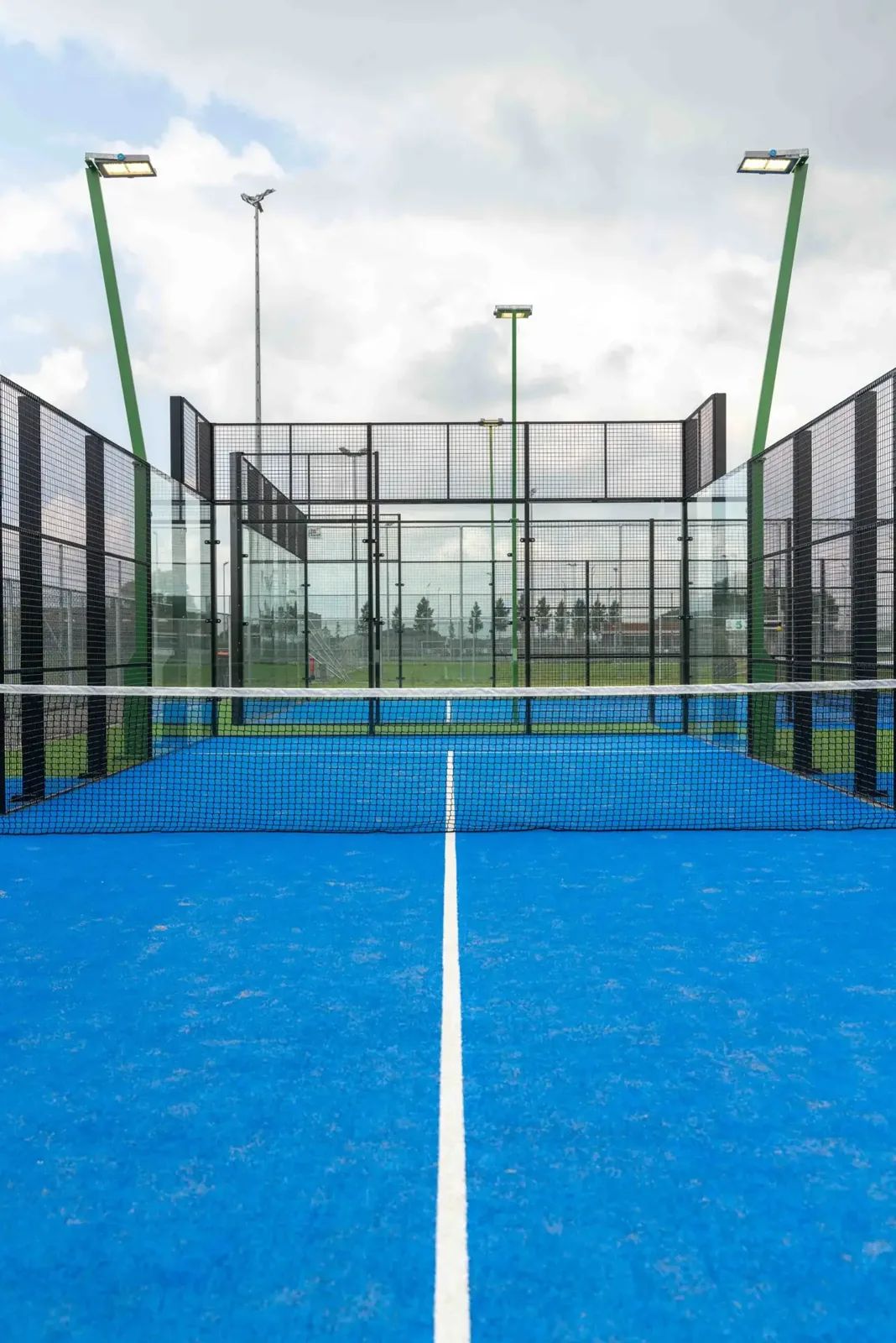
| Lighting | LED light masts, straight or curved | 6 metres high, 300 to 500 lux |
| Noise (optional) | Sound-absorbing panels | Included in design and structure |
All prices exclude VAT. We work out exactly what your location needs in the price indication.
The finish
Artificial turf and lighting: the playing surface and the light above it
The artificial turf is the final playing surface. The type determines the pace, the comfort and the look. We work with padel-specific turf with monofilament, texturised or curled fibres and sand infill: natural resilience and a consistent bounce, even with intensive use.
The turf is UV-resistant and keeps its shape and colour, outdoors in the sun and indoors in the hall. Choose your club’s colour. We also replace worn turf on existing courts.
Last comes the LED lighting: four 6-metre masts per court, straight or curved, giving even light without hard shadows. So you can play in the evening and in winter too. Line lighting or other lighting solutions are also possible.
- Padel-specific turf, exclusive to I-Padel in the Netherlands
- 6-metre LED masts, straight or curved
- Turf replacement on existing courts too
Frequently asked questions
Questions about how a padel court is built
Is your question not listed? Call us or request a price indication.
Why are soil tests needed for a padel court?
Soil tests show how much bearing capacity the ground has and how the soil layers are built up. We base the foundation advice on that: piles or not, and which base layer. Without that advice you risk the court subsiding.
Does every padel court need a foundation?
For outdoor courts always: weather, wind and intensive use call for a stable base. For an indoor court we first check whether the existing floor of the hall is suitable. If it is not, we advise on the right build-up.
Which foundation methods do you use?
That depends on the location and the foundation advice. We work with a ring foundation, Stelcon slabs, Supersub, drainage concrete or porous asphalt, and choose for each project what fits best technically.
How long does building a padel court take?
We make the steel structure and the glass in 8 to 10 weeks. Installation itself then takes 2 days per court. The whole process including the permit usually takes 3 to 6 months; read more under building a padel court.
Should I include noise reduction from the start?
Yes, preferably. For us, sound-absorbing panels are not an add-on but part of the design and the structural build-up. If neighbours or the permit require them, we draw them in straight away. See our noise solutions.
Knowledge base
Read more about how a padel court is built
Steel, glass, artificial turf and lighting: background on every layer of the court.
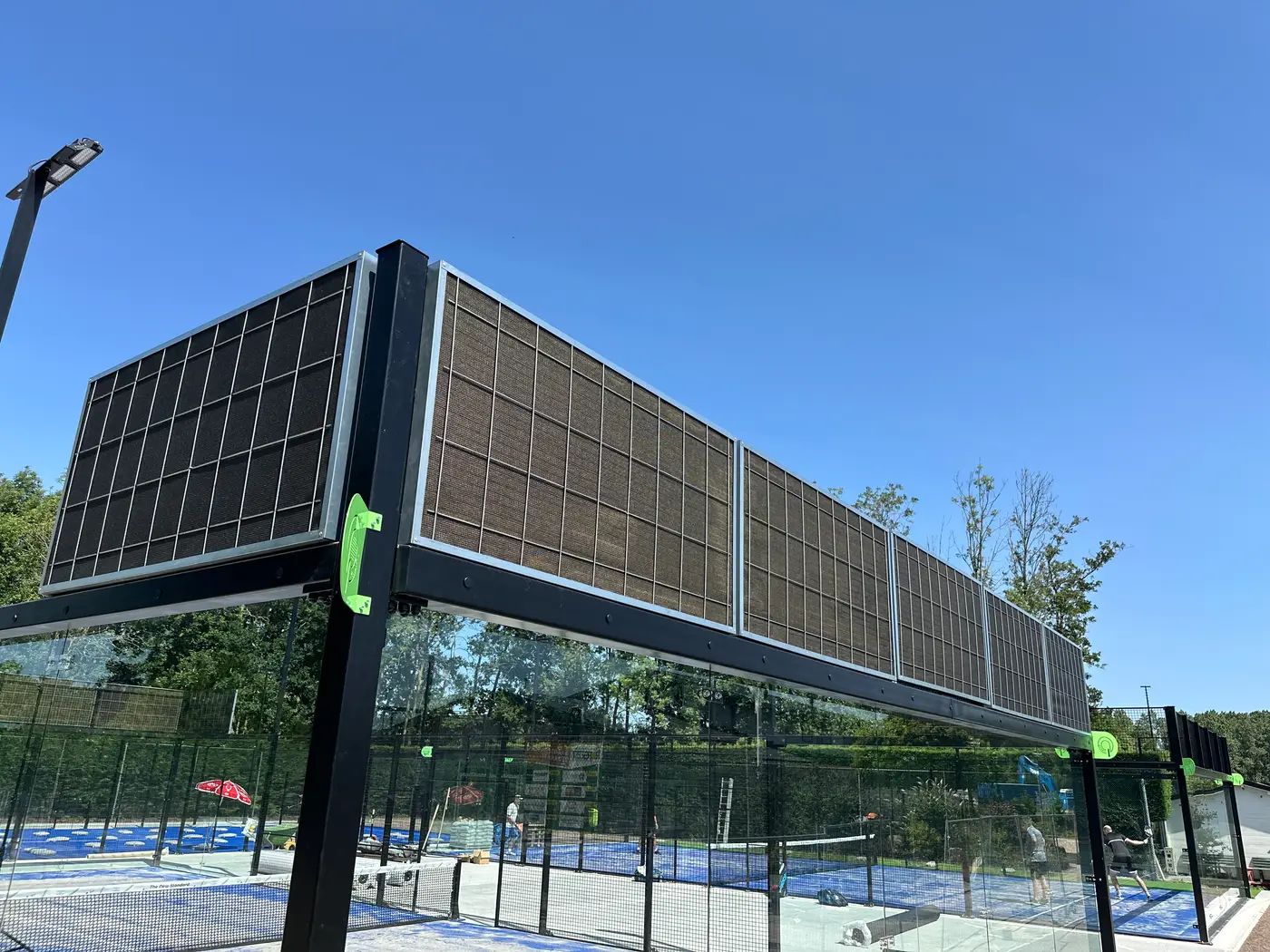 Building a padel court · 24 August 2026What misconceptions exist regarding noise nuisance at padel?Noise nuisance in padel: 7 common misconceptions debunked with technical substantiation. Discover what is really true regarding standards and measures.
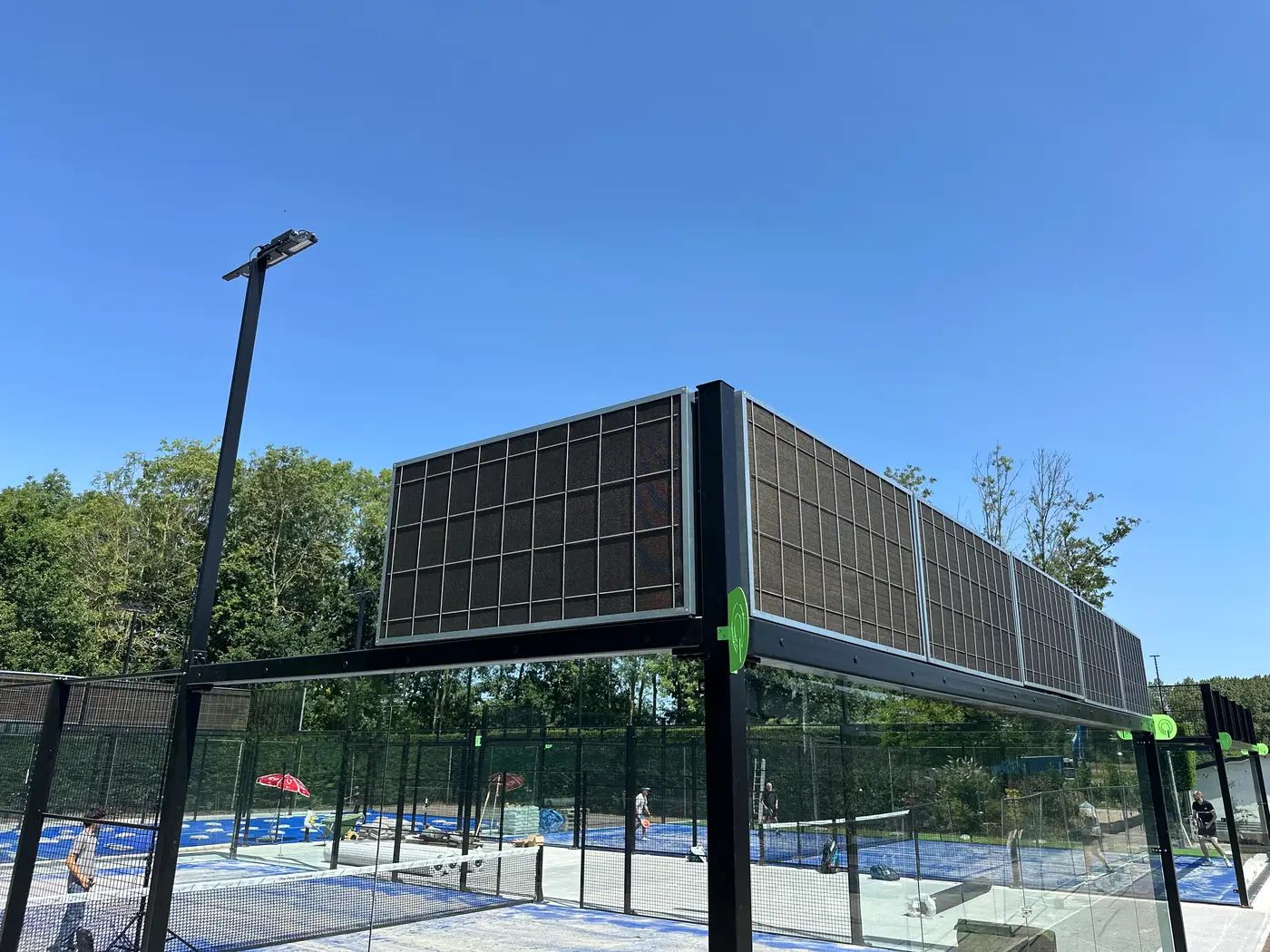 Building a padel court · 18 August 2026When is padel noise perceived as a nuisance?Padel noise already reaches 91 dB — 10 dB more than tennis. Discover which standards apply, when an inspection is mandatory, and which measures prevent nuisance.
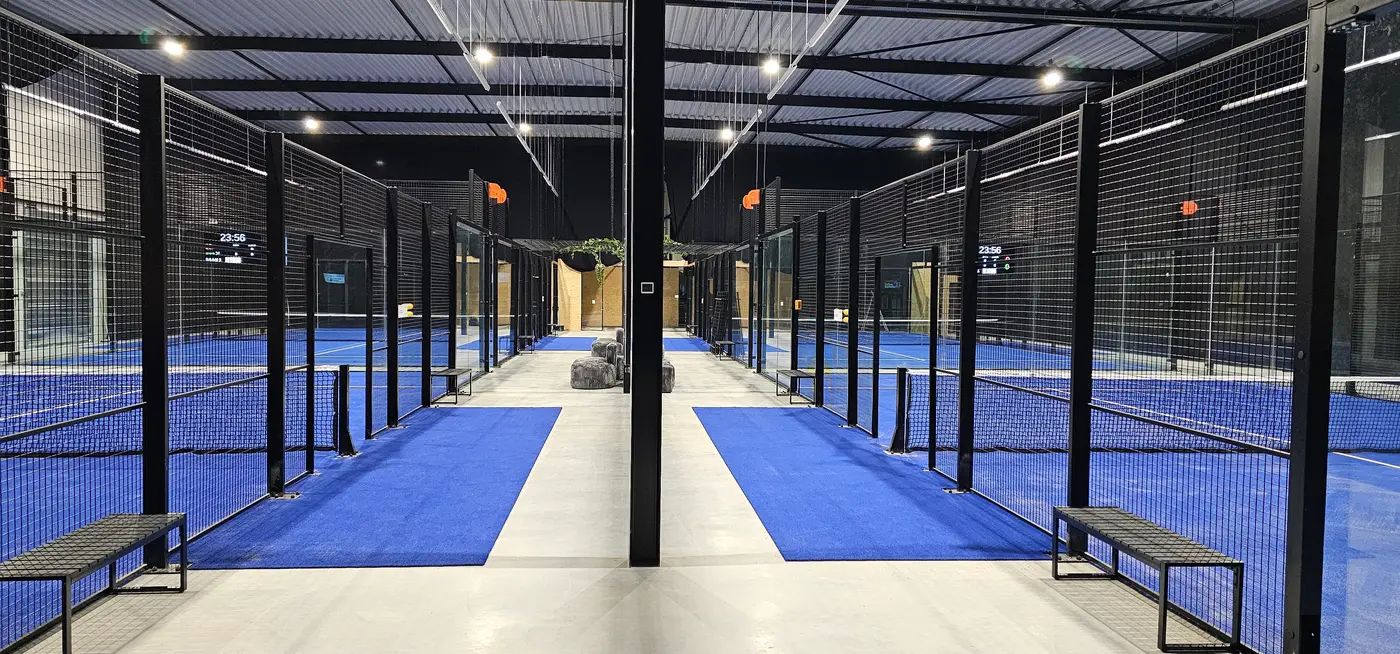 Building a padel court · 30 May 2026Does an indoor padel court cause noise nuisance to the surrounding area?Indoor padel court and noise pollution? Discover the standards (91 dB), legal regulations, and smart measures to prevent complaints.