

Noise solutions for padel courts
Less noise,more playing hours
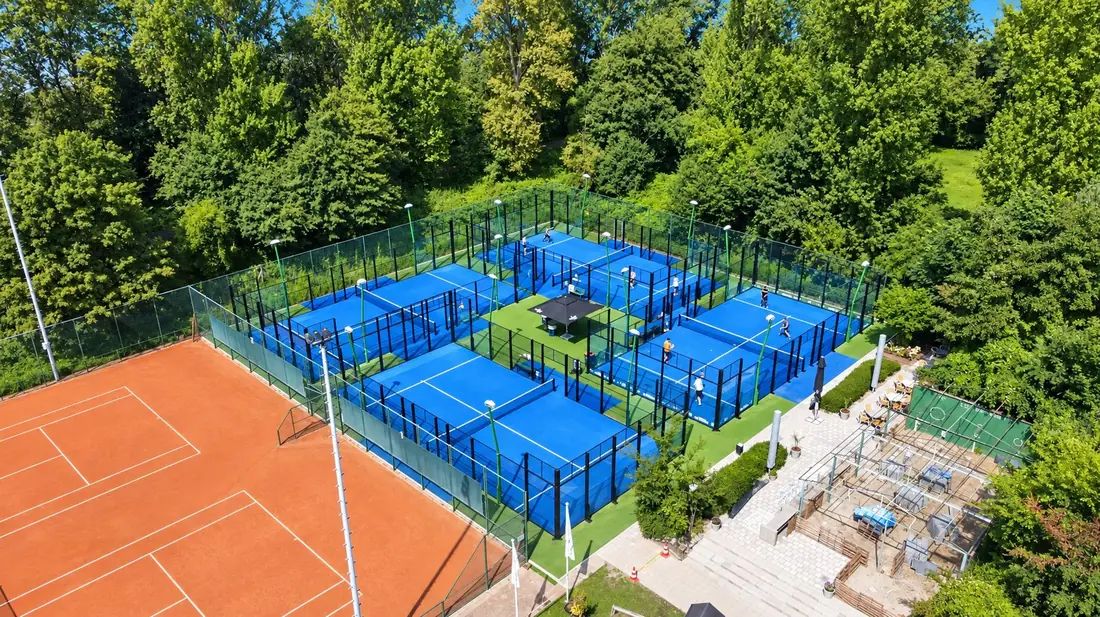
If the sports park is close to a residential area, noise is often the biggest challenge for a padel court. I-Padel supplies and advises on noise solutions for clubs and operators: solutions that fit the permit process and work in practice on site.
- For new and existing courts
- Fits within the permit process
- Coordination with consultant, engineer and municipality
Noise and padel
Why noise is an issue in padel
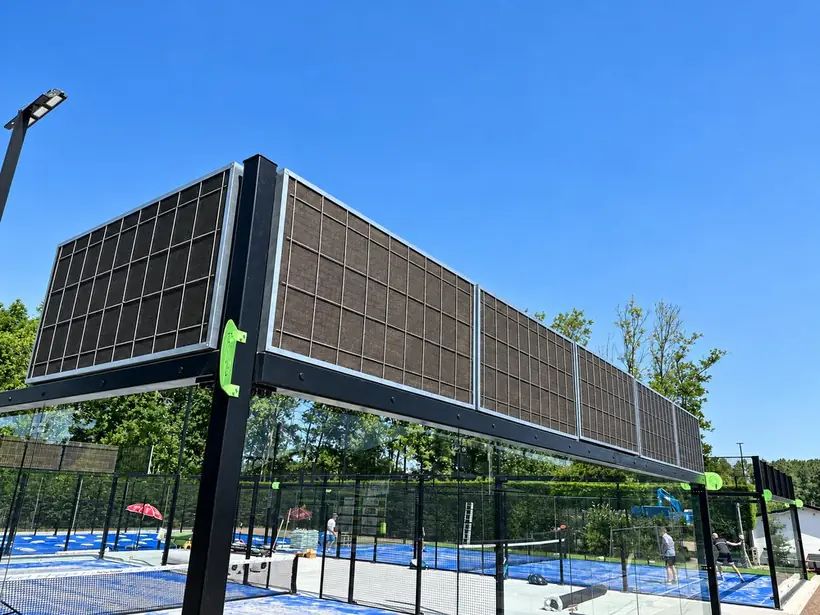
Padel noise comes from racket and ball, and from balls hitting the glass and the mesh. That short, sharp sound carries far. If the sports park is close to a residential area, the neighbours hear it, especially in the evening.
That is why municipalities set ever stricter noise requirements and neighbours are quicker to complain. The shorter the distance to the homes, the more measures are needed to get the permit approved and to actually use the court.
Our noise measures are for new and existing outdoor padel courts and serve four goals:
- Less noise towards nearby homes
- A better chance of getting the permit
- More playing hours, also in the evening
- A tidy, long-lasting look for the sports park
The solutions
Panels, a noise barrier or a combination
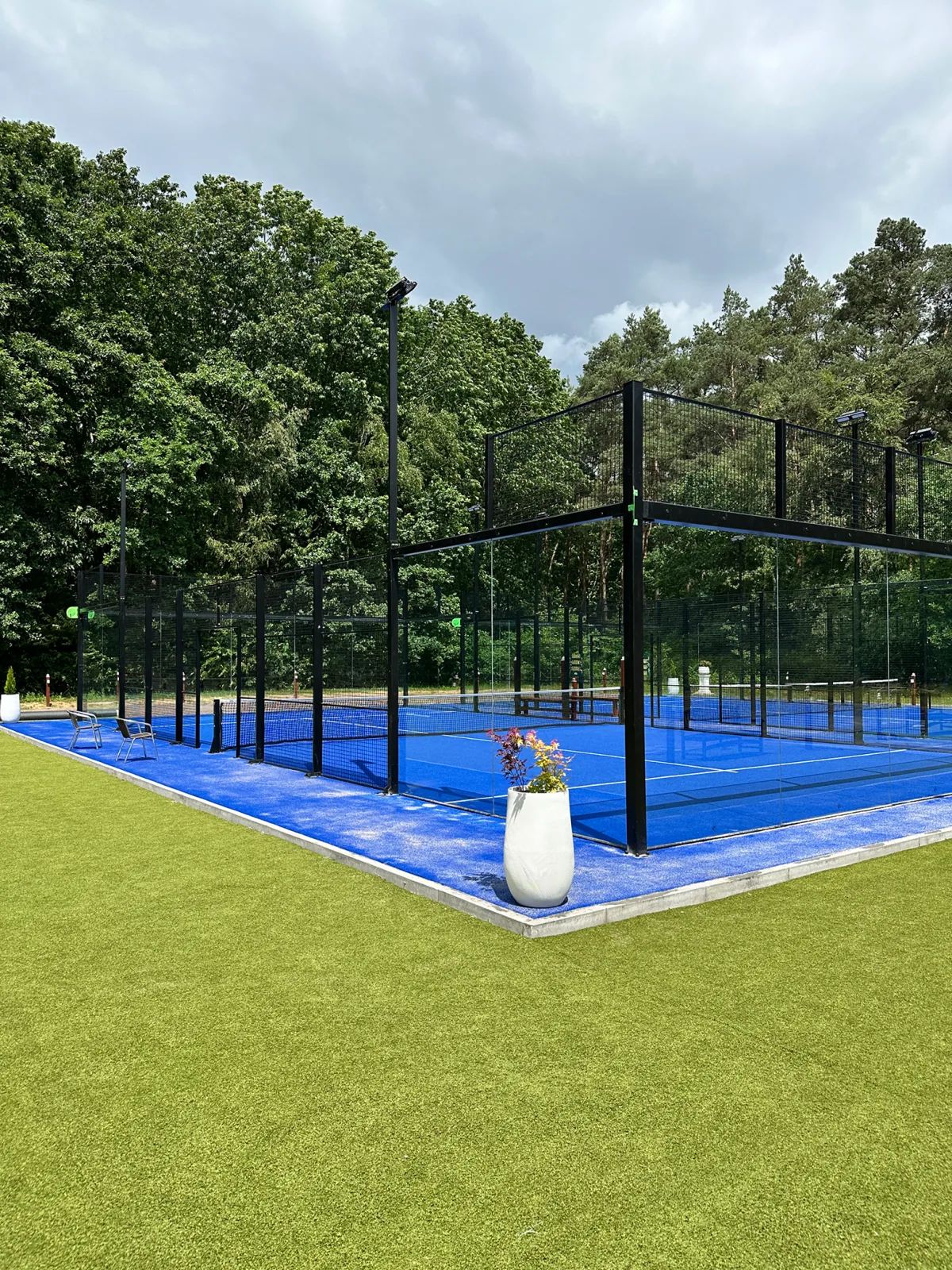
Every location is different: sometimes panels are enough, sometimes a noise barrier is needed.
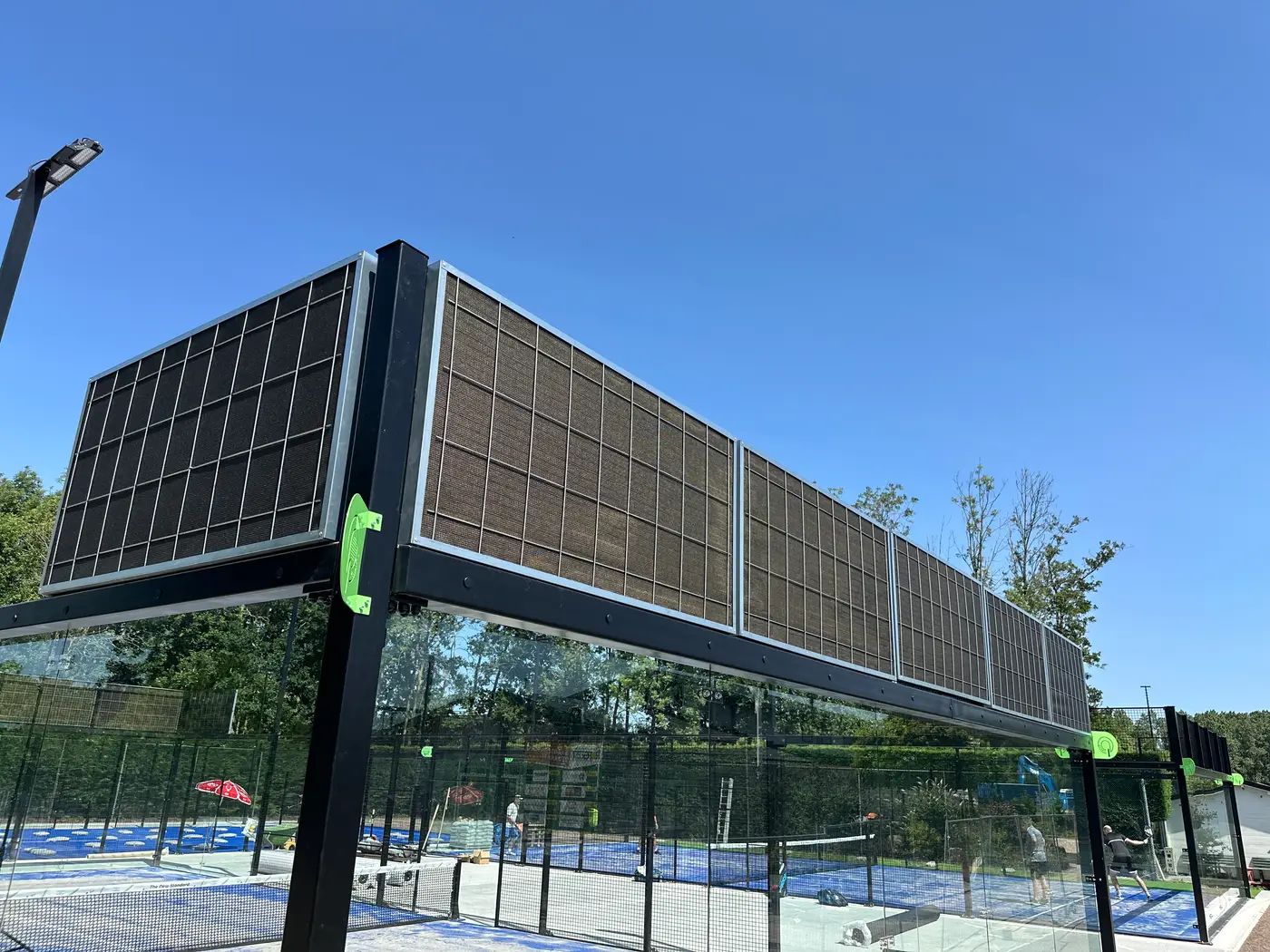
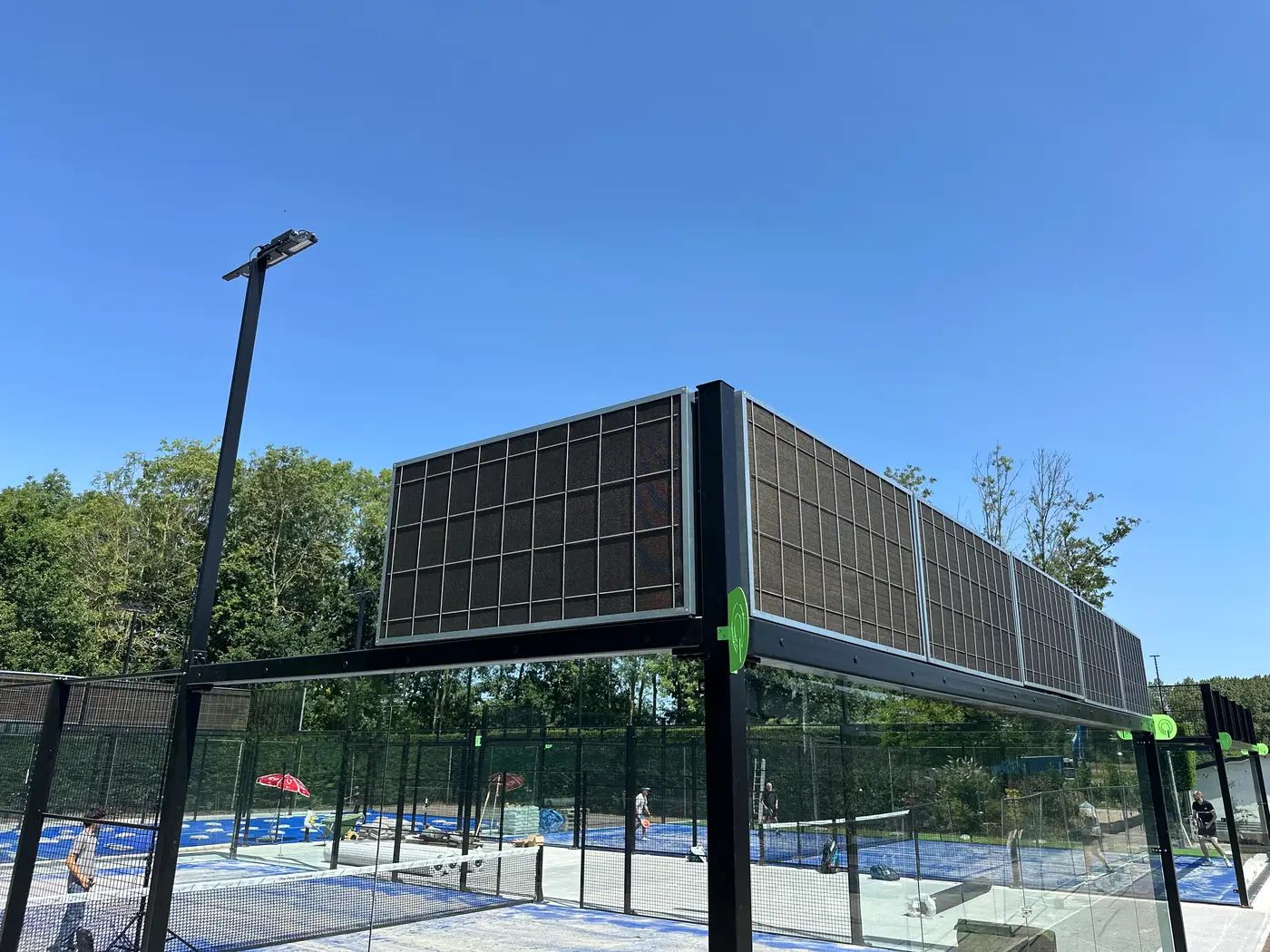
- Sound-absorbing panelsIn or behind the mesh of the cage, on one side or across several courts. Dampens the sound where it arises.
- Noise barriers and wallsNext to or around the court, for homes at a short distance. Screens off the sound and can be planted.
- Permit and calculationsStructural calculation, soil survey and planning permit: what is needed depends on the solution and the height of the wall.
Solution 1
Sound-absorbing panels in the mesh
Panels in or behind the mesh of the padel cage absorb the sound where it arises, instead of bouncing it back into the surroundings. It is an effective way to reduce the noise.
You only fit the panels where they are needed: on one side of the court, in a specific zone or across several courts at once.
Please note: panels let less wind through. The cage then has to be structurally reinforced according to the wind zone and the applicable calculations. That is necessary for the safety and lifespan of the court. Read more about sound-absorbing panels.
- At the sourceabsorbed, not reflected
- Per zoneone side, a zone or several courts
- Wind zonedetermines the reinforcement of the cage
Solution 2
Noise barriers and walls next to the court
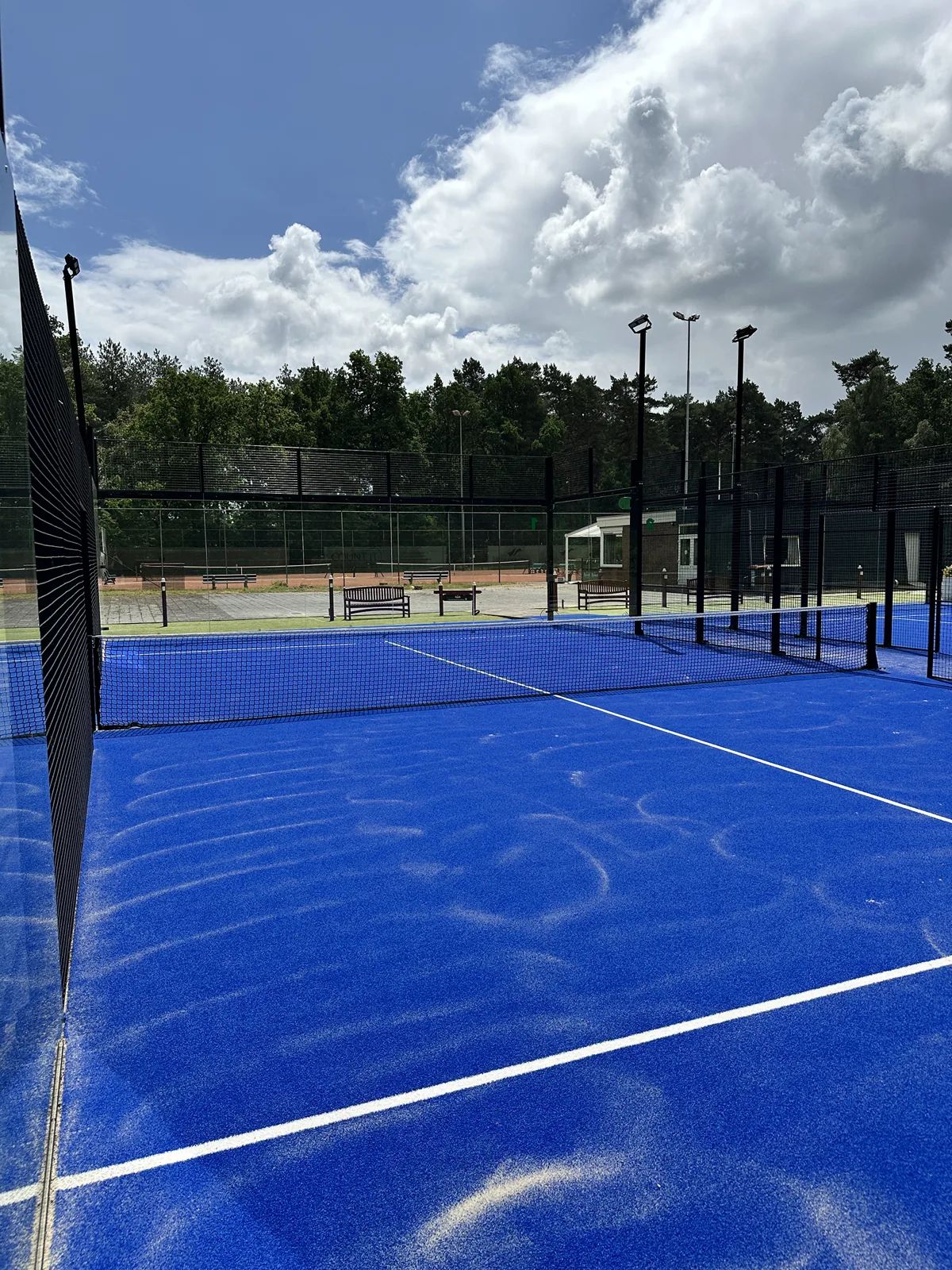
If the homes are close by and more noise reduction is needed, a noise barrier can be the best solution. The barrier stands next to or around the padel court, is tens of metres long and, depending on the situation, is built up to 6 to 8 metres high.
We can also build the barrier with planting, for example with coir or green fabric and climbing plants. That looks more natural, increases acceptance among neighbours and the municipality and fits better into the landscape. Read more about noise barriers.
A noise barrier is always custom-made. This is what you usually need to take into account:
- A structural calculation for wind and stability
- Often soil survey data of the subsoil
- A [planning permit](/vergunning-padelbaan), certainly for higher walls

Comparison
Which solution suits your location?
This is how the two solutions compare. We advise based on your situation, the acoustic report (if there is one), the wind zone and the requirements of the municipality.
| Feature | Sound-absorbing panels | Noise barrier |
|---|---|---|
| Position | In or behind the mesh of the cage | Next to or around the court |
| How it works | Dampens the sound at the source | Screens the sound off from the homes |
| Size | One side, a zone or several courts | Tens of metres long, up to 6 to 8 m high |
| Structure | Reinforce the cage according to the wind zone | Calculation for wind and stability, often a soil survey |
| Permit | Fits within the permit process of the court | Usually a planning permit is needed |
| Appearance | Clean, within the cage itself | Can be planted with coir or green fabric and climbing plants |
| Retrofitting | Yes, after assessing the structure | Yes, after assessing space and permit |
In many cases a combination of panels and a noise barrier works best.
Frequently asked questions
Questions about noise at padel courts
Is your question not listed? Call us on +31 527 210 040 or send a message.
What is the difference between sound-absorbing panels and a noise barrier?
Panels sit in or behind the mesh of the cage and dampen the sound at the source. A noise barrier stands next to the court and screens the sound off from the homes. The two often complement each other.
Is a permit needed for a noise barrier?
Usually yes. A noise barrier often counts as a ‘structure that is not a building’ and then requires a planning permit, including structural calculations.
Does the padel structure need reinforcing when panels are fitted?
Yes, usually. Panels let less wind through, which increases the wind load on the cage. That is why we adapt the structure according to the wind zone.
Can noise barriers be planted?
Yes. That is often exactly what is wanted: it looks more natural, neighbours accept the barrier more readily and it fits better into the landscape.
Can these solutions also be fitted afterwards?
Yes, panels and noise barriers can also be fitted to existing courts. We first assess the structure, the available space and what is possible in terms of permits.
Knowledge base
Read more about padel court noise
How padel noise arises, what municipalities ask for and which measures really work.
 Building a padel court · 24 August 2026What misconceptions exist regarding noise nuisance at padel?Noise nuisance in padel: 7 common misconceptions debunked with technical substantiation. Discover what is really true regarding standards and measures.
 Building a padel court · 18 August 2026When is padel noise perceived as a nuisance?Padel noise already reaches 91 dB — 10 dB more than tennis. Discover which standards apply, when an inspection is mandatory, and which measures prevent nuisance.
 Building a padel court · 30 May 2026Does an indoor padel court cause noise nuisance to the surrounding area?Indoor padel court and noise pollution? Discover the standards (91 dB), legal regulations, and smart measures to prevent complaints.