

Without concrete foundation
A padel court withoutconcrete foundation
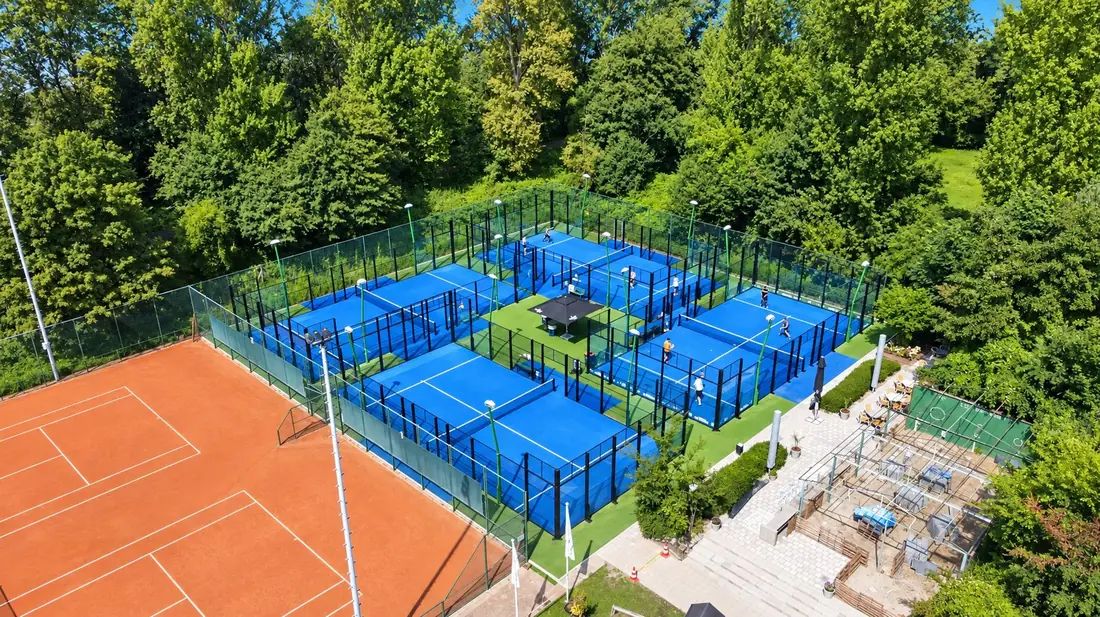
Not every location is suitable for a traditional concrete foundation. Sometimes anchoring in the existing floor is not allowed, the subsoil is not strong enough or the location is only temporarily available. For that we developed a semi-permanent foundation solution: a specially designed steel foundation structure on which both indoor and outdoor courts are placed, without a permanent concrete foundation. The result is a fully relocatable padel court.
- No anchoring in the existing floor
- Fully demountable and relocatable
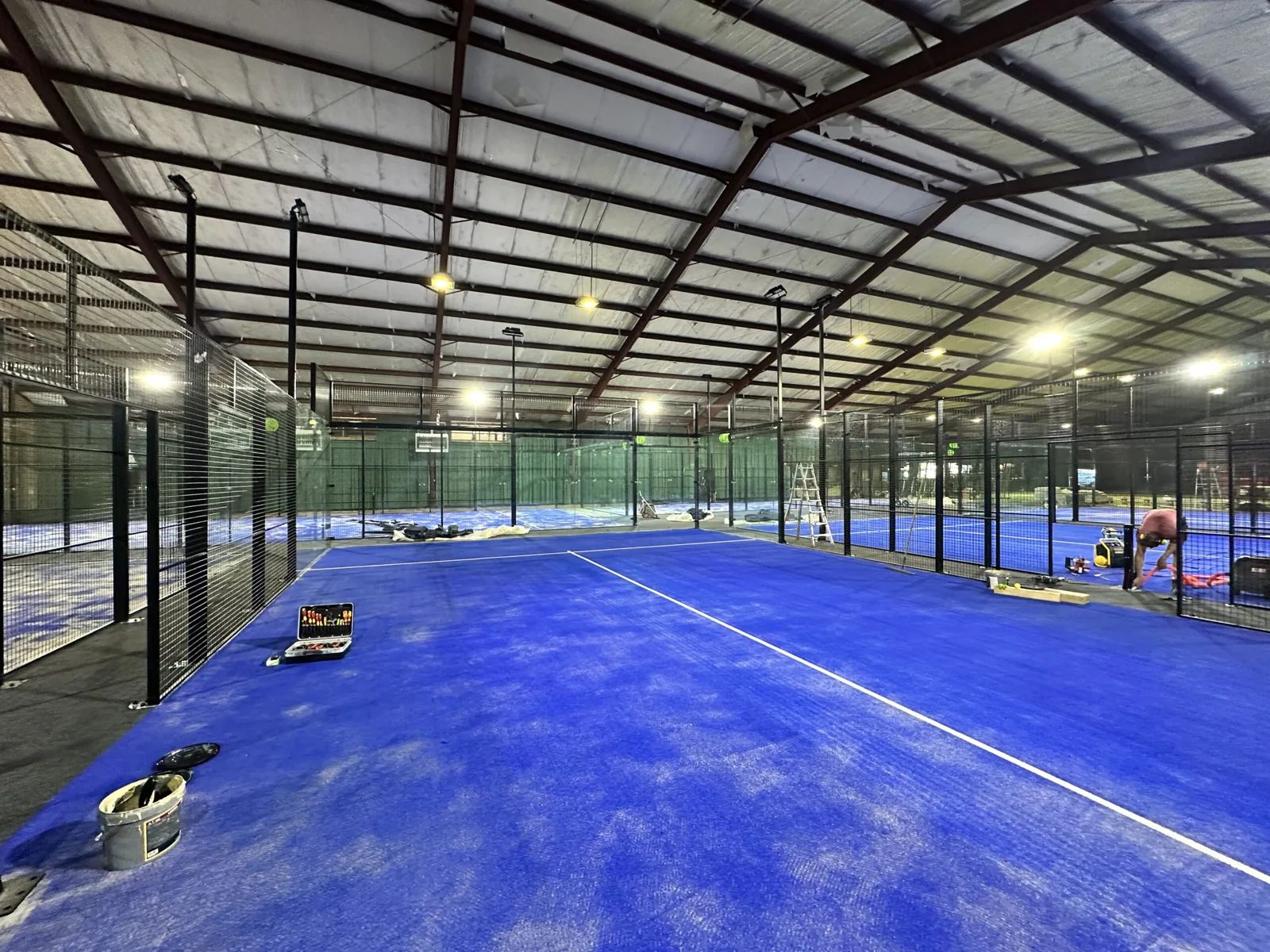
- Indoor and outdoor, from our own factory

What it is
A steel foundation frame around the court
A semi-permanent padel court stands on a specially designed steel foundation structure placed all the way around the court. Unlike a traditional ring foundation, the court is not anchored in the existing floor.
The complete steel structure spreads the load over a large area; the padel court itself is fixed to the foundation structure. The existing floor stays intact and no permanent foundation is needed.
The foundation structure can be hot-dip galvanised and, if you wish, powder-coated for maximum lifespan. The court on top is the same as on a ring foundation: read how it is built up.
- Load spread over a large area
- Hot-dip galvanised, optionally powder-coated
- The existing floor stays intact
When
Eight situations where this is the solution
It is precisely at locations like these that a semi-permanent foundation offers possibilities that are often not feasible with a traditional foundation.
- Drilling is not allowedThe owner of the building does not allow drilling into the existing floor.
- Temporary locationThe location is only available for a certain period.
- Listed buildingA listed building must be preserved, so the floor may not be damaged.
- RepurposingA church or other characteristic building gets a new purpose.
- Gaining experience firstA tennis hall wants to gain experience with padel before making final decisions.
- Insufficient load-bearing capacityThe existing floor has insufficient load-bearing capacity for a traditional foundation.
- Trade fair or eventA trade fair, event or temporary sports venue needs to be set up.
- Relocating laterThe padel court must be easy to move to another place later.
Fully demountable
Taken apart later, and rebuilt elsewhere
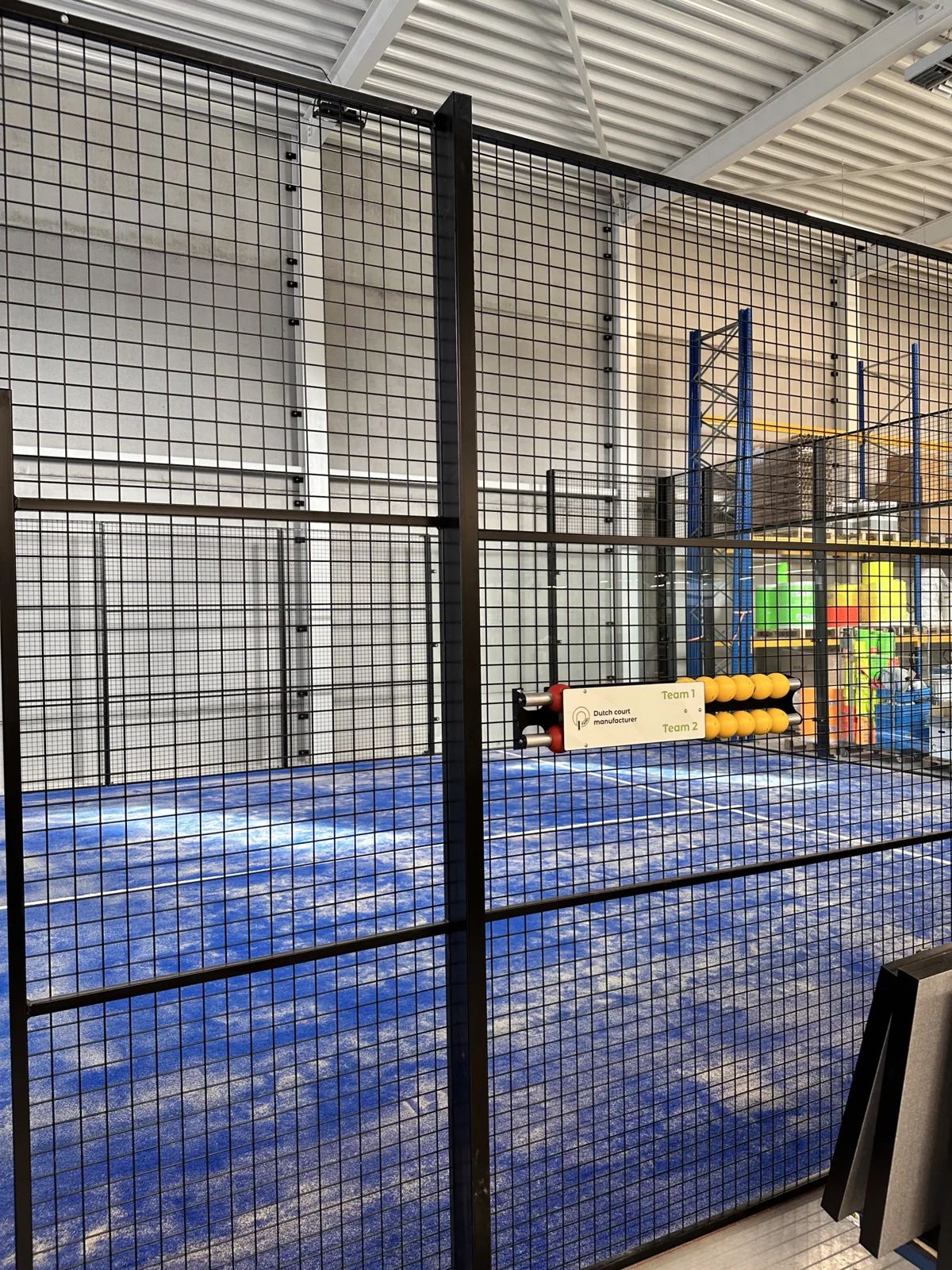
A major advantage: the complete padel court remains fully demountable. Thanks to I-Padel's unique hook-in system, the mesh panels can also be easily removed and refitted without damaging the structure. That makes the investment considerably more flexible than a court on a traditional foundation.
The structure can be used both indoors and outdoors. Every location is technically assessed in advance by our engineers. Among other things, we look at:
- the existing subsoil
- the load-bearing capacity of the floor
- the load of the structure
- the desired lifespan
- the wind load for outdoor applications
Based on that we determine whether a semi-permanent foundation is suitable, or whether a traditional foundation is the better choice.
In-house engineering and production
Design, engineering and production under one roof
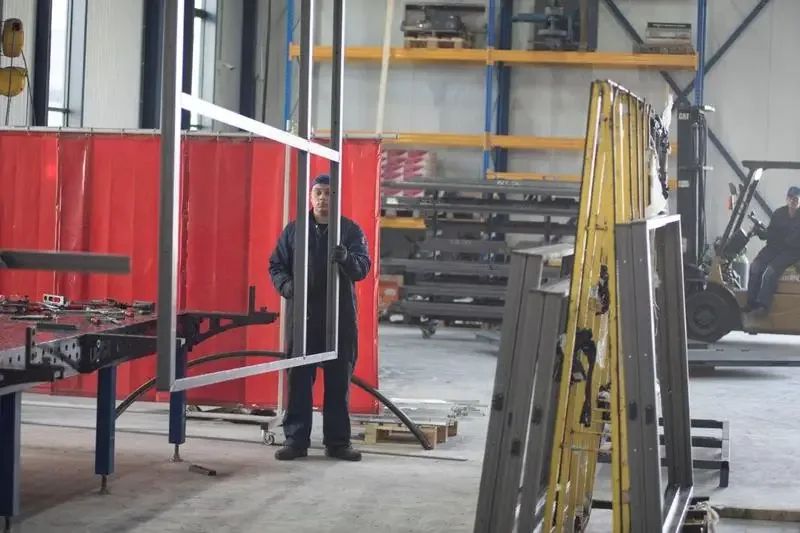
All I-Padel padel courts are developed entirely in-house. That allows us to engineer and produce every foundation structure specifically for the project. Because design, engineering and production take place under one roof, we act quickly and deliver custom work when a standard foundation is not an option.
That flexibility makes solutions possible that are not feasible for many other suppliers. The steel structure comes from our own factory, at Jonkers Bouwmetaal, with a 15-year warranty. A custom padel court is therefore no problem either.
- 40+years of experience in steel
- 15years of warranty on the steel structure
- 1roof for design, engineering and production
The choice
Semi-permanent or ring foundation?
Is a semi-permanent foundation always the best choice? No. If a location is being set up permanently as a padel venue and a traditional foundation is possible, in many cases we still recommend a ring foundation. The semi-permanent foundation is for locations where that is not possible or not desirable, without compromising on the quality of the court.
| Feature | Semi-permanent foundation | Concrete ring foundation |
|---|---|---|
| Foundation | Steel frame around the court | Concrete ring in the ground |
| Anchoring in the floor | None | Yes, chemically anchored |
| Relocatable | Fully demountable and rebuildable | No |
| Suitable for | Temporary, protected or weak floors, indoor and outdoor | Permanent padel venues |
| Installation | Fast, the floor stays intact | Groundwork, concrete and curing |
| Our advice | When a traditional foundation is not possible or not desirable | In most other cases |
Read more about the foundation of a padel court and about what a padel court costs.
Frequently asked questions
Questions about a padel court without concrete foundation
Is a semi-permanent court less sturdy than a court on concrete?
No. The cage is the same as on a ring foundation; only the foundation differs. The steel frame spreads the load over a large area and for outdoor applications our engineers include the wind load in the calculation.
Can this be done on any floor?
Not on every floor. Our engineers assess in advance the subsoil, the load-bearing capacity of the floor, the load of the structure, the desired lifespan and, outdoors, the wind load. That determines whether a semi-permanent foundation is suitable.
How quickly is the court up?
Because no concrete needs to cure, installation is fast. Exactly how fast depends on the location; we include that in the assessment and the planning.
What does a padel court without concrete foundation cost?
That depends on the location and the specification. For comparison: a concrete ring foundation costs €20,000 to €40,000. Request a no-obligation price indication for your situation.