

Noise barriers
A noise barrier aroundyour padel courts
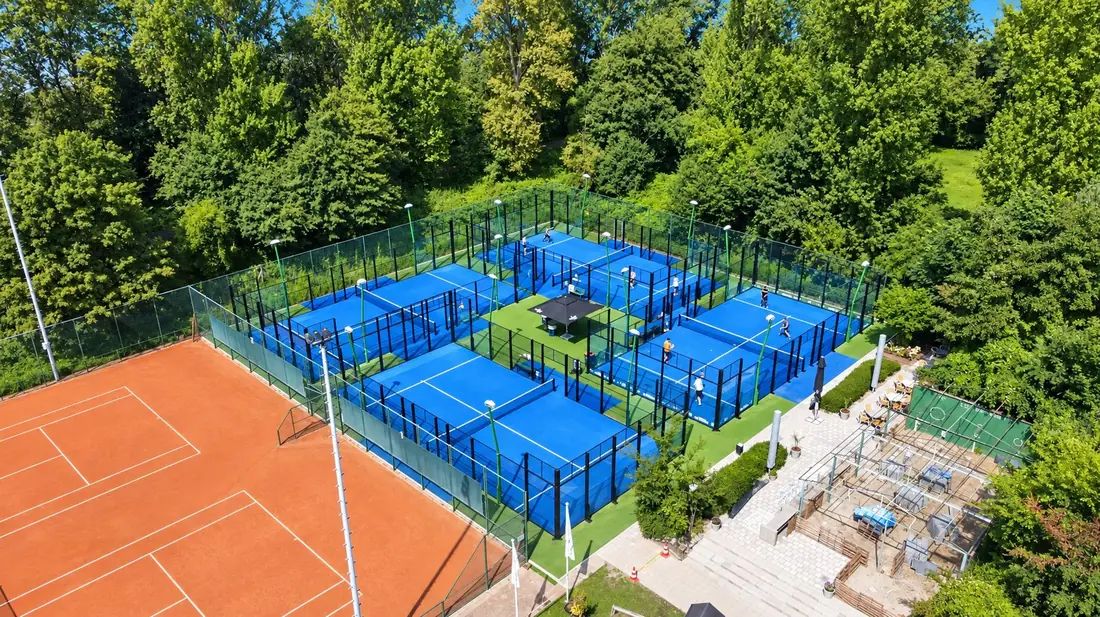
Padel has become hugely popular in a short time. But the sound of balls hitting rackets, glass and fencing can disturb local residents, especially when the courts are used intensively. At sports parks next to a residential area this regularly leads to complaints, objections and stricter requirements from the municipality. A noise barrier around the padel court limits that nuisance and makes the use of the courts future-proof.
- Considerably less noise for local residents
- A better chance of a permit
- Keep or extend playing hours
What is a noise barrier
A free-standing wall that shields the sound
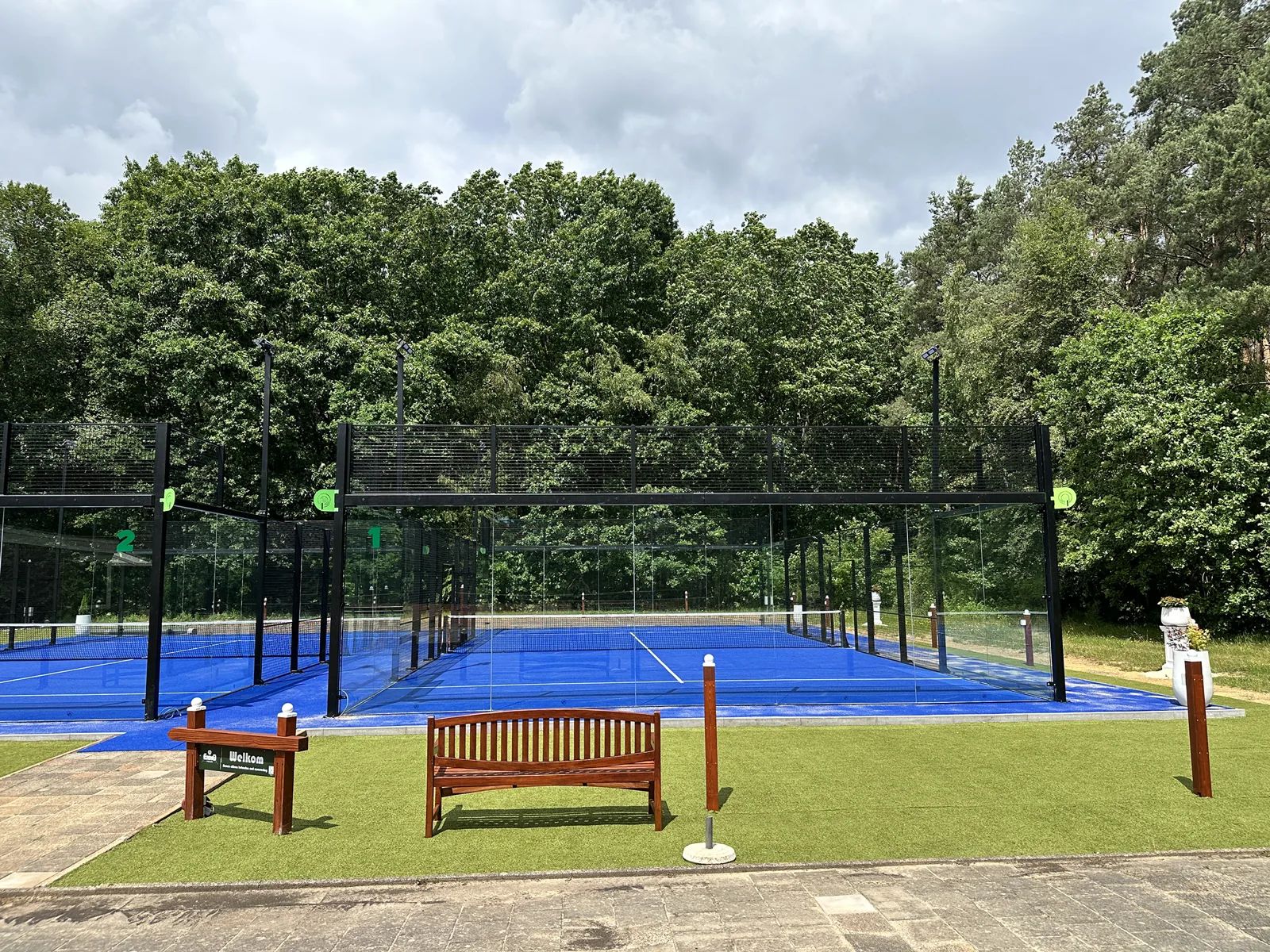
A noise barrier is a free-standing, sound-insulating structure next to or around the padel court. Unlike sound-absorbing panels, which sit in the padel cage itself, a noise barrier works at a greater distance and keeps the sound away from homes and other sensitive places.
The barrier is built from sound-absorbing and sound-insulating materials. Sound waves therefore do not radiate freely into the surroundings, but are absorbed and partly blocked. How well that works depends on:
- the height of the wall;
- the length and positioning;
- the distance to the padel court and the homes;
- the acoustic properties of the panels.
An acoustic consultant sets out in a noise report which dimensions are needed to meet the applicable standards. Also see the overview of all our noise solutions.
- Tens of metres long
- As high as 6 to 8 metres
- Aimed at the one direction where reduction is needed
When to choose a noise barrier
In these situations a noise barrier is the right solution
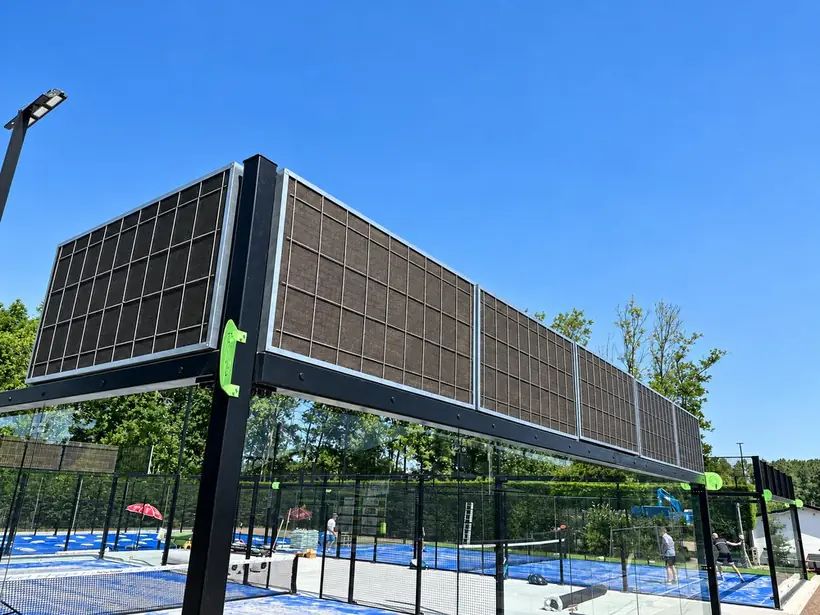
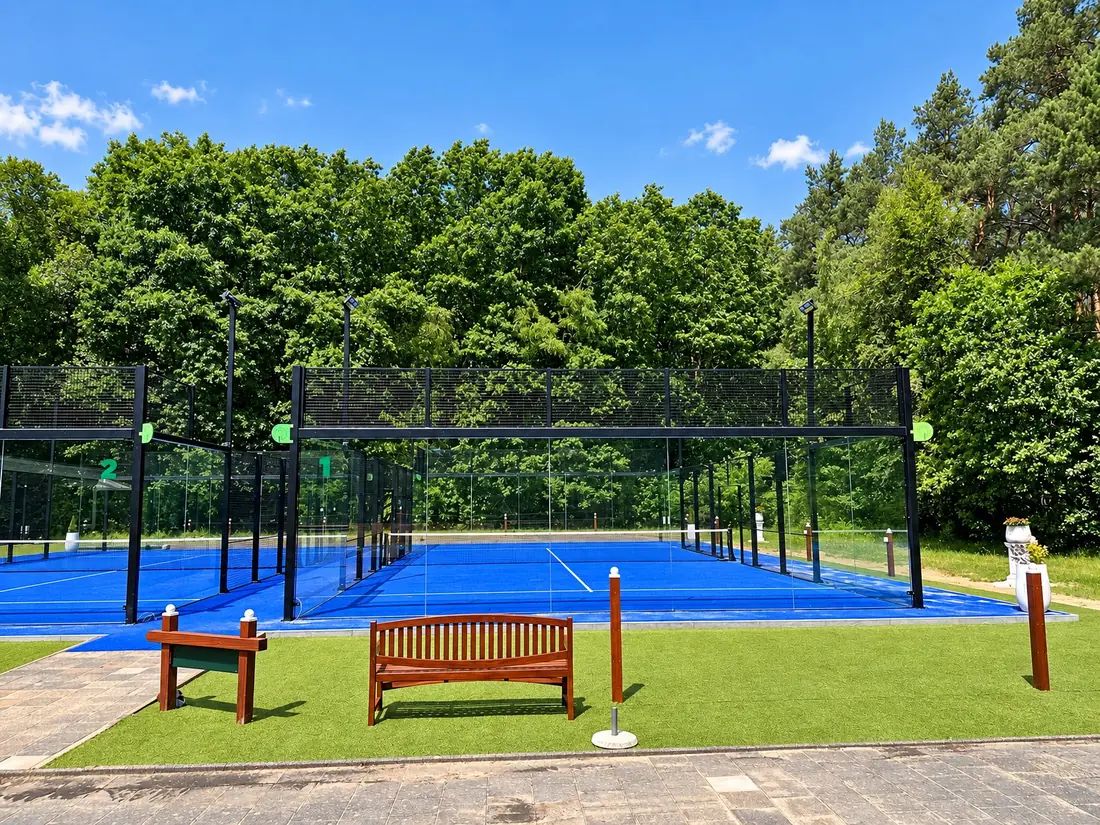
A noise barrier is not always the only solution. In some cases it is an addition to other measures, such as sound-absorbing panels behind the mesh of the court.
- Homes close byThe homes are a short distance from the padel court.
- One directionNoise reduction is required in one specific direction.
- Panels alone are not enoughSound-absorbing panels in the cage do not meet the standard on their own.
- The municipality demands moreThe municipality makes additional measures a condition of the permit.
Comparison
Noise barrier or sound-absorbing panels?
Panels and a noise barrier tackle the sound in different places. These are the differences at a glance.
| Feature | Sound-absorbing panels | Noise barrier |
|---|---|---|
| Where it works | At the source, in or behind the mesh of the cage | At a distance, towards homes and surroundings |
| Dimensions | Follow the size of the padel cage | Custom-made: height and length follow from the noise report |
| Direction | All around the court | One specific direction, for example towards the homes |
| Structure and foundation | Carried by the cage | Own foundation, calculated for the wind load |
| Permit | Included in the permit application for the court | Almost always a building permit: the barrier counts as a structure |
| Planting | None | Possible with coconut-fibre or planting fabric |
A combination often works best: panels in the cage plus a noise barrier, sometimes supplemented with an organisational measure. That produces an approach that is feasible both technically and administratively.
Structure and permit
Always custom-made, calculated for wind and ground
A noise barrier has to withstand a considerable wind load. That is why it is always custom-made and structurally calculated for the wind zone of your site. We also calculate the foundation for the height of the wall, the wind zone and the soil conditions.
Because noise barriers are often higher than 3 metres, the permit plays an important role in the planning. A noise barrier counts as a structure that is not a building. To install one you usually need:
- a structural calculation (wind and stability calculation);
- soil survey data (cone penetration test);
- in almost all cases a building permit.
A noise barrier can also be added to existing courts afterwards. We then first look at the available space, the subsoil and what the permit allows.
- Custom-madecalculated for the wind zone
- Soil testof the subsoil
- > 3 mhigh, so almost always subject to a permit
With planting
A green noise barrier that fits the neighbourhood
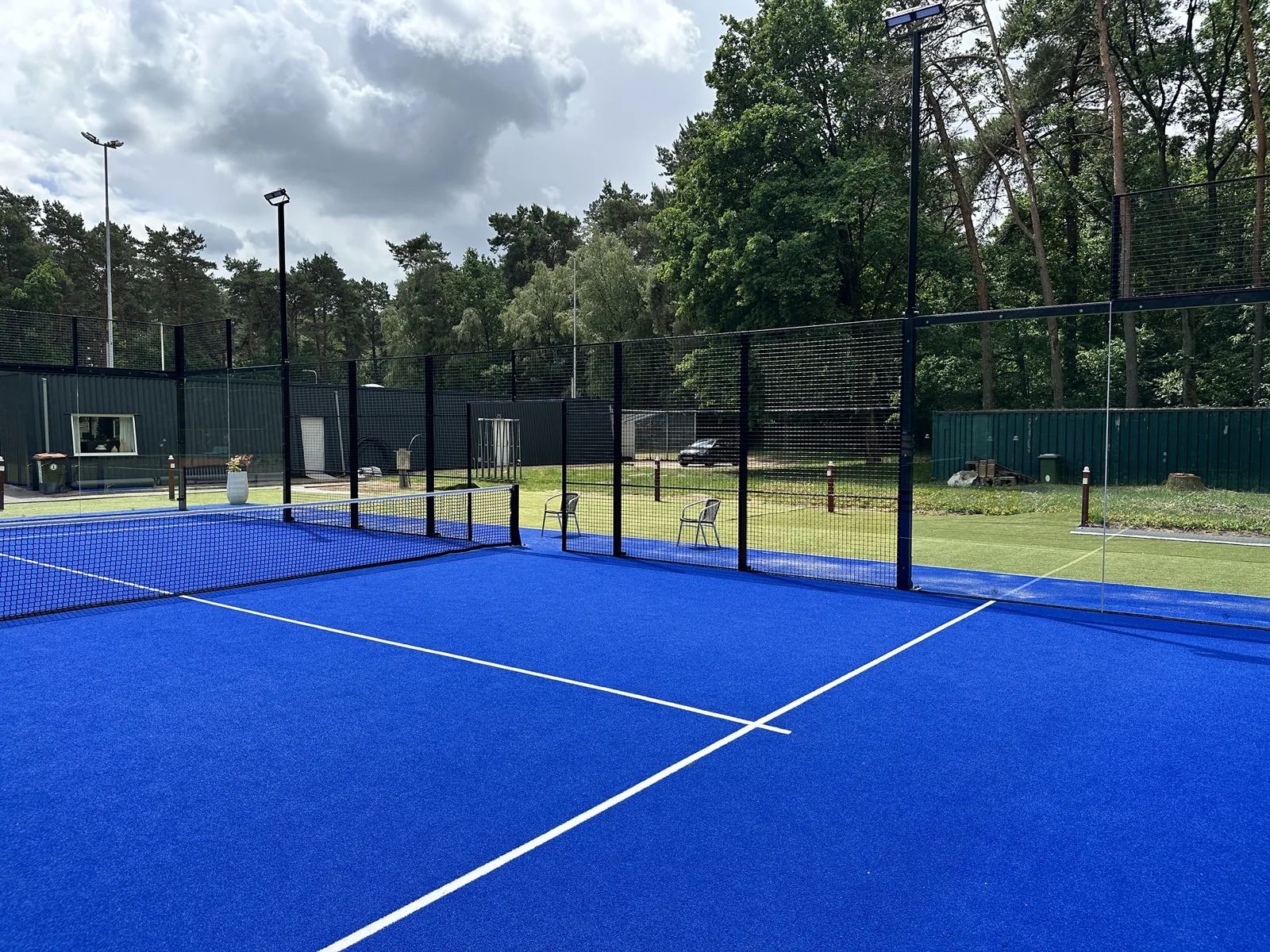
Increasingly, the choice falls on a noise barrier that can be planted. It is finished with coconut-fibre or planting fabric for climbing plants to grow on. Over time this creates a green, living noise wall that does not just work, but also adds something to its surroundings.
The noise reduction itself comes from the structure and the sound-absorbing materials in the wall. Planting mainly helps the visual integration and can soften the perception of the noise further, but it is no substitute for an acoustically well-designed barrier.
- A natural look that fits a residential area
- Higher acceptance by the municipality and residents
- Contributes to biodiversity and CO₂ storage
- Less prone to graffiti
Frequently asked questions
Questions about noise barriers at padel courts
Is your question not listed? Call +31 527 210 040 and we will look at your site together.
How high and how long does a noise barrier need to be?
That depends on the distance to the homes, the position of the court and the desired noise reduction. In practice noise barriers range from a few metres to tens of metres in length, with heights of up to 6 to 8 metres. An acoustic consultant determines the dimensions in a noise report.
Is a permit required for a noise barrier?
Yes, almost always. A noise barrier is regarded as a structure that is not a building and usually requires a building permit. That normally calls for a structural calculation, a wind load calculation and sometimes soil survey data. Read more about the permit for a padel court.
Is a noise barrier more effective than sound-absorbing panels?
That depends on the situation. Sound-absorbing panels in the padel cage reduce the sound at the source. A noise barrier works at a greater distance and shields the surroundings from the sound. In many cases a combination of both is the most effective.
What does a noise barrier for a padel court cost?
The cost depends on height, length, choice of material, foundation and any planting. As an indication, a price per square metre of noise wall is often used. An exact price requires custom work based on a noise report and structural assumptions. Send us your location for a price indication.
Does a noise barrier help to keep playing longer?
Yes, in many cases it does. By lowering the noise load on the surroundings, a municipality can allow the padel courts to stay open longer, for example in the evening, as long as you meet the established noise standards.
How do you determine whether a noise barrier is needed in our situation?
We always look at the specific situation: the position of the courts, the distance to homes, the applicable wind zone, the results of the noise report and the wishes of the municipality and the neighbourhood. Based on that we advise whether a noise barrier is needed, or whether another or a combined solution will do. The result is a solution that is technically sound, feasible in terms of permits and supported by everyone involved.
Knowledge base
More about noise and noise barriers
Background on noise measurements, noise barriers, panels and the permit.
 Building a padel court · 24 August 2026What misconceptions exist regarding noise nuisance at padel?Noise nuisance in padel: 7 common misconceptions debunked with technical substantiation. Discover what is really true regarding standards and measures.
 Building a padel court · 18 August 2026When is padel noise perceived as a nuisance?Padel noise already reaches 91 dB — 10 dB more than tennis. Discover which standards apply, when an inspection is mandatory, and which measures prevent nuisance.
 Building a padel court · 30 May 2026Does an indoor padel court cause noise nuisance to the surrounding area?Indoor padel court and noise pollution? Discover the standards (91 dB), legal regulations, and smart measures to prevent complaints.