

Converting a tennis court
From tennis court topadel courts
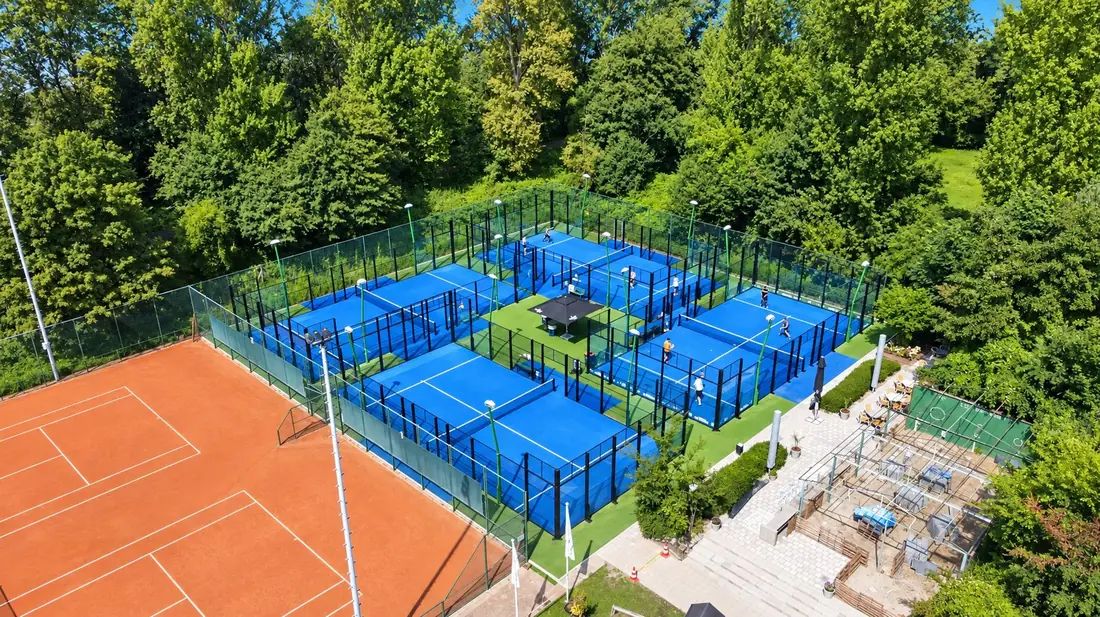
More and more tennis clubs are converting some of their courts to padel: two to three padel courts per tennis court, often on the surface that is already there. We assess the situation on site and guide the conversion from the first assessment to handover.
- Two to three padel courts on one tennis court
- Existing surface reused where possible
- On-site assessment and guidance from A to Z
Why padel
Why tennis clubs choose padel
Padel is accessible and popular. You need less technique to get started, the sport attracts a wide audience and a padel court is played on more intensively than a tennis court. That means a higher occupancy rate and new energy within the club.
That is why many clubs want to replace existing tennis courts with padel courts or combine the two. Converting is often more efficient than building from scratch, provided the existing surface allows it. That is exactly why every project with us starts with a technical assessment.
At the same time, a conversion raises questions: is the surface still suitable, how much space is needed, what does it mean for the foundation and what determines the costs? You will find the answers on this page.
- Less technique needed to get started
- Attractive to a wide audience
- Played more intensively than a tennis court
Costs and feasibility
What determines the cost of the conversion?
There is no fixed price, because every site is different. A padel court is sometimes possible from around € 30,000, but there are almost always additional costs for foundation and preparation. These six factors make the difference; also read what an outdoor padel court costs.
- State of the drainageIf the existing drainage still works well, we can often build on it. If not, repairing it is part of the preparation.
- Dimensions and wideningThe current dimensions of the tennis court determine how many padel courts fit and whether widening is needed.
- Number of padel courtsEvery extra court means extra steel, glass, artificial turf and installation. How many courts fit depends on the space and the layout of the park.
- Choice of sports floorSupersub, drainage concrete or asphalt on the existing lava layer. Which floor is suitable follows from the foundation advice.
- Additional foundation workIf the ground cannot carry the new structure, extra foundation work is needed. A complete foundation costs € 20,000 to € 40,000 excl. VAT.
- Noise and permitAn outdoor padel court almost always needs a planning permit, because of noise, lighting and spatial impact. If the park is close to homes, an acoustic study is part of the application and sometimes a noise solution is needed.
Surface and foundation
Reusing the existing surface: what is possible?
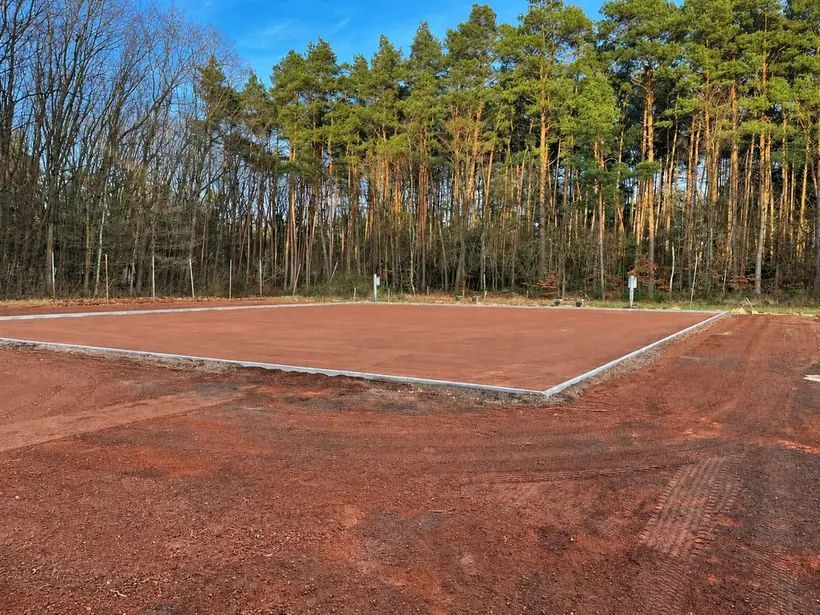
In many cases a tennis court has a fixed build-up with a layer of M3C sand and a lava layer underneath. Those layers were once installed for stability, water permeability and load-bearing capacity. In practice, a good base to build on is therefore often already there.
Whether those layers can really be reused differs per site and can never be guaranteed in advance. We look at the state of the drainage, the flatness of the court and the load the new structure brings with it. On the existing lava layer we can then work with a sports floor of Supersub, drainage concrete or porous asphalt.
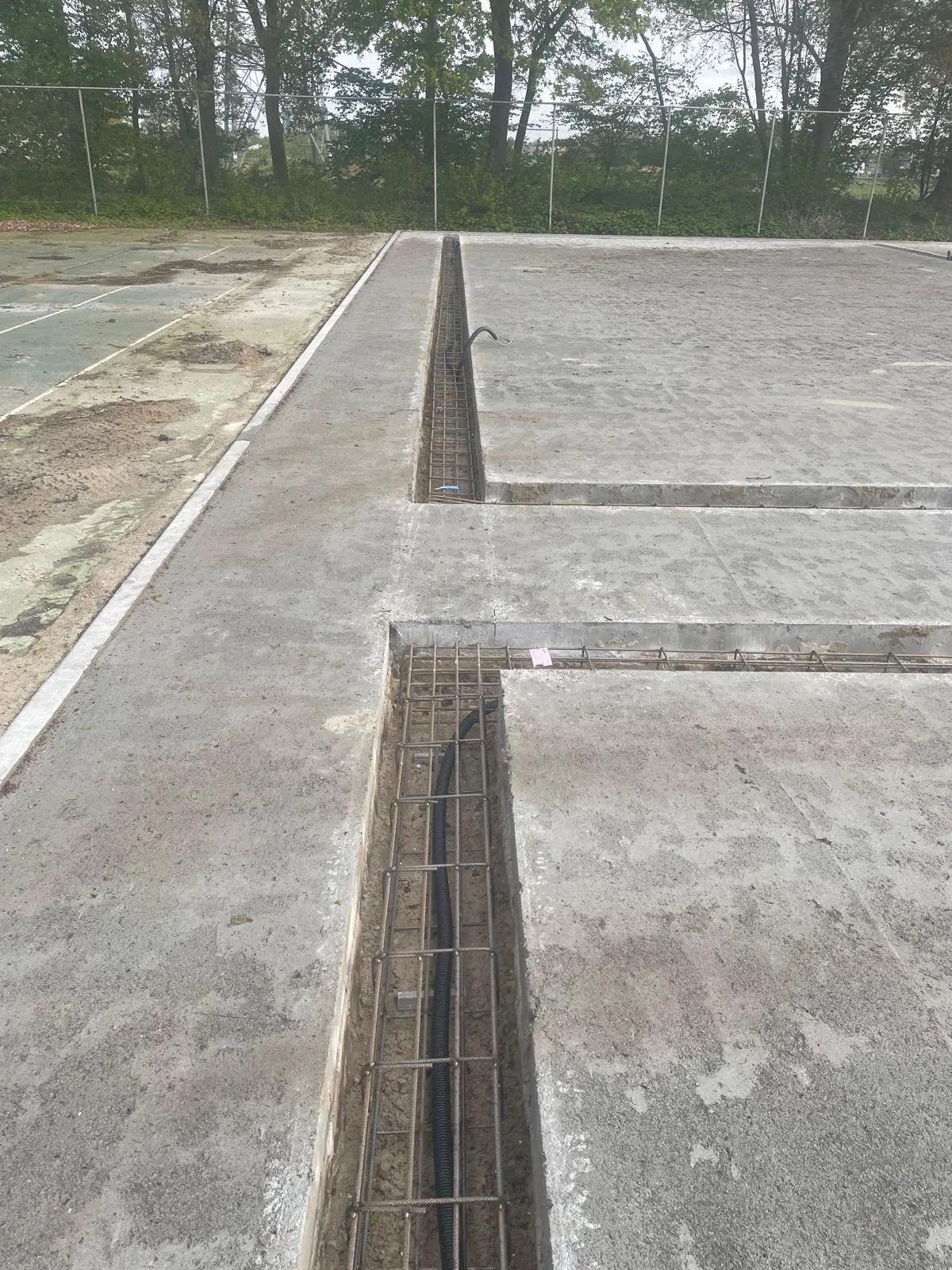
We always weigh that choice against the foundation advice. Outdoors in particular, weather, the load of glass and steel and years of use play a major role. A good foundation prevents subsidence, so where necessary we have additional surveys carried out before the build of the padel courts starts.
- M3Csand and lava layer as the existing base
- 3sports floors: Supersub, drainage concrete or porous asphalt
- In advancefoundation advice, with extra surveys where needed
Space and layout
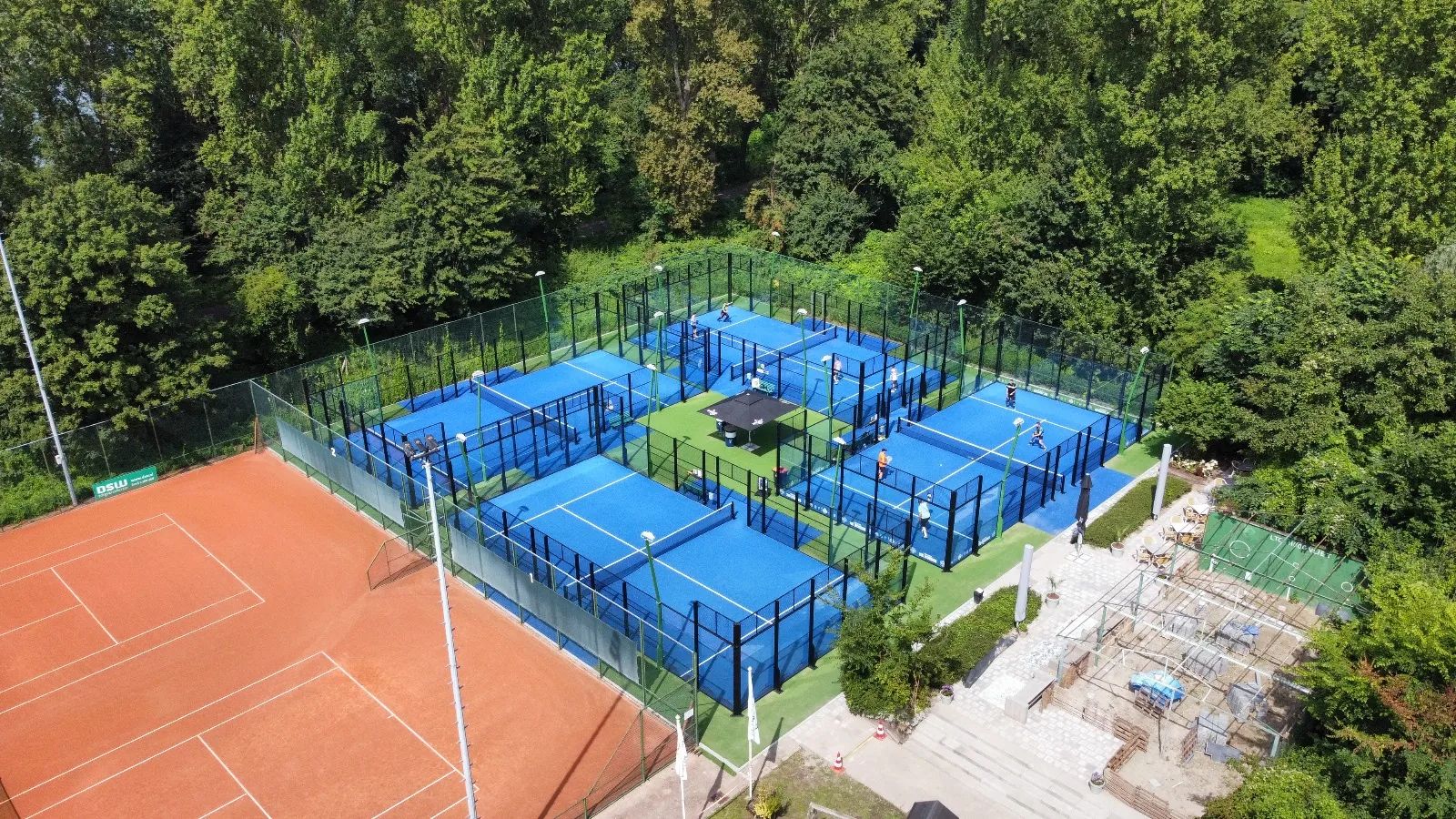
Four padel courts on two tennis courts
Two to three padel courts fit in the place of one tennis court. A popular solution at clubs is four padel courts in the place of two existing tennis courts. This layout, often called the pinwheel layout, uses the available space efficiently and offers maximum capacity for padel.
This configuration does not fit every site, but for many clubs it turns out to be a feasible and attractive option, sometimes with a slight widening of the existing court. That way you make the most of the space on the park.
We map your situation and look at which layout fits, including the lighting and the place of any noise solutions. That way you know in advance what the park will look like.
- 2-3padel courts on one tennis court
- 4padel courts on two tennis courts in a pinwheel layout
- 16locations built in the Netherlands and Germany
How the conversion works
From assessment to first match in five steps
No two tennis facilities are the same, so we do not give standard answers. Together with the club we look for the solution that fits the site, the existing situation and the club’s plans.
- Clear in advance where you stand, no surprises afterwards
- One point of contact from assessment to handover
- 15-year warranty on the steel structure
- Without obligation
On-site assessment
We visit, assess the existing tennis courts and map the drainage, flatness, space and surroundings. Together we determine how many padel courts fit.
- Where needed
Foundation advice and choice of sports floor
Where needed we have additional surveys carried out and draw up foundation advice. Based on that, we choose the sports floor: Supersub, drainage concrete or porous asphalt.
- By arrangement
Quotation and permit
You receive a fully worked-out quotation, tailored to the wishes and possibilities of the club. At the same time we guide the permit application at the municipality.
- 8 to 10 weeks
In-house production
The steel structure, the glass and the artificial turf are made in our own factory. Meanwhile the surface is prepared and any foundation work is carried out.
 2 days per court
Build and handover
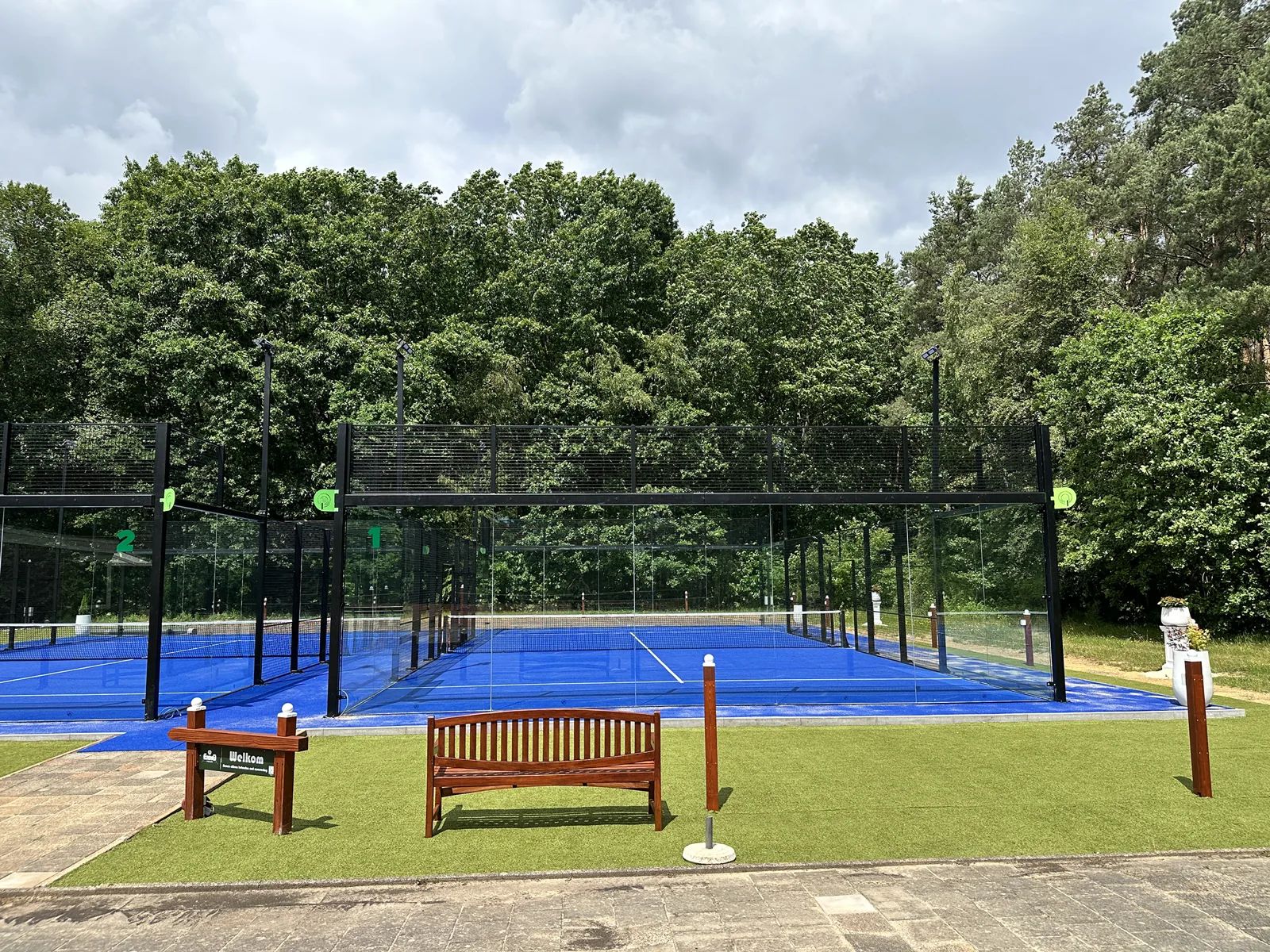
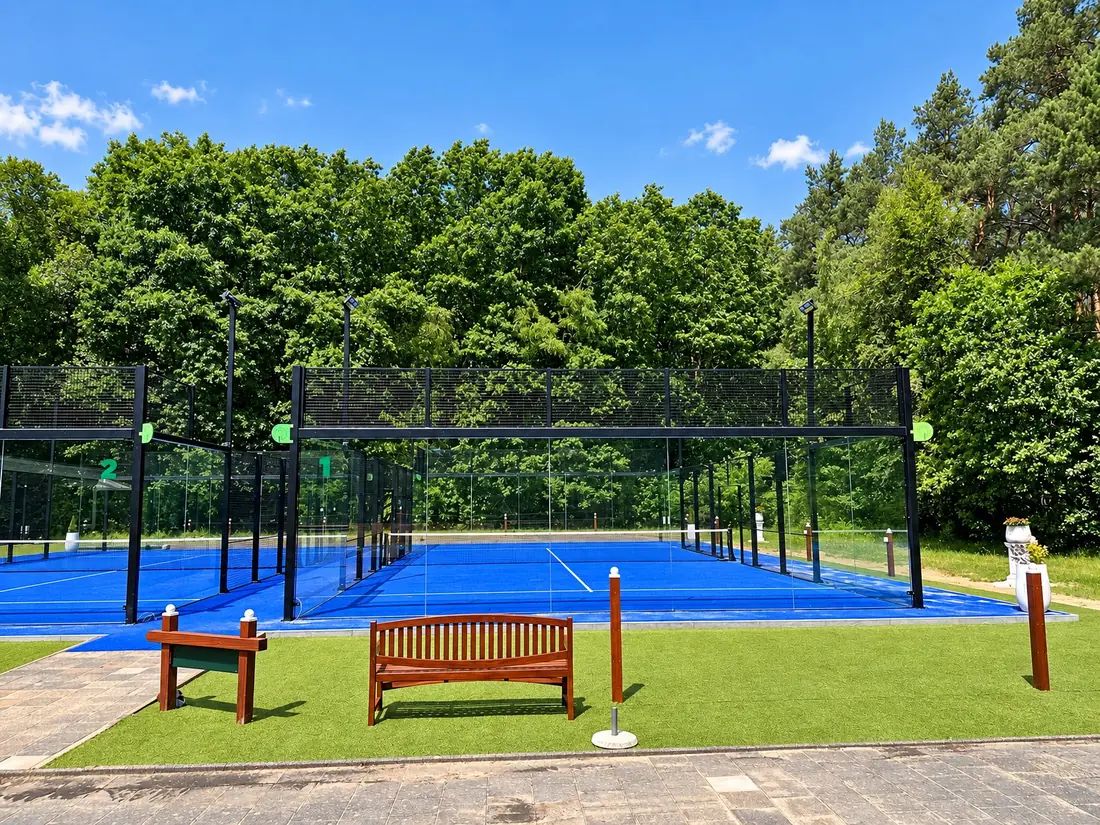
Our installation team places the steel structure, the glass walls and the other parts on the prepared surface, according to the technical specifications and calculations. After that, the court is ready to play.
Frequently asked questions
Questions about converting a tennis court
Is your question not listed? Call +31 527 210 040 or send us your location for a price indication.
How many padel courts fit on a tennis court?
Two to three padel courts per tennis court. Many clubs choose four padel courts on two tennis courts in a pinwheel layout. That is not possible everywhere: we check on site whether it fits at your club, including any widening of the court.
Can the existing surface of the tennis court be reused?
Often yes, but there is only certainty after an assessment on site. Under a tennis court there is usually a layer of M3C sand and a lava layer, and those form a good base. The state of the drainage, the flatness and the load of glass and steel determine what is possible. On the lava layer we then work with Supersub, drainage concrete or porous asphalt, always alongside the foundation advice.
What does converting a tennis court into padel courts cost?
That depends on the site: the state of the drainage, the dimensions and any widening, the number of courts, the sports floor and additional foundation work determine the amount. An outdoor padel court starts at around € 30,000 without foundation; complete, including foundation, it starts at € 50,000, excluding VAT. Read more at what an outdoor padel court costs.
Do I need a permit if the padel courts go onto an existing sports park?
Almost always. A padel court counts as a structure, and an outdoor court needs a planning permit in most cases, even in the place of a tennis court. If the park is close to homes, an acoustic study is usually part of it. We guide the entire permit process and supply sound-absorbing panels and noise barriers with our own measurements.
How long does converting a tennis court take?
After the order we produce the courts in 8 to 10 weeks. Installation by our own team takes 2 days per court. The assessment of the surface, the foundation advice and the permit come before that; the whole process usually takes 3 to 6 months.
Knowledge base
Read more about padel at a tennis club
Space, noise, member support and permits: what clubs run into with padel.
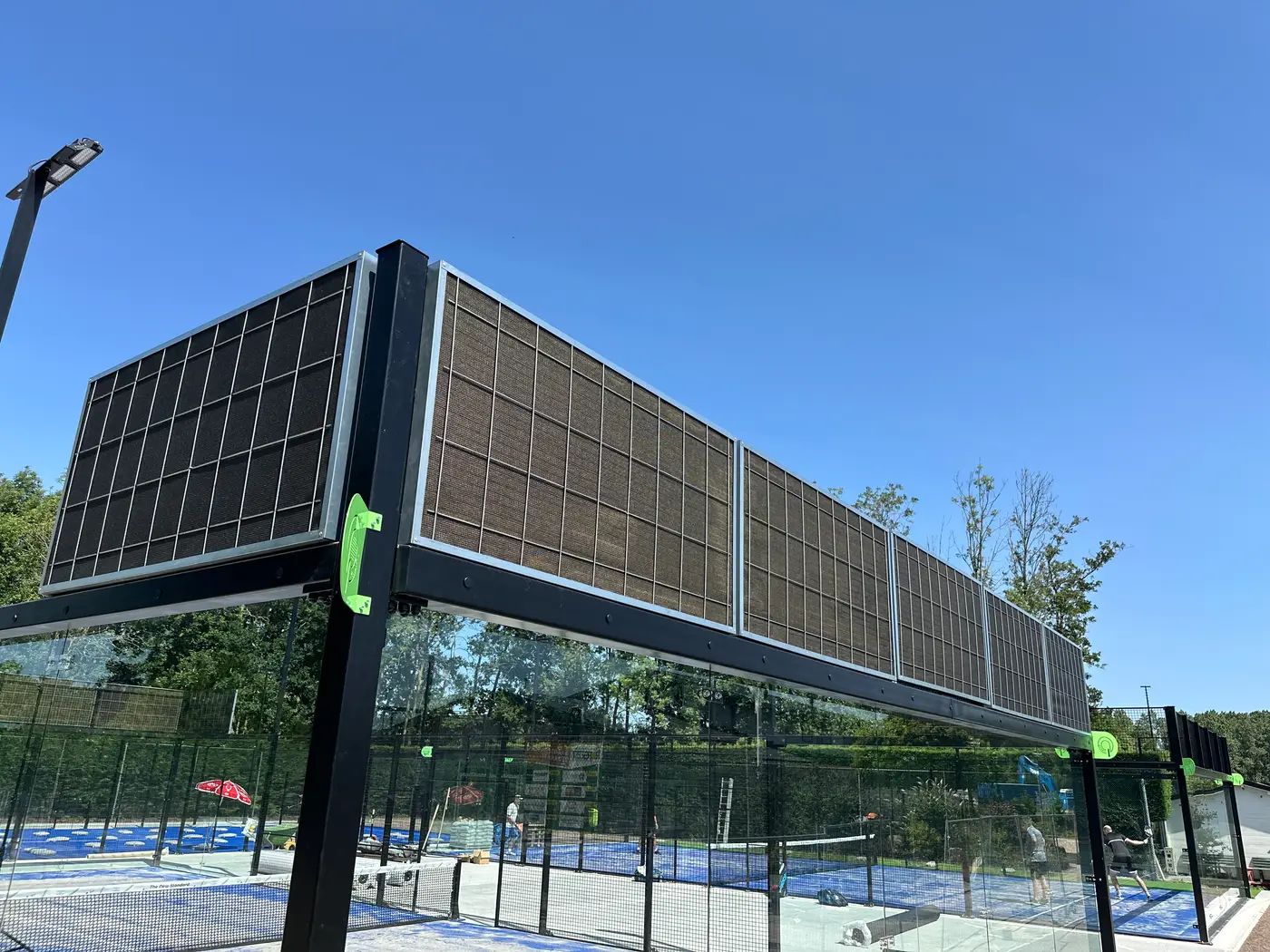 Building a padel court · 24 August 2026What misconceptions exist regarding noise nuisance at padel?Noise nuisance in padel: 7 common misconceptions debunked with technical substantiation. Discover what is really true regarding standards and measures.
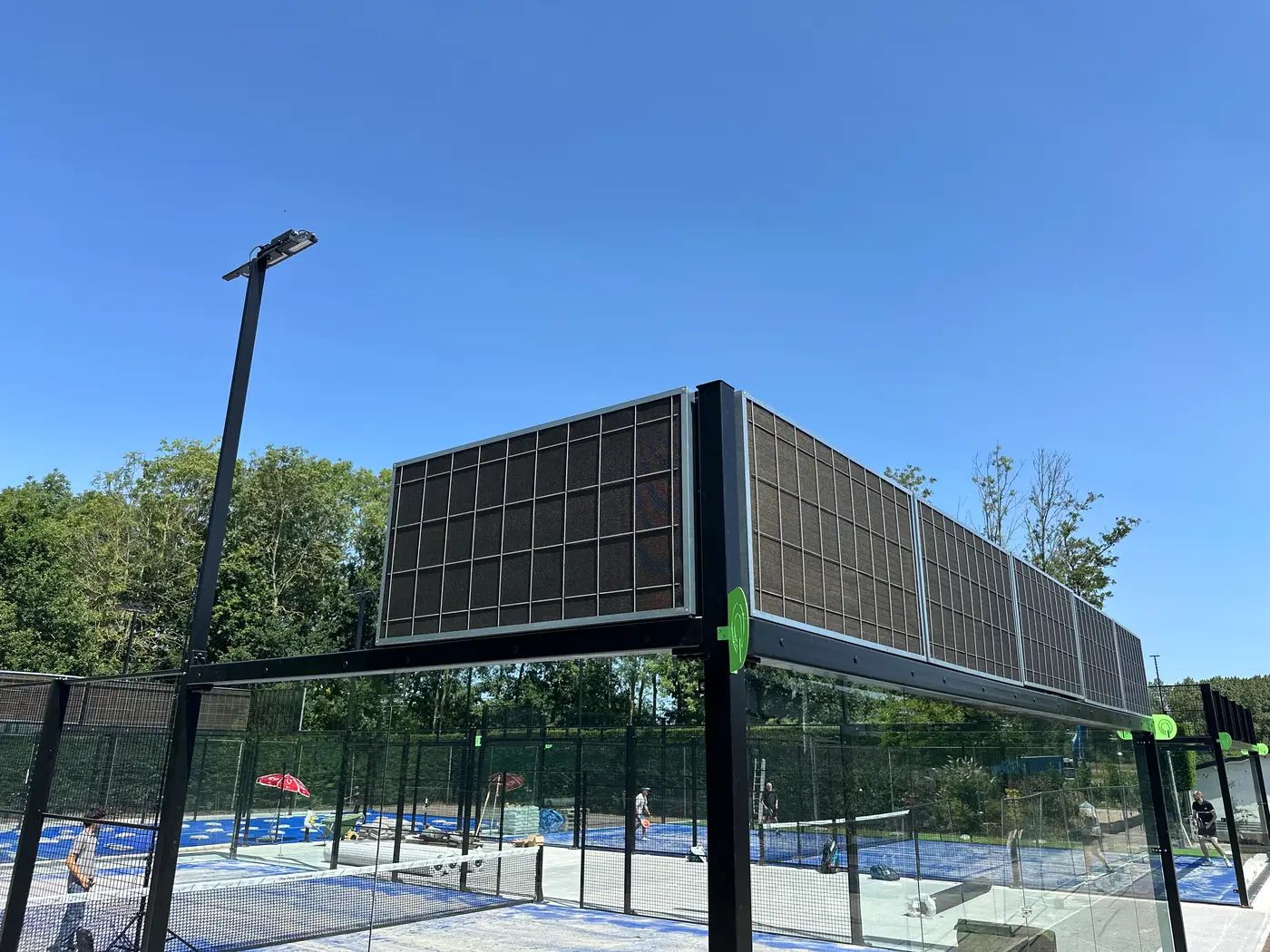 Building a padel court · 18 August 2026When is padel noise perceived as a nuisance?Padel noise already reaches 91 dB — 10 dB more than tennis. Discover which standards apply, when an inspection is mandatory, and which measures prevent nuisance.
 Building a padel court · 30 May 2026Does an indoor padel court cause noise nuisance to the surrounding area?Indoor padel court and noise pollution? Discover the standards (91 dB), legal regulations, and smart measures to prevent complaints.