


Building a padel court · 4 May 2026 · 11 min read
When Is a Permit for a Padel Court Required?
Is a permit required for a padel court? Find out when, which documents you need and how the application process works. Avoid fines and delays.
In this article
- What is an environmental permit and what does it have to do with padel?
- Which factors determine whether your padel court requires a permit?
- How do you apply for a permit for a padel court?
- What are the noise requirements for a padel court and how do they affect the permit?
- How long does it take to get a permit for a padel court?
- What happens if you build a padel court without a permit?
- Frequently asked questions
Building a padel court often starts with one question that determines everything: do I need a permit for this? In most cases the answer is yes, especially if the court will be outdoors. For an indoor court in an existing hall it may be different, but rules apply there too. In this article we explain, situation by situation, when a permit for a padel court is required, which documents you need and what you can expect from the application process.
What is an environmental permit and what does it have to do with padel?
An environmental permit (omgevingsvergunning) is official permission from the municipality to build, renovate or use a location differently. In the Netherlands a padel court is regarded as a structure, which means that in most cases you need such a permit before you even break ground.
Padel is more than a sport. A padel court is a permanent structure with a steel structure, glass walls, artificial turf, LED lighting and in many cases a foundation of drainage concrete or Supersub. Together, all those components make it a structure in the eyes of the law. The municipality wants to assess whether that structure is safe, whether it fits within the zoning plan and whether it causes no nuisance to the surroundings.
That last point is especially relevant for padel. Padel produces more noise than tennis. The ball striking glass and steel, with the cage structure acting as a resonance box, results in a sound power level of around 91 dB on average. That is roughly 10 dB more than with tennis. Municipalities are increasingly aware of this and therefore more and more often set requirements for noise measures and playing times when granting permits.
Which factors determine whether your padel court requires a permit?
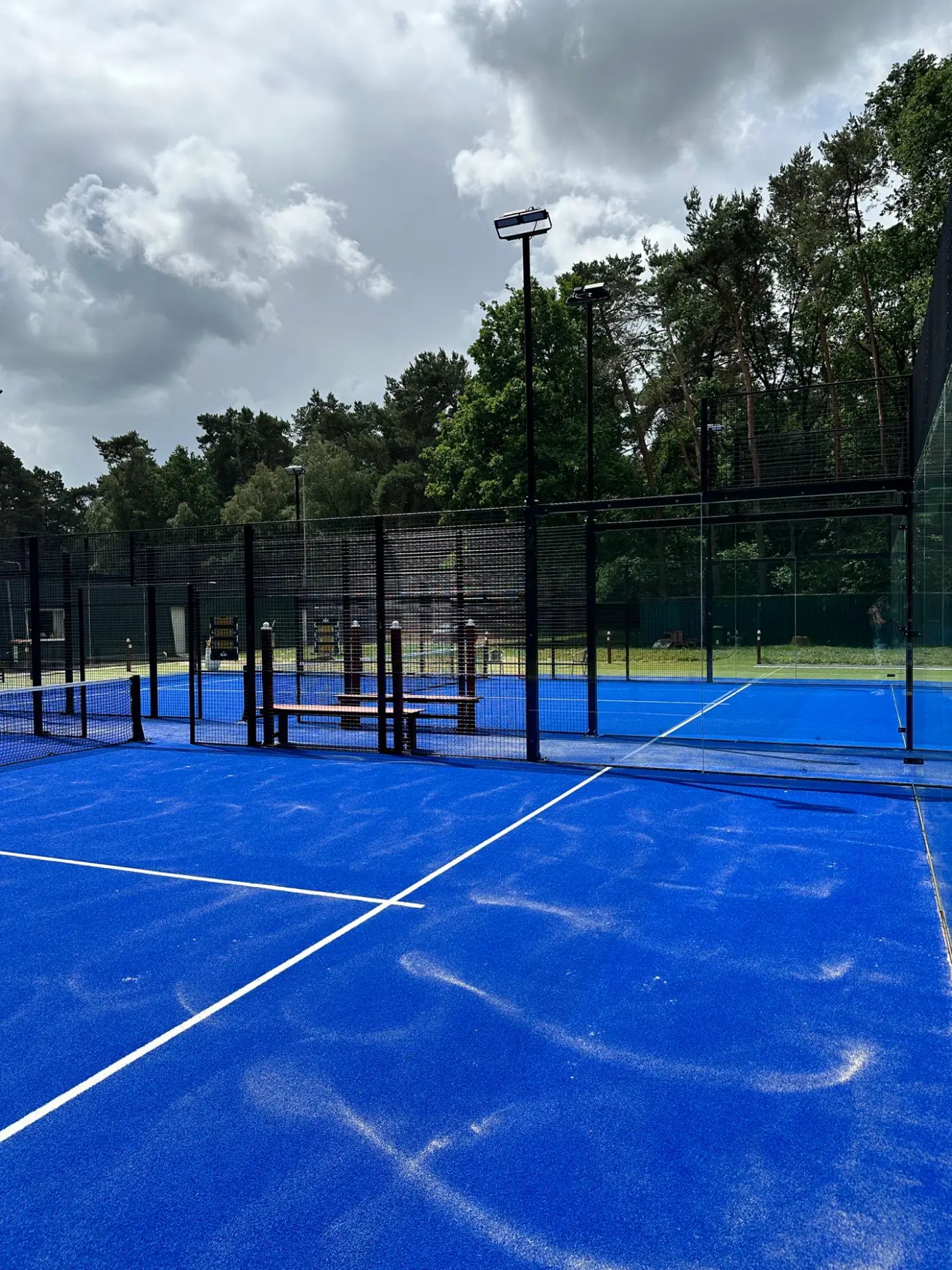
Whether a padel court requires a permit depends on four factors: the location (indoors or outdoors), the nature of the structure, the impact on noise and lighting, and the proximity of homes. For an outdoor court an environmental permit is almost always mandatory. For an indoor court in an existing hall it depends on the situation.
- Outdoor court
An outdoor padel court almost always needs an environmental permit. The structure is permanent, the foundation is substantial and the court has a visible impact on its surroundings. On top of that, LED lighting outdoors also requires a light study, and noise carries further when playing outside than in an enclosed hall. If the location also borders a residential area or lies in open terrain, the permit requirement is virtually certain. - Indoor court
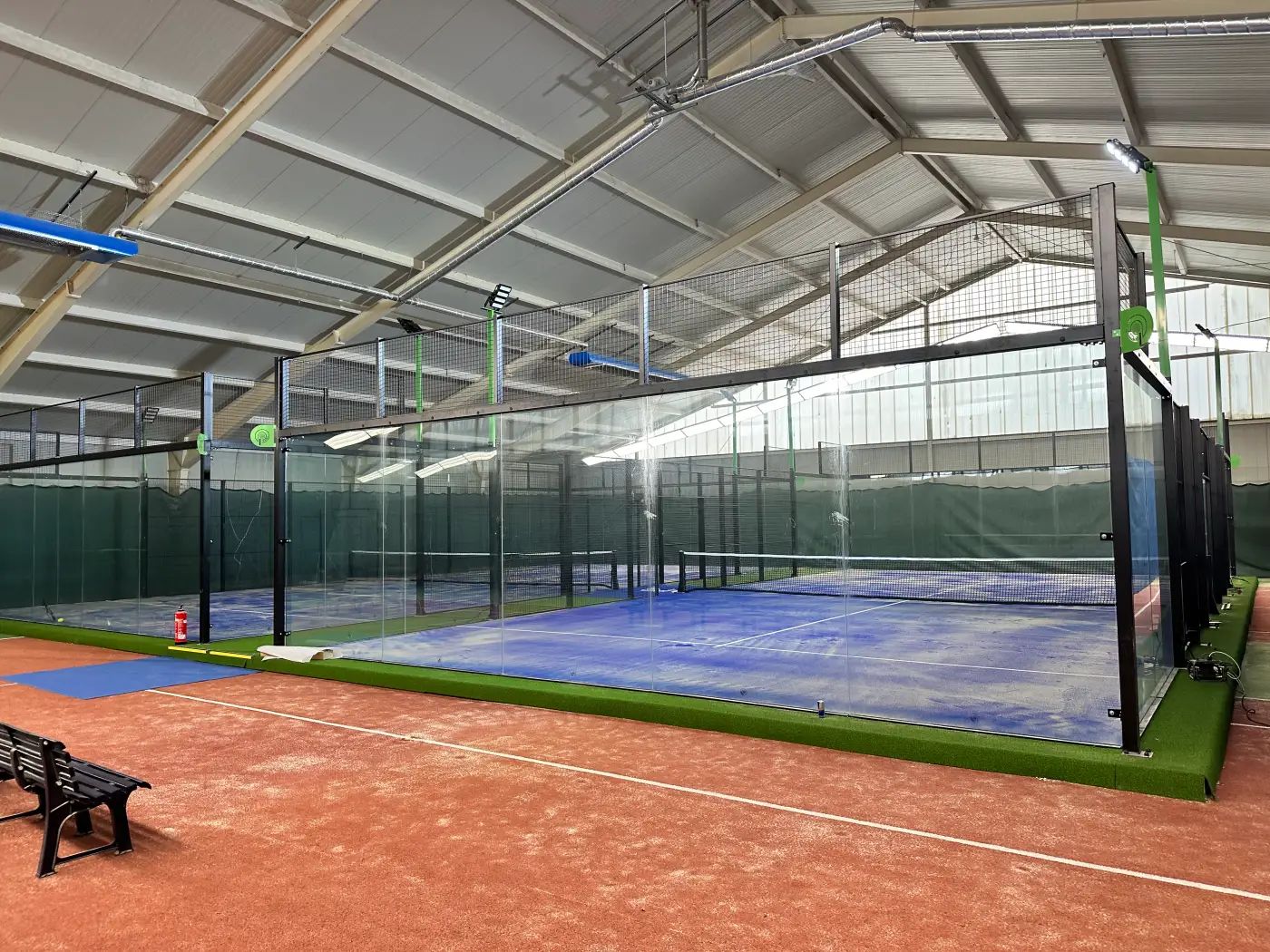
A padel court in an existing hall, without structural changes to the building itself, does not always need a separate building permit. Even so, rules apply: fire safety, usage regulations and sometimes adjustments to ventilation or escape routes. Always check with the municipality whether a notification or permit is required, even if you think it is a simple installation. - Proximity of homes
Is the location close to residential buildings? Then an acoustic study is almost always required with the application. The municipality wants to know how much noise the court produces at the facades of surrounding homes, and whether that stays within the statutory noise standards. This applies to both outdoor and indoor courts if the hall borders a residential area.
How do you apply for a permit for a padel court?
You apply for a permit for a padel court through the municipality's Omgevingsloket (the national online permit portal). You submit an application with a set of mandatory documents, after which the municipality assesses the application against the zoning plan, the Building Decree and local policy rules. The application must be complete. Missing documents almost always lead to delays.
The documents you need for the application depend on the location and the type of court. For most projects the following list applies:
- Structural calculations in accordance with the Building Decree
- Acoustic study (noise levels at surrounding facades)
- Light study (for outdoor LED lighting)
- Site plan of the location
- Possibly an ecological study (for locations in or near protected nature)
- Sometimes an archaeological study (for ground works at certain locations)
Good preparation starts with a zoning plan check. Check whether padel is permitted as a sport at the location. If it is not, you need a deviation from the zoning plan in addition to the environmental permit, which makes the process considerably longer. If in doubt, always contact the municipality first before you submit a formal application. Informal preliminary consultation saves you time and avoids unnecessary costs.
What are the noise requirements for a padel court and how do they affect the permit?
Noise requirements for a padel court are based on the Environmental Management Act (Wet milieubeheer) and the Activities Decree (Activiteitenbesluit). The municipality assesses whether the noise from the court at the facades of nearby homes stays within the applicable limit values. In the daytime that is generally 50 dB(A), in the evening 45 dB(A) and at night 40 dB(A). If that limit is exceeded, the permit is refused or additional requirements are imposed.
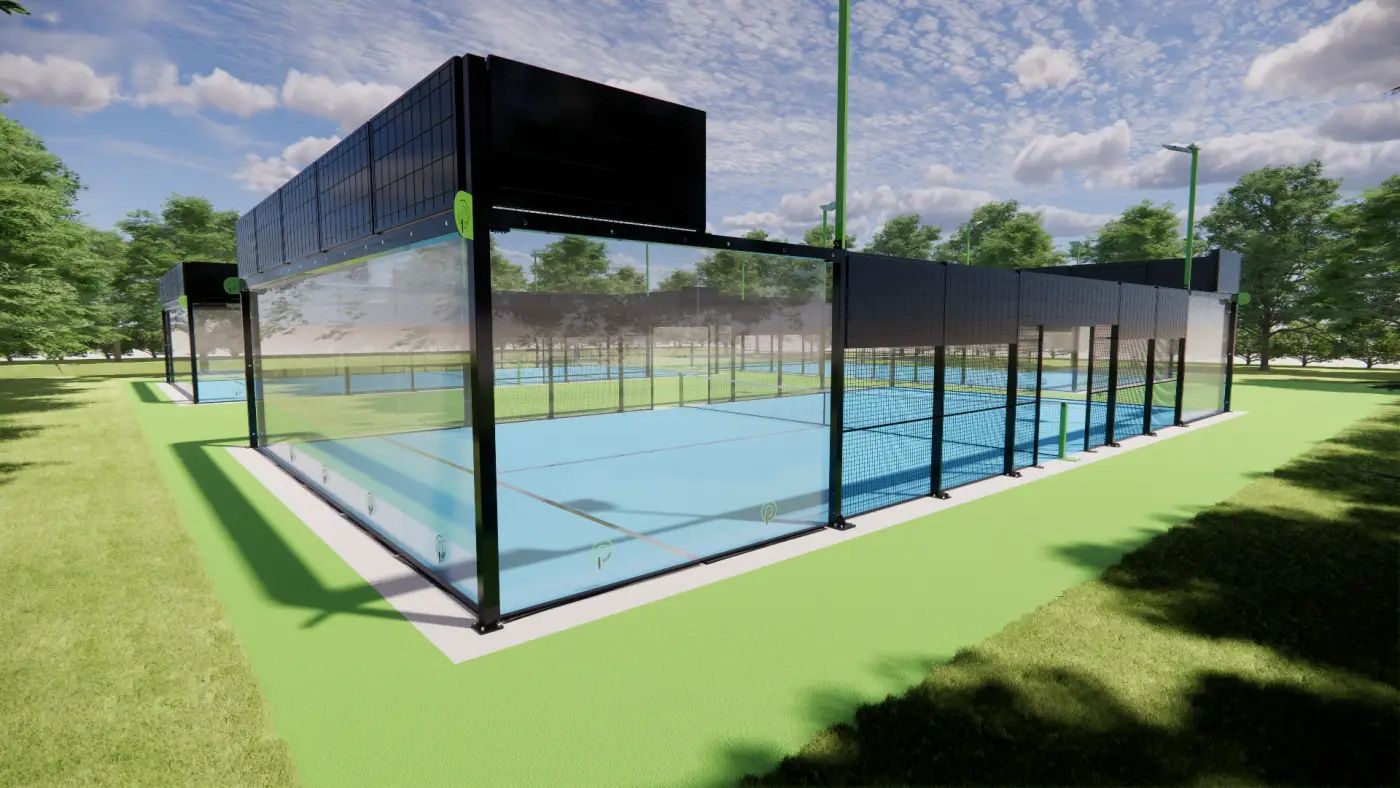
Because padel produces more noise than most other outdoor sports, an acoustic study is almost always mandatory with the permit application for an outdoor court. That study maps how much noise the court produces at what distance and whether additional measures are needed. Think of sound-absorbing panels on the outside of the cage structure or a freestanding noise barrier next to the court.
Noise measures can also improve the chances of getting a permit. Municipalities are more willing to grant a permit if the applicant shows that active thought has been given to noise reduction. Panels in the cage structure have demonstrated, in independent acoustic laboratory testing, an absorption value of 0.80 (class A) and a sound insulation index of 19 dB.
That is an audible difference at distances of 40 to 100 metres. Note, however, that fitting panels has structural consequences. The cage structure catches more wind and must be structurally reinforced with heavier posts or additional columns. This is not an optional step, but a technical obligation for safety and service life.
How long does it take to get a permit for a padel court?
The processing time for a permit application for a padel court averages 8 to 12 weeks, counted from the moment the application is submitted in full. For complex locations, objection procedures or a deviation from the zoning plan, this can rise to 6 months or more.
The municipality has 8 weeks by law to decide on a regular application, with a one-time extension option of 6 weeks. In practice the process takes longer if the application is incomplete when submitted. Missing studies or drawings lead to a request for supplementary information, and that period does not count towards the decision period.
So plan the permit process early in the project. If you want to play in spring, you need to start the application in the autumn before. Also allow for the time needed to have the acoustic study, the structural calculations and the light study prepared. Those documents take time to produce and must be ready before you can submit the application.
What happens if you build a padel court without a permit?
Building without a permit is a serious risk. The municipality can halt the building project, impose a penalty payment or fine, and even require the cage structure to be removed at your own expense. In that case you have paid for a court that you may not use and that you also have to demolish.
Besides the direct sanctions, there are practical consequences as well. A court without a permit cannot be used for official matches. For competition use, an inspection by a recognised body is mandatory, and that inspection presumes the court was built legally. In addition, an unpermitted court can cause problems with insurance and liability if something goes wrong.
Sometimes people think that a small court or a temporary installation falls outside the permit requirement. That is rarely the case with padel courts. The structure, the weight, the foundation and the social impact mean that municipalities consistently treat it as a structure requiring a permit. Do not take any risks and always check in advance.
At I-Padel we guide the entire permit process from start to finish. That includes the zoning plan check, preliminary consultation with the municipality, coordination of noise and light studies, supplying structural calculations and support with any objection procedures.
We work exclusively with certified materials that meet the requirements of Kiwa ISA Sport, which protects you against unintended non-conformity at the inspection after completion. Want to know what is needed for your location? Take a look at our approach to building padel courts or get in touch for an initial exploration. We are happy to think along with you, without obligation.
Frequently asked questions
Can I install a temporary padel court without a permit?
A temporary installation sounds like a way out, but in practice even temporary padel courts almost always require a permit. The structure, foundation and weight of a padel court mean that municipalities regard it as a structure, regardless of whether you call it “temporary”. If you still want to install a temporary court, always contact the municipality in advance to determine which rules apply.
What is a zoning plan check and how do I carry it out?
A zoning plan check is an initial exploration in which you verify whether using a location as a padel facility is permitted under the applicable zoning plan. You do this through the online portal ruimtelijkeplannen.nl, where you can look up by address what designation a location has and which activities are permitted there. If sport is not permitted at the location in question, you need an amendment to the environmental plan or a deviation in addition to the environmental permit, which makes the process considerably longer and more complex.
What does an acoustic study for a padel court cost and who carries it out?
An acoustic study for a padel court is carried out by a certified acoustic consultancy and usually costs between €1,500 and €3,500, depending on the complexity of the location and the number of facades to be assessed. The study maps the noise levels at the surrounding homes and makes recommendations for any measures. Make sure to have this study carried out early in the process, so that the results can still influence the construction choices.
What do I do if the municipality rejects my permit application?
If your application is rejected, you have six weeks to lodge an objection with the municipality. Always ask for the exact grounds for refusal in the rejection, because that determines whether an objection has a chance of success or whether an alternative approach, such as additional noise measures or an adjusted location, makes more sense. In some cases an informal conversation with the municipality after the rejection is more effective than immediately starting a formal objection procedure.
Do different rules apply if I want to build padel courts at an existing sports club?
At an existing sports club the location is often already designated as a sports site, which makes the zoning plan process simpler. Even so, an environmental permit for the structural aspects is still mandatory in most cases, especially for outdoor courts. In addition, further requirements may apply from the club's operating framework, such as municipal rules on opening hours or parking pressure, which are separate from the building permit.
What about the permit if I want to add LED lighting to an existing padel court?
Adding LED lighting to an existing padel court afterwards can be a new activity requiring a permit, even if the court itself already has a permit. For outdoor lighting, municipalities often require a light study showing that the light emitted into the surroundings stays within the applicable standards. Check with the municipality whether a notification or a full environmental permit is needed before you proceed with installation.
Can I combine the permit process with the construction schedule to avoid delays?
Yes, and this is strongly recommended. Start the permit process in parallel with the design phase, so that the required studies, such as the acoustic study and the structural calculations, are ready by the time the application is submitted.
Keep in mind that the average processing time is 8 to 12 weeks after a complete submission, but that preparing all the documents can add another 6 to 10 weeks on top of that. A realistic total planning horizon of 4 to 6 months for obtaining the permit is no exception for more complex projects.


