


Building a padel court · 6 May 2026 · 10 min read
What sound solutions are available for a padel venue?
Noise nuisance at a padel court? Discover which acoustic solutions work, from absorbing panels to noise barriers. Meet the standards and get your permit.
In this article
- Why does a padel court cause so much noise nuisance?
- What sound solutions exist for a padel court?
- How do sound-absorbing panels work on a padel court?
- When are sound-absorbing panels mandatory at a padel venue?
- What is the difference between an indoor and an outdoor court in terms of noise?
- Which supplier can structurally integrate sound-absorbing panels?
- How much does a sound solution for a padel court cost?
- Frequently asked questions
Noise nuisance is one of the biggest obstacles to realising a padel venue. Municipalities are setting ever stricter requirements, local residents complain more quickly and an acoustic study is almost always mandatory for outdoor courts. Fortunately, there are proven solutions that help you meet the noise standards and build support with both the municipality and the neighbourhood. In this article we answer the most frequently asked questions about noise nuisance at padel courts and the solutions available.
Why does a padel court cause so much noise nuisance?
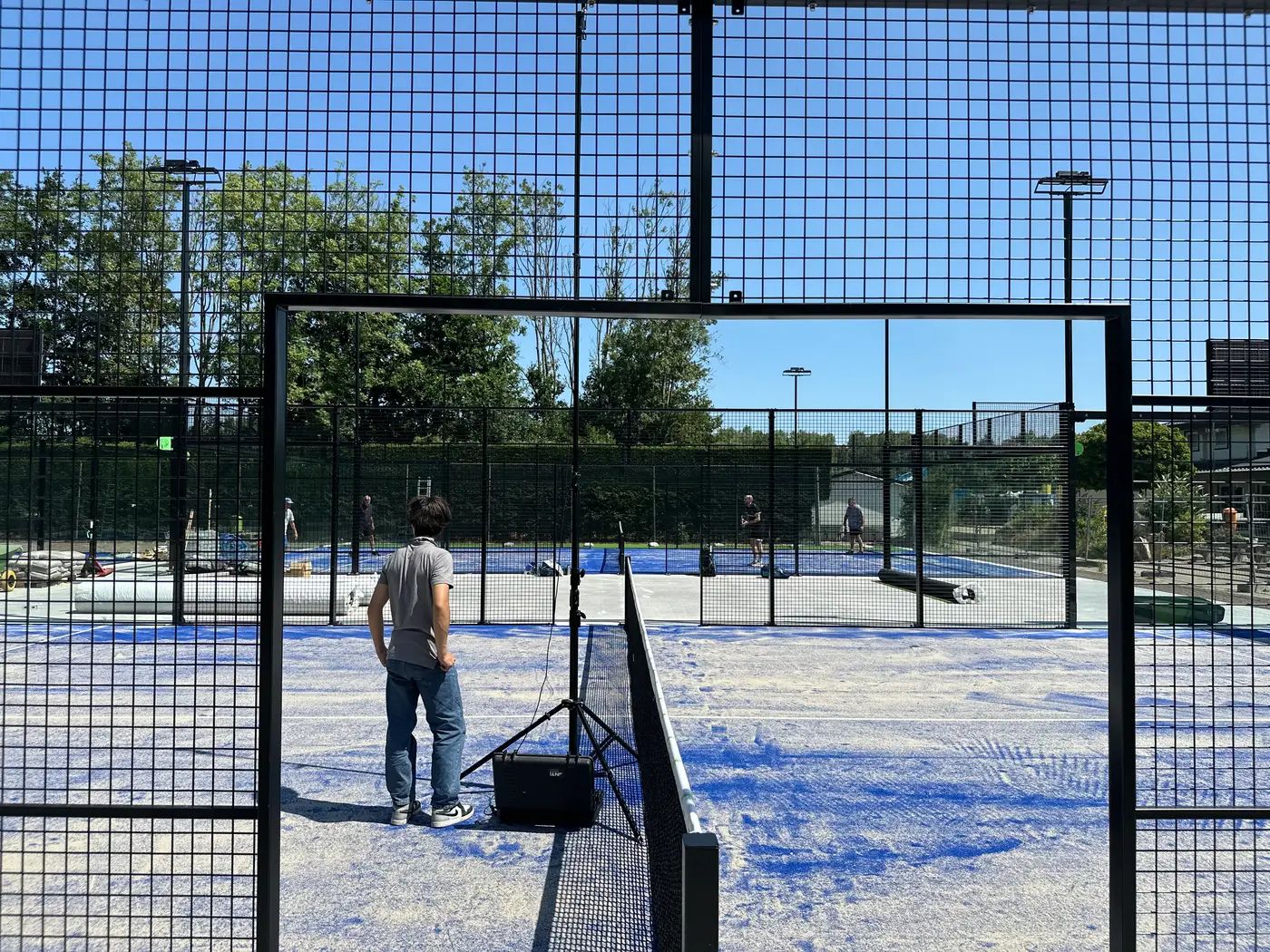
A padel court produces more noise than a tennis court, because the cage structure acts as a sound box. The ball hitting glass and steel reflects the sound in all directions. The average sound power level of a padel court is around 91 dB, which is roughly 10 dB more than with tennis.
There are two main sources of noise in padel. The first is the noise at source of the racket hitting the ball. The second, and larger, source is the impact noise of the ball against the glass and mesh of the cage structure. Those glass walls reflect the sound back instead of absorbing it, and the steel structure amplifies this effect. The closer the court is to homes, the greater the likelihood of complaints and mandatory measures from the municipality.
What sound solutions exist for a padel court?
There are two main solutions for noise nuisance at a padel court: sound-absorbing panels that are fixed directly to the cage structure and freestanding noise barriers that are placed next to or around the court. In many situations a combination of the two is the most effective.
- Sound-absorbing panels
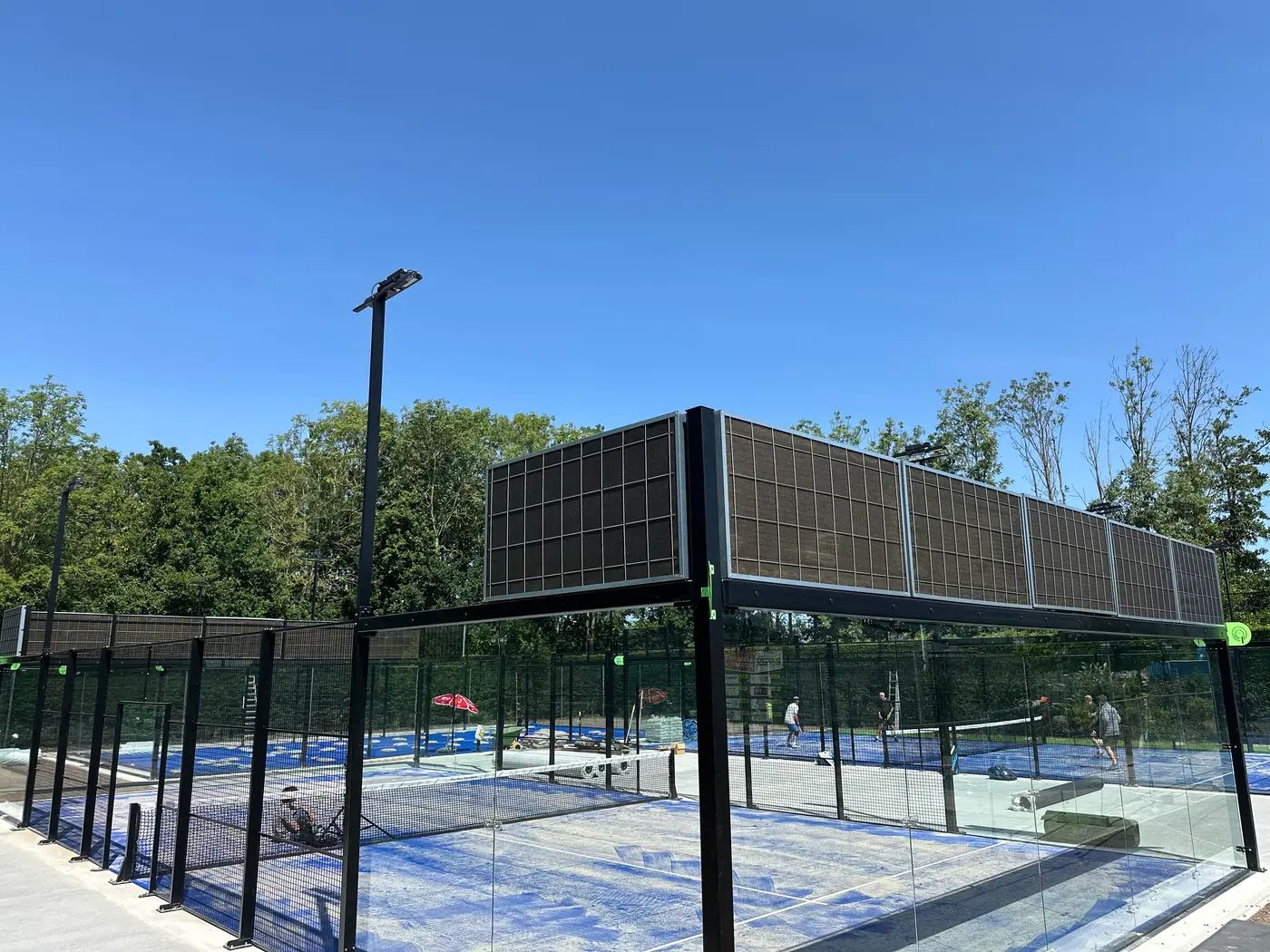
Panels are fitted to the outside of the mesh of the cage structure. They absorb the sound at the source instead of reflecting it back. The court stays visually open and the dynamics of play do not change. Panels can be used on one side, on several sides, or only in the lower or upper metres of the cage. They can also be added to existing courts afterwards. - Noise barriers
A noise barrier is a freestanding structure placed next to or around the padel court. A noise barrier works at a greater distance and screens the sound off from homes. Barriers can be up to 6 to 8 metres high and tens of metres long. They can also be built with coconut fibre or green screening on which climbing plants can grow. That gives a more natural appearance and increases the chance of acceptance by the municipality and local residents. - Combination of panels and barrier
In practice, a combination of sound-absorbing panels and a noise barrier is often the most effective approach. Thanks to the panels, the noise barrier can sometimes be lower, which saves costs and makes obtaining a permit easier.
Read more about sound solutions
How do sound-absorbing panels work on a padel court?
Sound-absorbing panels are fixed to the outside of the mesh of the cage structure. They absorb the sound that would otherwise be reflected by glass and steel. Independently tested in an acoustic laboratory, they achieve sound absorption class A, with an absorption value of 0.80 and a sound insulation index of 19 dB.
In practice this results in a clearly audible noise reduction at distances of approximately 40 to 100 metres. The panels can be used flexibly: on one side of the court facing homes, on several sides, or in the lower and/or upper metres of the cage. They can also be combined with glass walls or other noise measures.
An important point to bear in mind: as soon as panels reduce the wind permeability of the cage structure, the wind load on the structure increases. The steel structure must then be structurally reinforced, in accordance with the wind zone. This means heavier posts, additional columns or modified connections. This is not an optional step, but a safety requirement.
When are sound-absorbing panels mandatory at a padel venue?
Sound-absorbing panels are not automatically mandatory, but in practice they often become necessary when a padel court is close to homes and an acoustic study shows that the noise standards are exceeded. The municipality decides this on the basis of the acoustic report submitted with the permit application.
For outdoor courts, an acoustic study is almost always mandatory if the site is close to residential buildings. If that study shows that the noise standards are exceeded, the municipality attaches conditions to the permit. Sound-absorbing panels can then be a measure that the municipality requires, or that you deploy proactively to meet the standards.
In some cases a noise barrier is sufficient, in others panels are needed, and sometimes a combination of the two is the only workable solution. Which measure is needed always depends on the specific site and the outcome of the acoustic study.
What is the difference between an indoor and an outdoor court in terms of noise?
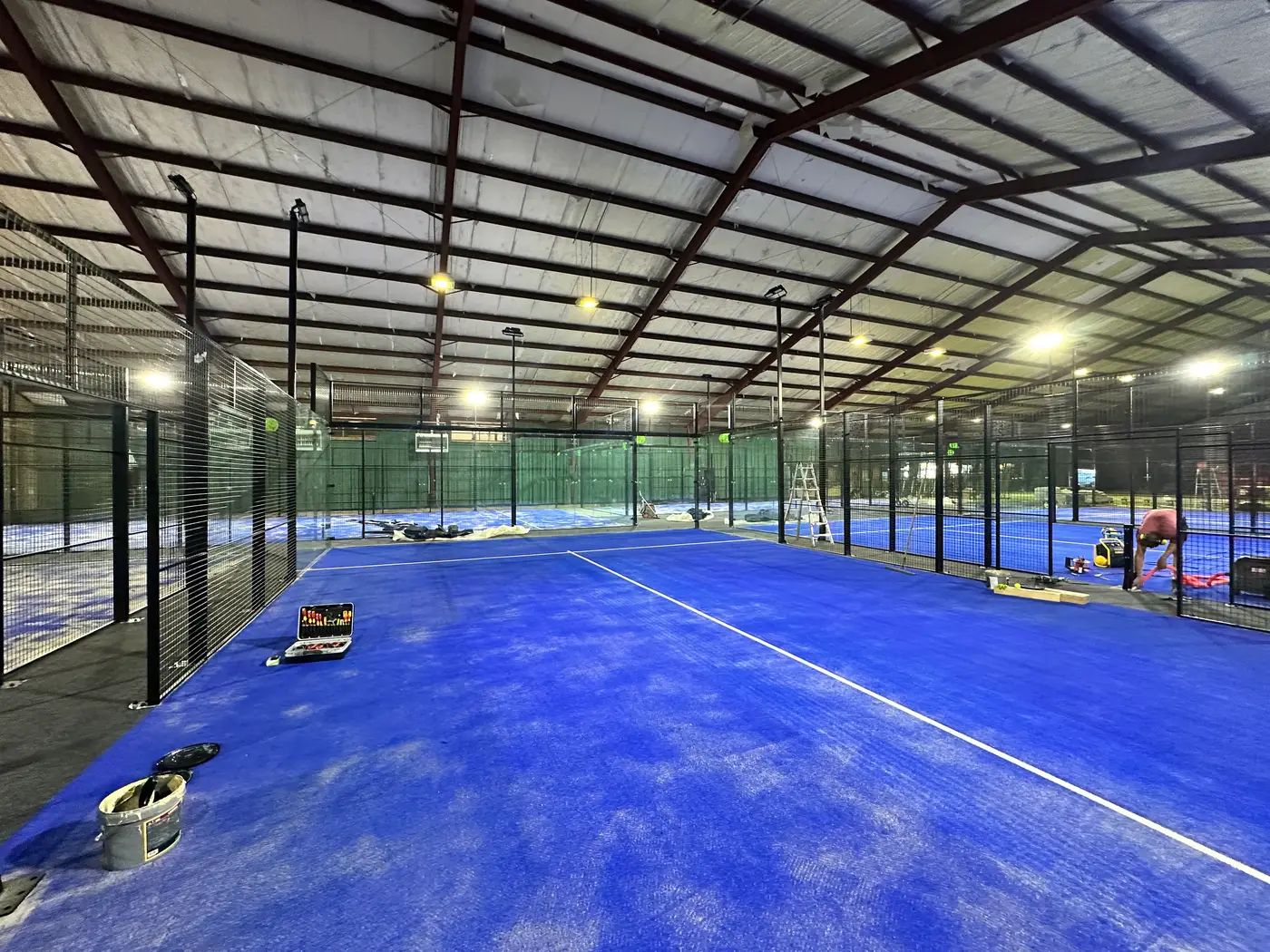
An indoor court produces as much noise as an outdoor court, but the noise nuisance for the surroundings is generally much smaller at indoor venues. The hall acts as a sound barrier. With outdoor courts the sound spreads unhindered into the surroundings, which directly leads to more complaints and stricter requirements from the municipality.
For indoor padel courts in existing halls, a separate environmental permit is not always needed, depending on the structural modifications and fire safety requirements. An acoustic study is less often mandatory for indoor venues, although this can differ per municipality. For outdoor courts the situation is different: an environmental permit is almost always required and an acoustic study is a standard part of the permit application.
Panels can also be useful for the sound experience inside the hall itself. They reduce reverberation and improve playing comfort, which players and visitors find pleasant. This is not a legal requirement, but a quality consideration that is increasingly taken into account in the design of a padel hall.
Which supplier can structurally integrate sound-absorbing panels?
Not every padel builder can structurally integrate sound-absorbing panels. Fitting panels changes the wind exposure of the cage structure, which means a new structural calculation is needed for each site. Suppliers who import their courts from Spain generally cannot offer this for small numbers of courts, because the importer does not modify the structure.
At I-Padel we produce the steel structure entirely in-house. That means we can adapt the structure to the specific requirements of your site, including the reinforcement needed when fitting sound-absorbing panels. We structurally calculate every court per site, so we can integrate panels on both new and existing courts.
We also guide the entire permit process, including coordinating the acoustic study and supplying the structural calculations. All the materials we use are certified and approved by Kiwa ISA Sport, the recognised quality mark for sports infrastructure in the Netherlands. That gives you the certainty that the sound solution not only works technically, but also meets the requirements for official use and permitting.
How much does a sound solution for a padel court cost?
The cost of a sound solution for a padel court always depends on the situation. Sound-absorbing panels are calculated and produced per site, depending on the number of sides, the height of the cage and the structural reinforcement required. A noise barrier also requires its own structural calculation, cone penetration test data and an environmental permit.
For sound-absorbing panels, the price is determined by the number of sides to be treated and the scope of the structural modifications to the cage structure. The more sides and the greater the wind load at the site, the heavier the structure and the higher the costs. An exact price without a site check is therefore not meaningful.
For noise barriers, the height, length and finish play a major role. A barrier with green screening and climbing plants requires more preparation than a standard finish, but does increase the chance of a smooth permit process and less resistance from local residents. In some cases a lower barrier will suffice thanks to the combination with panels, which reduces the total costs.
If you are planning a padel venue close to homes, it pays to include the sound solution early in the process. That way you avoid having to invest in modifications afterwards. At I-Padel we help you build padel courts including all noise measures, from the structural calculation to completion. Get in touch for an initial exploration and we will look together at what your site needs.
Read more about building a padel court
Frequently asked questions
How early in the planning process should I take noise measures into account?
It is strongly advisable to include noise measures in the very first design phase, even before the permit application. If you align the location of the courts, their orientation and the distance to homes with the acoustic requirements at an early stage, you can often make do with lighter and cheaper measures. Modifying afterwards is always more expensive and can delay the permit process.
What are the most common mistakes when tackling noise nuisance at a padel venue?
A common mistake is postponing the acoustic study until just before the permit application, leaving little room to still adjust the location or the design. Another frequent slip is choosing sound-absorbing panels without calculating the structural consequences, which can later lead to safety problems or extra costs. Finally, many applicants underestimate the importance of early communication with local residents, whereas support in the neighbourhood can considerably speed up the permit process.
Can I have sound-absorbing panels fitted to an existing padel court afterwards?
Yes, that is possible, but it does require a new structural calculation of the existing cage structure. Because panels reduce wind permeability, the wind load on the steel structure increases. Depending on the current structure, this can mean that reinforcements or additional columns are needed before the panels can be fitted safely. It is therefore wise to have this assessed by a supplier who produces and calculates the structure themselves.
Which noise standards apply in the Netherlands for an outdoor padel court close to homes?
In the Netherlands, noise standards for sports venues are generally determined on the basis of the Activities Decree (Activiteitenbesluit) or the environmental permit, with the municipality setting the limit values based on the surroundings and the zoning plan. Typical limit values are around 45–50 dB(A) 24-hour value at the façade of nearby homes, but this differs per municipality and situation. The acoustic study submitted with the permit application tests the expected noise levels against these standards and determines which measures are needed.
Does a noise barrier affect the permit procedure, and how long does that process take?
Yes, a noise barrier is a structure in its own right and in most cases requires a separate environmental permit, including structural calculations and cone penetration test data. The lead time of a permit procedure varies, but averages 8 to 26 weeks, depending on the municipality and the complexity of the project. A noise barrier with a green appearance, such as a version with coconut fibre and climbing plants, can increase the chance of faster approval because it fits better with the aesthetic requirements and meets less resistance from local residents.
What can I do if local residents object to my padel venue because of noise?
It is wise to involve local residents proactively before the official permit application, for example through an information meeting. Show which noise measures you are taking and back this up with the results of the acoustic study. In many cases resistance decreases as soon as residents see that their interests are being taken seriously and that the noise standards are demonstrably being met. Should a formal objection be filed anyway, a well-documented acoustic report and a constructive solution are your strongest argument.
Are there subsidies or financing options available for noise measures at a padel venue?
In some cases, municipal or provincial subsidies are available for sustainable or green noise solutions, such as noise barriers with planting. In addition, some sports funds, such as the Nationaal Sportakkoord or the Fonds voor Cultuurparticipatie, offer financing options for sports infrastructure. It is advisable to ask your municipality and organisations such as NOC*NSF or the KNLTB about current schemes, because the offering can differ per region and per year.


