


Building a padel court · 9 April 2026 · 12 min read
What does an indoor padel court cost, including installation?
Build an indoor padel court from €23,000 turnkey. Discover all cost factors, foundation options and what is really included.
In this article
- What does an indoor padel court cost on average, including installation?
- What exactly is included in the price of a padel court?
- Why do padel court prices vary so much?
- What does an outdoor court cost versus an indoor padel court?
- Which foundation options are there and what do they cost?
- Drainage concrete
- Supersub
- ZOAB asphalt
- Which factors determine the final price of a padel court?
- When is a turnkey package the best choice?
- Frequently asked questions
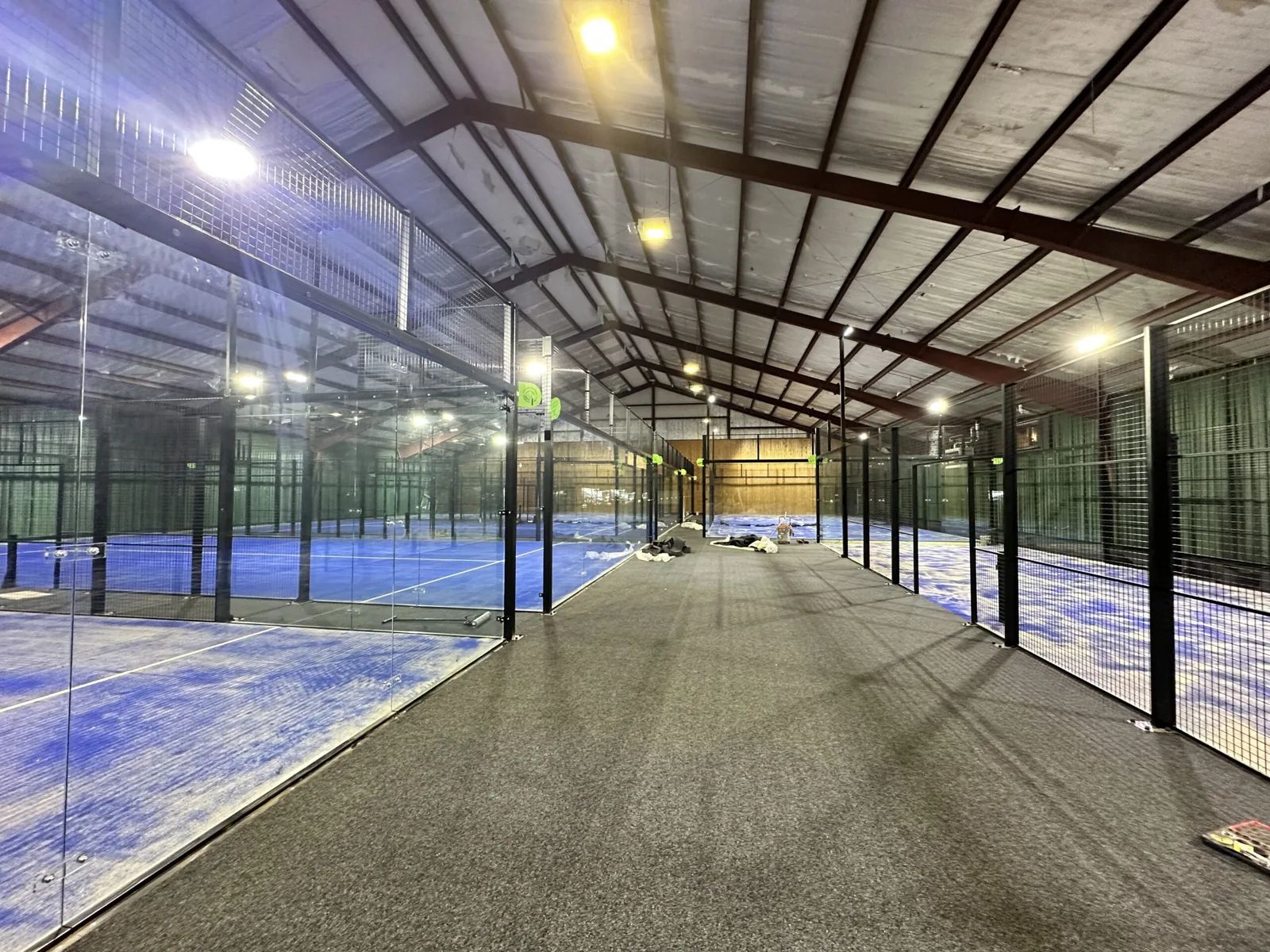
Building an indoor padel court costs from around €23,000 per court, turnkey and including steel structure, glass, artificial turf, LED lighting and installation. That is the guide price for a standard indoor court. The final costs depend on the type of court, the number of courts, the location and the options you want. In this article we set out all the relevant cost factors, so you know what to take into account.
What does an indoor padel court cost on average, including installation?
An indoor padel court costs on average from around €23,000 per court, turnkey. That means: including the steel structure, the glass around the court, padel-specific artificial turf, LED lighting and the complete installation. This is a guide price for a standard panoramic indoor court at a location with normal accessibility.
The Dutch market average for a comparable court is between €30,000 and €35,000 per court, although that amount sometimes covers only the superstructure, with the installation charged separately. It therefore pays to compare carefully what exactly is included in the price. A low price that excludes installation, artificial turf or lighting can end up more expensive than a higher all-in price.
For larger projects with multiple courts, economies of scale also arise. The production and assembly costs per court fall the more courts you have built at the same time. Anyone who has six courts installed in one hall pays less per court than someone who has a single court built on its own.
What does an indoor padel court cost?
What exactly is included in the price of a padel court?
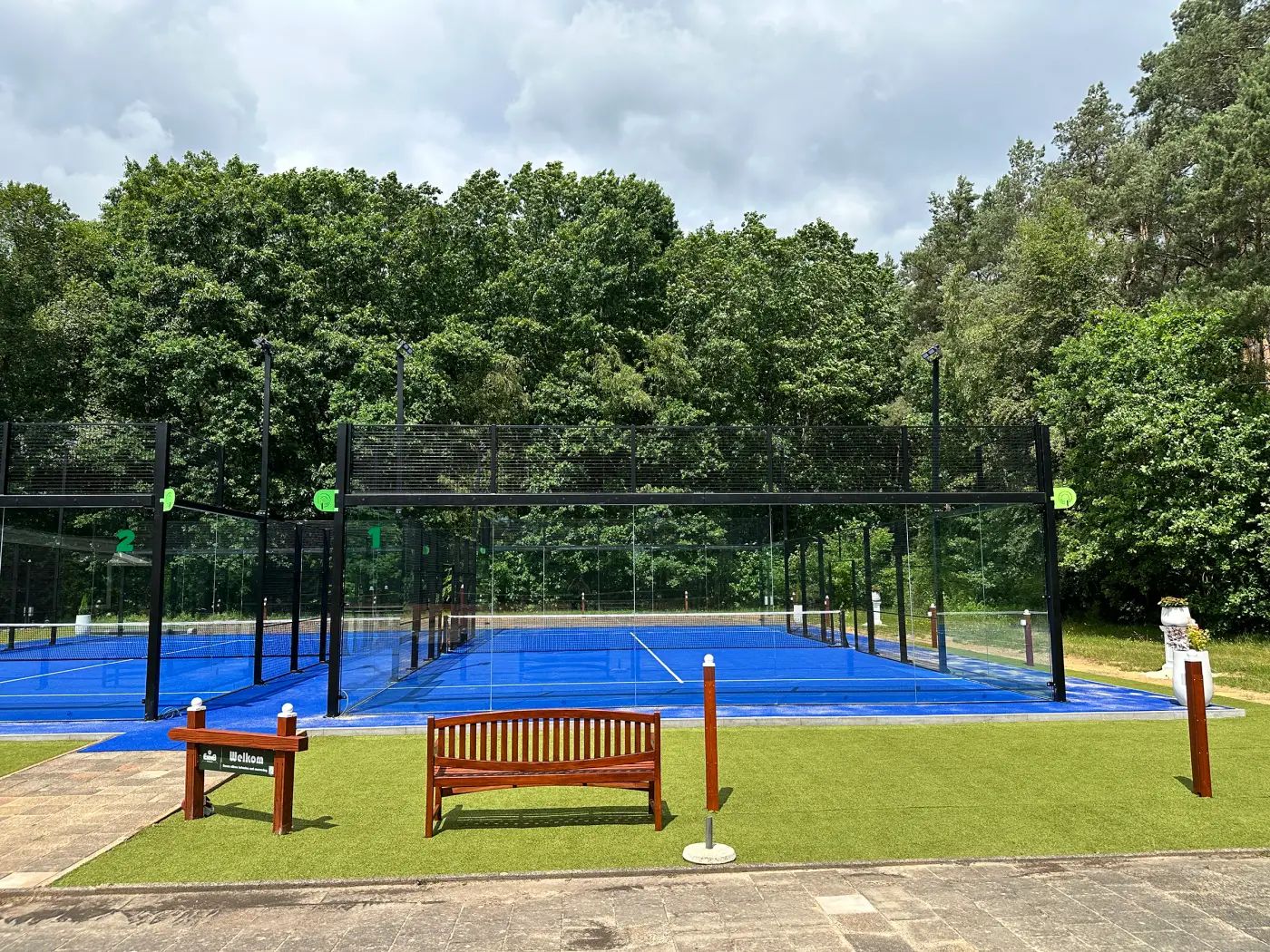
A turnkey price for an indoor padel court includes the following components: the steel structure, the glass around the court, padel-specific artificial turf including sand bed and line markings, LED lighting and the complete installation. On-site advice and structural calculations are also part of it.
Items that are not included in the standard price are things such as sound-absorbing panels, extra run-off zones with artificial turf or specific requirements from the municipality. These are always priced separately based on the situation. It is wise to always ask what exactly is and isn't covered when you receive a quote, so you don't get any surprises.
For outdoor courts, the foundation is usually not included in the standard price. There is a good reason for that: foundation costs are highly location-dependent and always require a separate calculation. You can read more about this later in this article.
Why do padel court prices vary so much?
The price differences between suppliers stem mainly from the way the steel structure is purchased or produced. Most Dutch padel builders import their courts from abroad. That brings transport costs, lead times and an import margin. All these links in the chain raise the final price for the customer.
In addition, what is included in the price differs greatly per supplier. Some companies quote a price excluding artificial turf, excluding lighting or excluding installation. That makes direct comparison difficult. So always ask for an all-in quote with a clear specification of what is and isn't included.
Quality differences also play a role. Courts built with lighter steel profiles or cheaper artificial turf are cheaper on paper, but need maintenance sooner and have a shorter lifespan. A padel court is a long-term investment, where the total costs over ten to fifteen years say more than the purchase price alone.
What does an outdoor court cost versus an indoor padel court?
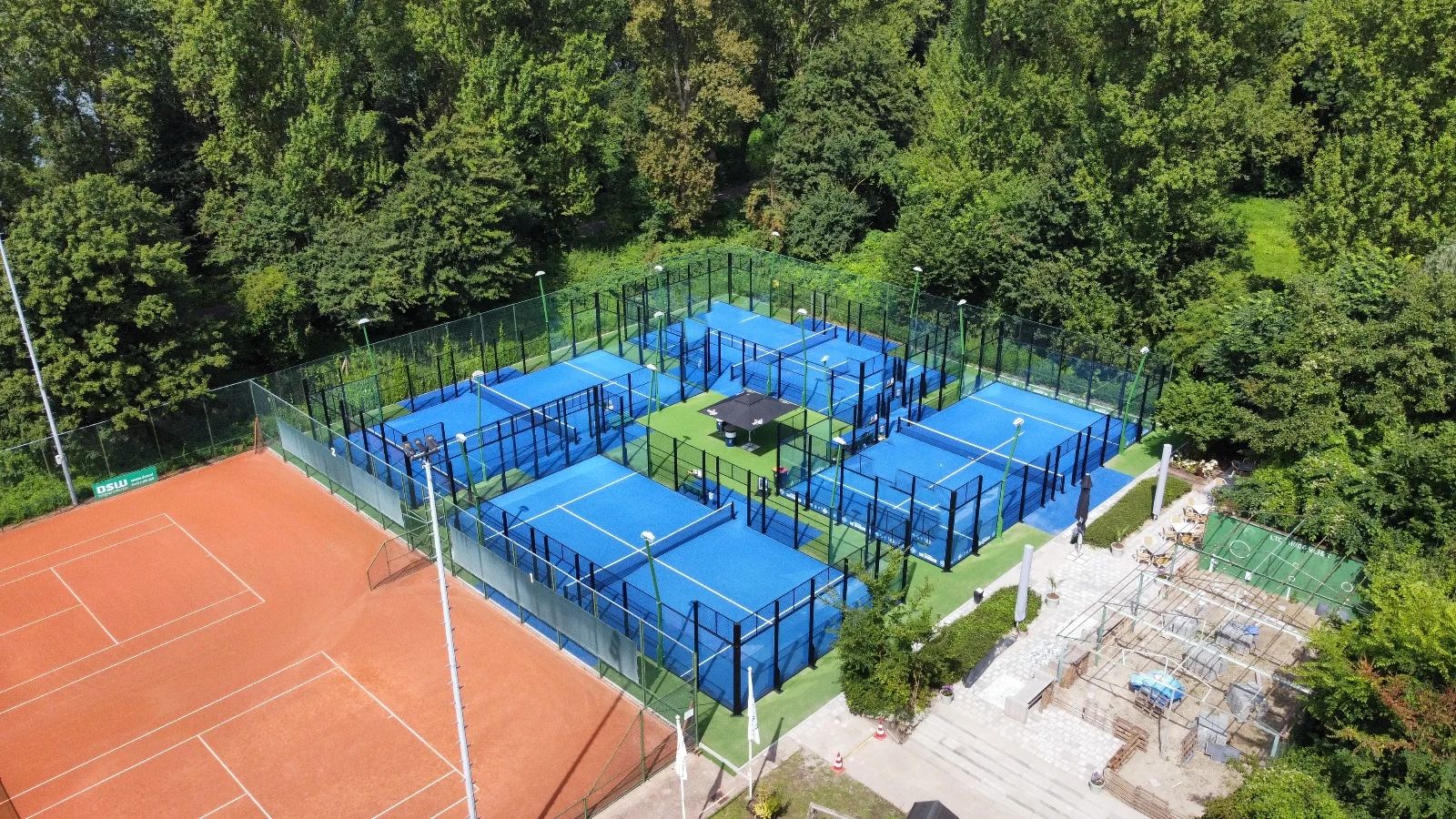
An outdoor padel court costs more than an indoor court. The steel structure of an outdoor court has to be heavier because of wind load and weather influences. As a guide price: the superstructure of an outdoor court starts from around €30,000 and a complete project including foundation from around €50,000.
The foundation is the largest additional cost factor for an outdoor court. Depending on the soil conditions, the accessibility of the location and the chosen foundation solution, foundation costs average between €20,000 and €40,000. That is a wide range, because every location is different. A location with stable soil and good accessibility is simply cheaper to build a foundation on than a location with poor soil or limited access routes.
Outdoor courts also involve permit costs and, if applicable, an acoustic study. Padel produces more noise than tennis, and municipalities increasingly set requirements on the noise levels in the surrounding area. These are costs you generally don't have with an indoor court in an existing hall.
What does an indoor padel court cost?
What does an outdoor padel court cost?
Which foundation options are there and what do they cost?
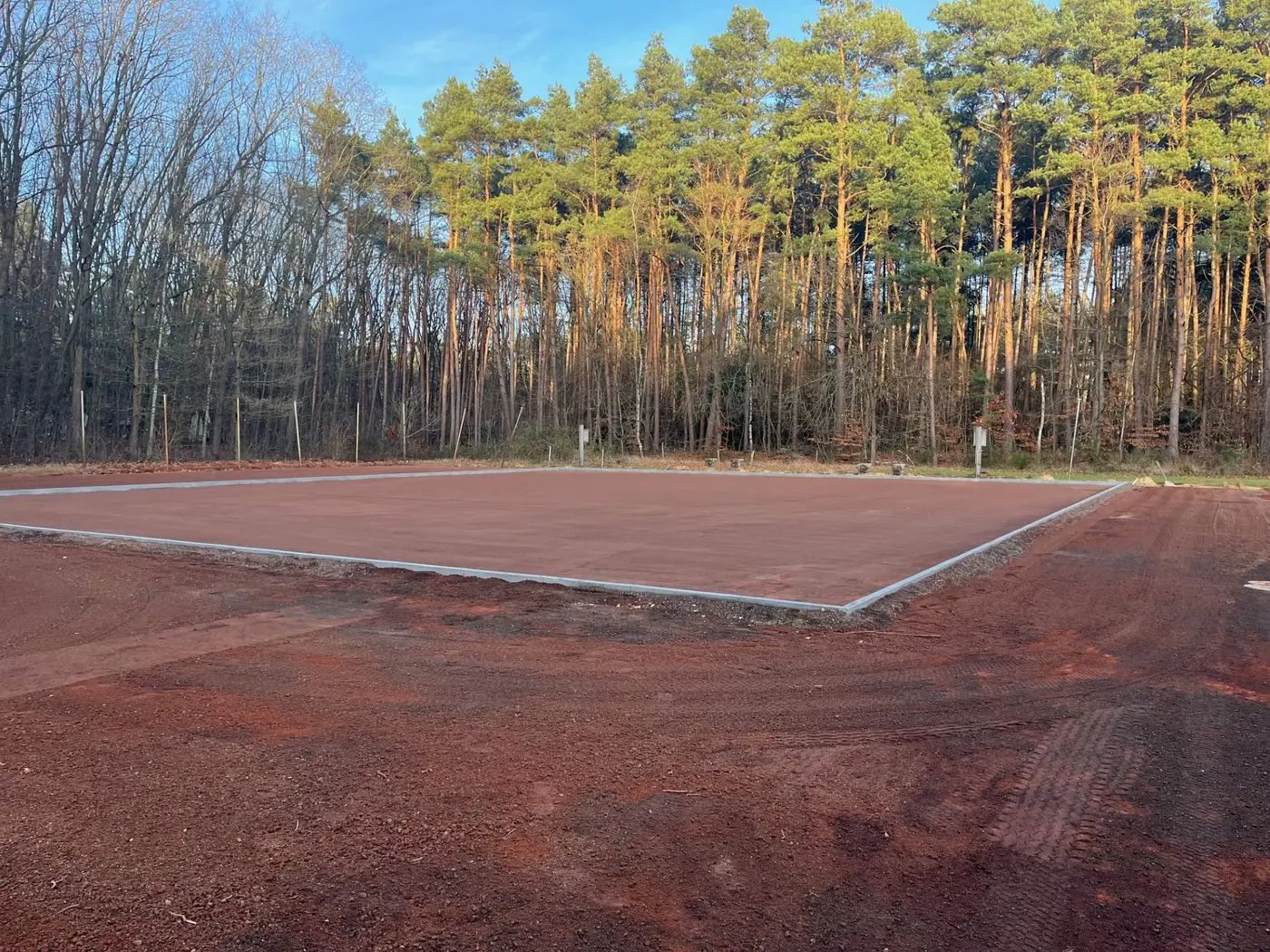
Three commonly used foundation solutions are available for padel courts: drainage concrete, Supersub and ZOAB asphalt. The choice depends on the soil conditions, the intended use and the budget. Costs differ per solution and per location, but average between €20,000 and €40,000 for an outdoor court.
Drainage concrete
Drainage concrete is a water-permeable concrete floor in which rainwater drains straight through the foundation into the ground. It is a widely used solution for outdoor courts, with an average lifespan of 25 to 40 years. Drainage concrete has a high load-bearing capacity and is highly resistant to frost and intensive use. It is often combined with a ring foundation with steel reinforcement to properly absorb the forces from the steel structure.
Supersub
Supersub is a foundation solution based on foam concrete. It is lightweight, self-levelling and provides an extremely flat base. That is important for a consistent ball bounce. Supersub is shock-absorbing, water-permeable and in many cases can be poured within a single day. The thickness is usually 10 centimetres when building on existing tennis courts and 15 centimetres for new builds, depending on the soil conditions.
ZOAB asphalt
ZOAB asphalt (open asphalt concrete) is a porous type of asphalt that lets water through. It is less common for padel courts than drainage concrete or Supersub, but in certain situations it is a good option. Think of locations where the surrounding infrastructure is already made of asphalt or where specific requirements apply from the municipality.
Important to know: all foundation components must be approved by Kiwa ISA Sport in the Netherlands. This is a legal requirement for certification. Anyone who works with non-certified materials risks the court being unsuitable for official matches and possibly not meeting the permit conditions.
Which factors determine the final price of a padel court?
The final price of a padel court is determined by a combination of factors: the type of court, the number of courts, the foundation situation, the accessibility of the location and any extra options. No two projects are the same, which is why a quote is always tailor-made.
The main cost factors at a glance:
- Type of court:
a panoramic court has an open back and a different visual appearance than a standard pro court. Despite the lighter look, heavier materials are often used, which makes the price slightly higher. - Number of courts:
with multiple courts at once, economies of scale arise in production and installation. The price per court falls as the volume increases. - Accessibility:
a hall with limited access or a location with poor access routes requires more time and logistics, which raises the installation costs. - Artificial turf and LED lighting:
both are available in different quality levels and specifications. Higher quality means higher purchase costs, but also a longer lifespan and less maintenance. - Sound-absorbing panels:
when the location is close to homes, the municipality or local residents may set requirements on the noise level. Panels are structurally calculated per location and are a separate cost item. - Foundation:
for outdoor courts, this is the biggest variable. The soil conditions determine which solution is needed and what it costs.
A common mistake is to focus solely on the lowest price. In practice, this often leads to higher costs in the long run due to faster wear, limited warranty or a structure that has not been calculated for the specific conditions of the location.
What does an indoor padel court cost?
What does an outdoor padel court cost?
When is a turnkey package the best choice?
A turnkey package is the best choice when you want to hand over the entire process and be certain of a single responsible party. This applies to most commercial locations, sports halls and tennis clubs that have no construction crew or technical department of their own. You then have one point of contact for everything: from the structural calculation to delivery.
The alternative is a supply of materials without installation. That is relevant for parties that have their own installation capacity, such as contractors or foreign customers who want to source the materials from a Dutch producer and handle the assembly themselves. In that case you receive the steel structure, the glass, the artificial turf and the LED lighting, and you take care of the installation yourself.
For most clients in the Netherlands, the turnkey package offers the most certainty. There is no room for discussion about who is responsible if something goes wrong, and the total lead time of a project averages 10 to 12 weeks, from order to delivery. Assembling the cage structure itself takes two days and laying the artificial turf another one to two days.
Would you like to know what an indoor padel court concretely costs for your location? At I-Padel, we are happy to think along with you, without obligation. We look at your specific situation and draw up a quote that makes clear what is included. Get in touch via our contact page for an initial exploration without obligations.
More about building padel courts
Frequently asked questions
How long does an indoor padel court last on average and what are the maintenance costs?
A good-quality indoor padel court has a lifespan of 15 to 25 years for the steel structure and the glass. The artificial turf needs replacing sooner: on average after 8 to 12 years, depending on the intensity of use. Regular maintenance consists of brushing the artificial turf regularly, checking the glass connections and keeping the court clean. Plan a small annual maintenance budget for this to get the maximum lifespan out of the court.
Do I need a permit for an indoor padel court in an existing hall?
For an indoor padel court in an existing hall, an environmental permit is not required in many cases, but this depends heavily on the municipality and the specific situation. Think of factors such as the designated use of the building, possible noise nuisance for local residents and fire safety regulations. It is always wise to contact the municipality beforehand to check which rules apply. An experienced padel builder can advise you on this based on previous projects in similar situations.
What is the difference between a panoramic court and a standard pro court, and when do I choose which?
A panoramic court has an open back without closed glass walls, which makes the court look more airy visually and more visible to spectators. This makes it a popular choice for commercial locations that want to increase the experience and visibility, such as sports centres or hospitality venues with padel.
A standard pro court is fully enclosed with glass and offers more consistency in the ball bounce, which is preferred by competition-oriented clubs. Keep in mind that, despite its lighter look, a panoramic court often costs slightly more because of the heavier materials needed for the structure
How many square metres of hall space do I need for one or more indoor padel courts?
A standard padel court has a playing field of 20 by 10 metres, but including run-off zones and the cage structure you need to allow for at least 22 by 11 metres of floor area per court. In addition, a clear height of at least 6 to 7 metres is needed for a full indoor court.
With multiple courts side by side you can use the space more efficiently because shared side walls reduce the total footprint. Always have the space measured beforehand by a specialist to determine how many courts are feasible and whether the structure of the hall needs modification.
Can I convert an existing sports hall or tennis court into a padel facility, and what does that cost extra?
Yes, an existing sports hall or tennis hall is in many cases well suited as a location for indoor padel courts, provided the floor is flat enough and the clear height is sufficient. With an existing concrete floor, the foundation cost factor falls away, which makes the total investment considerably lower than in a new-build situation.
Any extra costs may arise from modifications to the floor, lighting or sound dampening. A site visit by a padel builder is the quickest way to determine what is technically needed and what that concretely costs
What common mistakes should I avoid when requesting quotes for a padel court?
The most common mistake is comparing quotes on the headline price without checking what exactly is included. A low price excluding artificial turf, lighting or installation can end up more expensive than a higher all-in quote.
So always ask for an itemised quote with a clear description of what is and isn't included. A second common mistake is not taking the total costs over the lifespan into account: a cheaper structure with lighter materials can cost more in the long run due to faster wear and higher maintenance costs.
Is it possible to build an indoor padel court in phases, for example one court first and expand later?
Phased realisation is possible, but it is wise to include the expansion in the initial planning. If you know you want to expand later, the first court can already be built in a way that makes expansion easier, for example by preparing the foundation or the electrical infrastructure in advance.
Expanding afterwards without preparation is more expensive, because you then incur mobilisation costs again and may have to modify existing components. Discuss this scenario beforehand with your padel builder so the design takes it into account.


