The payback period of a commercial padel facility is on average between three and seven years, depending on the number of courts, the occupancy rate, and the chosen operating model. With four to six courts, a good location and active court management, a profitable operation is very achievable. Below you will find a practical overview of all financial factors that determine how quickly an investment in a padel court pays off.
Padel is growing rapidly in the Netherlands and demand for playing time in many locations still exceeds supply. This makes it an interesting moment to take a serious look at the numbers. Whether you operate a sports hall, manage a tennis club or want to utilize vacant real estate: the business case differs per situation, but the building blocks are the same everywhere.
What is the average payback period of a padel court?
The average payback period of a commercial padel court is between three and seven years. At a well-occupied location with multiple courts and professional court management, three to four years is realistic. Locations with higher investment costs, lower occupancy or higher operating expenses tend to be at the upper end of that range.
This payback period is not a fixed given. It is determined by three variables: the initial investment, the annual income and the annual costs. If you change one of these three, the payback period shifts immediately. A location that invests €25,000 per court instead of €35,000 already has a significant advantage at equal revenue. Conversely, a location that struggles with occupancy may take years longer to break even.
What also influences the payback period is whether you look at the investment per court or at the total site. A location with six courts has higher total costs, but benefits from economies of scale in operations, marketing and personnel. Per court, larger facilities often have a more favorable business case.
How much does it cost to build a commercial padel facility?
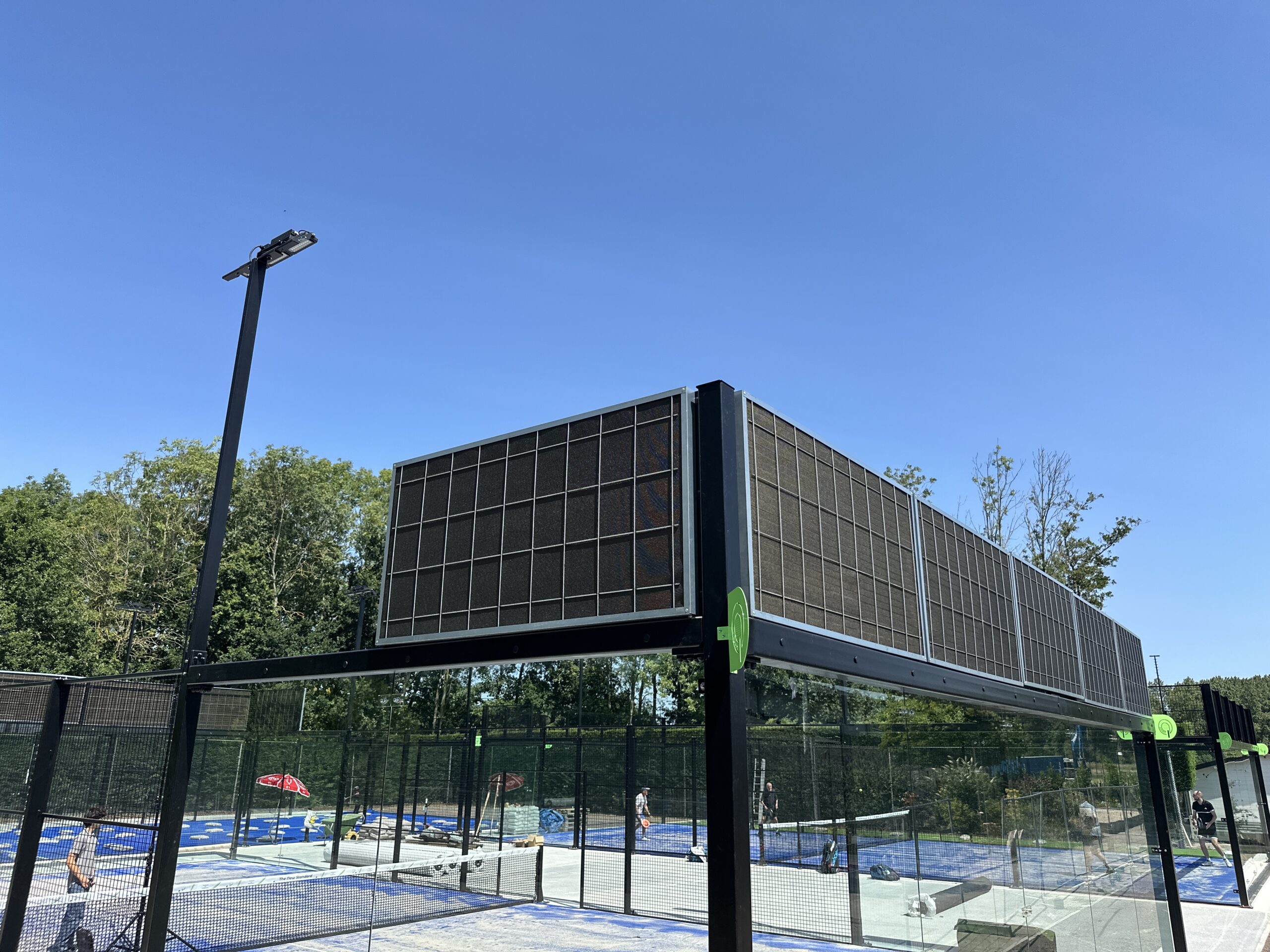
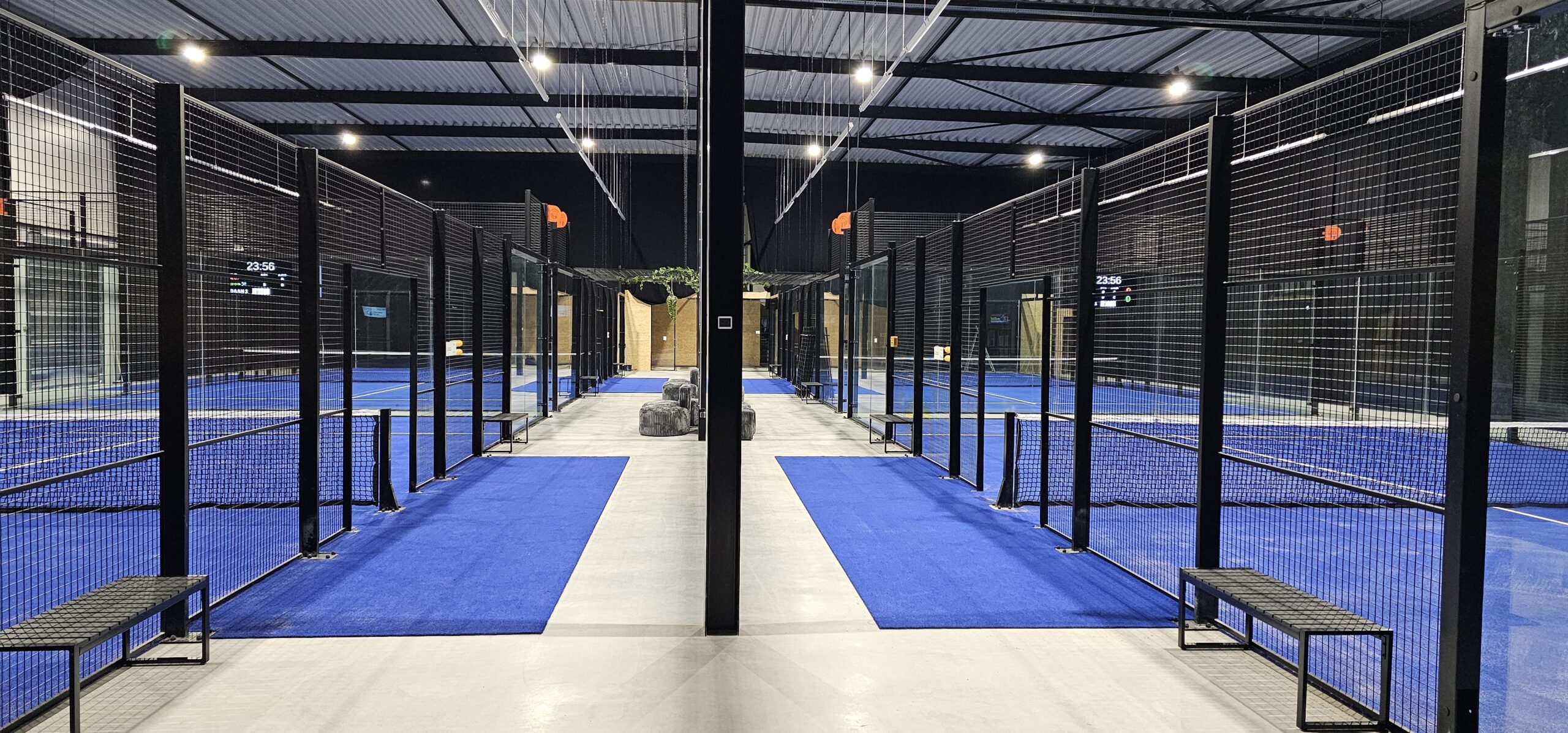
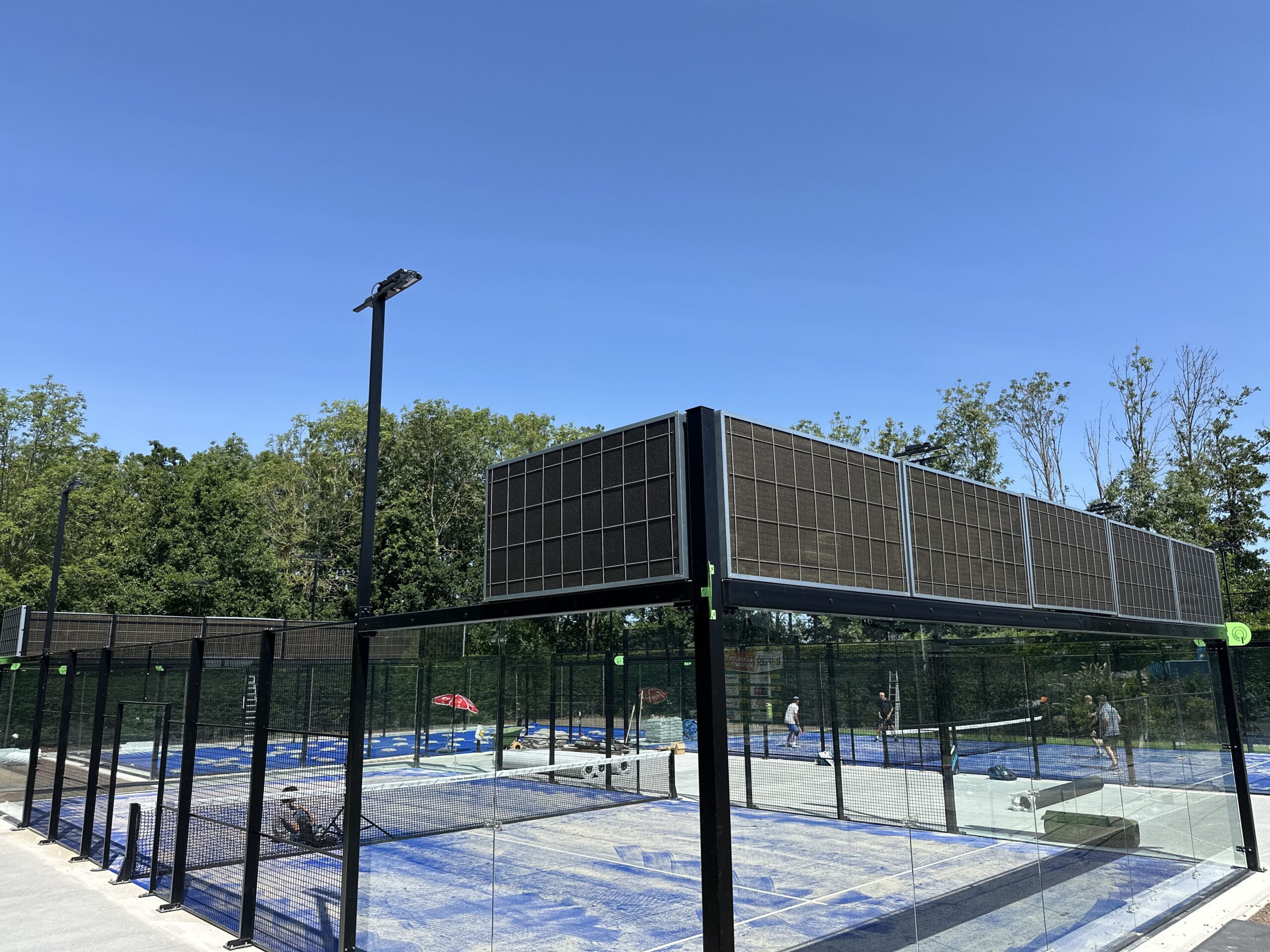
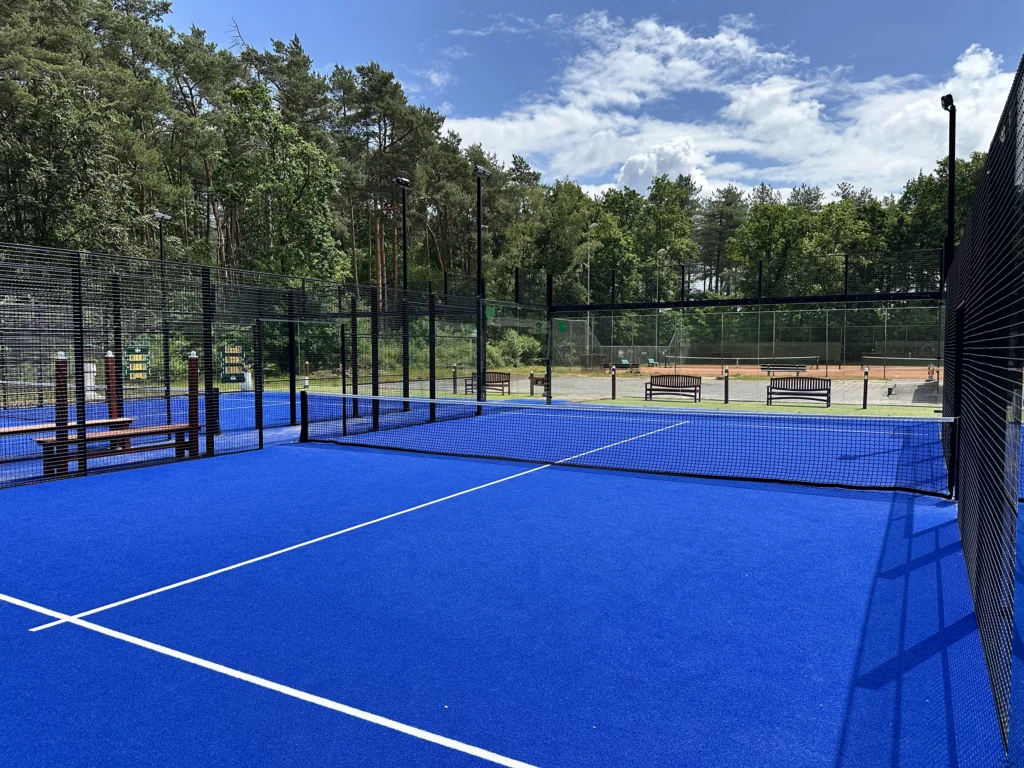
The construction costs of a commercial padel facility strongly depend on the type of court and the location. As an indication: an indoor padel court starts from approximately €23,000 per court (turnkey, including steel structure, glass, artificial turf, LED lighting and installation). An outdoor padel court starts from approximately €50,000 per court, including foundation, due to additional structural requirements and location-dependent foundation costs.
Indoor versus outdoor: what are the cost differences?
At an indoor location in an existing hall, costs are relatively predictable. The foundation is simpler, there is no weather impact and the permitting situation is less complex. At an outdoor location, wind load, soil conditions and water drainage play a major role. The foundation alone costs on average between €20,000 and €40,000 per court, depending on soil conditions and site accessibility.
What additional costs should you take into account?
In addition to the courts themselves, there are costs you should not overlook when preparing your business case:
- Permitting costs and studies (noise, light, construction): varies per municipality
- Fit-out of reception, changing rooms and sanitary facilities
- Booking software and payment systems
- Marketing and launch
- Possible sound-absorbing panels for locations near residential areas
- Connection to utilities (water, electricity)
All these items count toward the total investment and therefore the payback period. A realistic budget includes a buffer of 10 to 15 percent on top of construction costs for unforeseen expenses.
What are the average annual revenues of a padel court?
A commercial padel court can generate between €15,000 and €30,000 per year in direct court rental income, depending on hourly rates, occupancy rate and number of playable hours per day. At an hourly rate of €20 to €30 per court and an average occupancy of 60 percent over available hours, this quickly adds up to a substantial annual income per court.
The calculation is straightforward. For example: a court is available from 08:00 to 23:00, which is 15 hours per day. At an average occupancy of 60 percent and a rate of €25 per hour, this yields approximately €82,000 per court per year. In practice, occupancy is lower in the morning and daytime than in the evening hours, so a weighted average is more realistic. For an initial estimate, use an effective rate of €12 to €18 per available hour per court.
In addition to court rental, there are additional revenue streams that strengthen the business case:
- Lessons and clinics (higher margin than court rental)
- Memberships or subscriptions
- Rental of rackets and balls
- Food & beverage or vending machines
- Tournaments and competitions
- Corporate arrangements and team events
Locations that combine several of these streams significantly improve their returns without proportionally increasing fixed costs.
What operating models exist for a padel facility?
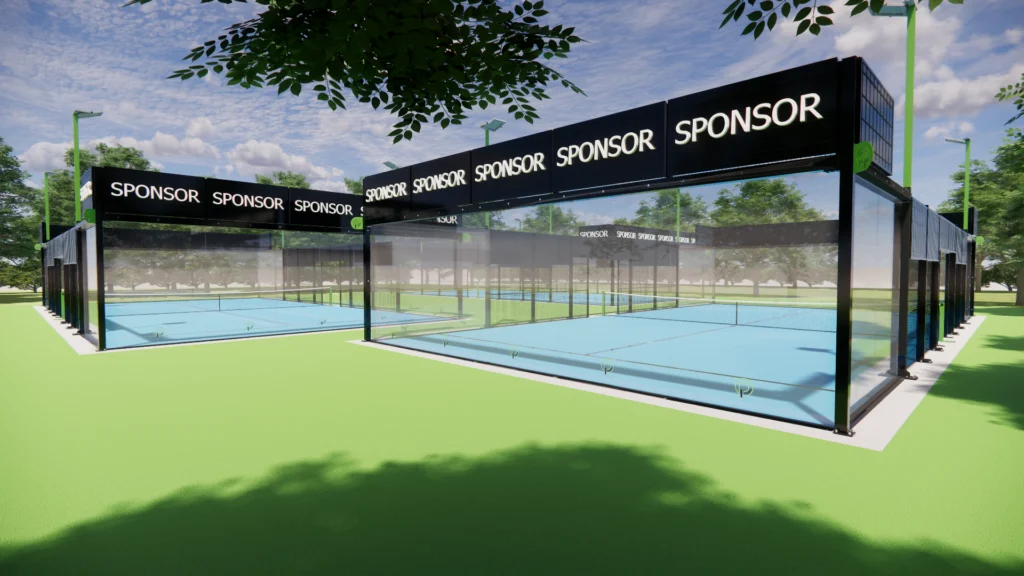
There are three commonly used operating models for a commercial padel facility: independent operation, leasing to an operator, and a partnership model (such as a joint venture or rental structure with a sports organization). Each model has a different risk profile and a different impact on the payback period.
Independent operation
You fully manage the facility yourself: court bookings, marketing, staffing and customer relations. This model yields the highest margin but also requires the most involvement and operational knowledge. The payback period is shortest if occupancy is strong, but the risk lies entirely with you.
Leasing to an operator
You lease the facility or courts to an external party who handles operations. You receive a fixed rental income and the operator bears the operational risk. This model is attractive for real estate parties or hall owners without affinity for sports operations. The margin is lower, but the security is higher.
Partnership model with a sports club
Tennis clubs sometimes choose a structure in which the club builds and operates the courts but rents out commercial playing time to non-members. This combines a social objective with commercial revenue. The business case is more complex, but the model can work well when the club already has an existing membership base and location.
How many padel courts do you need for a profitable facility?
For a profitable commercial padel facility, a minimum of four courts is recommended. With four courts, fixed operating costs (staff, rent, energy, marketing) can be spread over sufficient revenue. Facilities with two courts are financially more vulnerable and depend more heavily on high occupancy to break even.
The reason is simple: a large part of operating costs is fixed. Staff, software licenses, insurance and marketing budgets hardly change whether you have two or six courts. With more courts, these costs are distributed over a larger revenue base, increasing margin per court.
Six courts is often seen in the market as the ideal starting point for an independent padel hall. This provides enough scale for a recognizable offering (competitions, clinics, tournaments), justifies a reception staff member and makes it easier to maintain consistent occupancy through time-slot distribution.
That said, two or three courts can work well as an extension of an existing sports facility. If fixed costs are already covered by another activity, even two courts can be operated profitably.
What are the largest operational cost items?
The largest operating costs of a padel facility are personnel costs, energy costs (especially LED lighting), rent or depreciation of the facility, and maintenance of the courts. Together, these form the majority of annual fixed costs.
Below is an overview of the main cost items:
-
Personnel costs:
at a facility with six or more courts, at least one full-time staff member is needed for reception and management. This is often the largest variable cost item. -
Energy costs:
LED lighting consumes significantly less energy than traditional lighting, but still adds up in a large hall with multiple courts. -
Rent or capital costs:
depending on whether you rent or own the facility, this is a fixed monthly cost directly impacting margin. -
Artificial turf maintenance:
artificial turf has a lifespan of about eight to twelve years with intensive use. Reserve an annual amount for replacement and maintenance. -
Booking software and payment systems:
subscription costs are recurring. -
Insurance:
liability and property insurance are mandatory costs. -
Marketing:
especially during the startup phase, a marketing budget is required to fill the facility.
A realistic operating budget also includes periodic replacement of smaller components such as glass, nets and lighting fixtures. Planning for this in advance prevents unpleasant surprises.
How can you shorten the payback period of a padel court?
You can shorten the payback period by reducing initial investment, increasing revenue or lowering operating costs. In practice, a combination of all three is most effective. Below are the most impactful measures.
Reduce initial investment
The purchase price of the courts themselves is the largest one-time cost. By choosing a manufacturer that produces its own steel structures instead of importing them, you can directly save on purchase costs without compromising quality. Economies of scale also play a role: with four or more courts, costs per court decrease due to more efficient production and installation.
Also consider whether an existing tennis court can be converted. In that case, part of the foundation can be reused, significantly reducing foundation costs. For a full overview of all options when building padel courts, it is advisable to request a tailored quote early in the process.
Increase occupancy rate
Higher occupancy is the fastest way to shorten the payback period. Practical measures include: starting early with a waiting list or pre-registration, offering subscription models that guarantee fixed income, and actively targeting corporate bookings for off-peak hours. Off-peak hours (weekday mornings and afternoons) are often underutilized but can be filled with the right target audience.
Add additional revenue streams
Lessons and clinics deliver higher margins than court rental alone. An active lesson program also attracts new players who later make independent bookings. Combine this with a simple food & beverage offering or vending machine, and average spend per visitor increases without major additional investment.
Ensure a solid foundation and certified materials
Cheap construction may seem attractive in the short term but often leads to higher maintenance costs later. All foundation components in the Netherlands must be certified by Kiwa ISA Sport. Working with certified materials not only protects you against technical issues but also against legal risks during inspection and use. A good foundation has a lifespan of 25 to 40 years, significantly reducing total lifecycle costs.
At I-Padel we are happy to think along with you about the financial feasibility of your location. Whether you want to build a hall with four indoor courts or develop an outdoor complex: we calculate the business case together and look at which choices provide the best balance between investment and return. Contact us for an initial exploration and discover what is possible in your situation.
FAQ
Do I need a permit to build a commercial padel facility?
Yes, in most cases an environmental permit is required, especially for new construction or an outdoor facility. Depending on the municipality and the location, additional studies may also be required, such as noise studies, light nuisance studies or structural calculations. It is advisable to contact the municipality early in the process to determine which permits and lead times you can expect, so this does not delay your planning.
What is a realistic occupancy rate to use in my business case?
For an initial conservative business case, it is recommended to use an average occupancy rate of 45 to 55 percent across all available playing hours. In the evening hours (17:00–23:00), occupancy of 80 to 90 percent is achievable, but weekday mornings and afternoons are often significantly lower. A weighted average across all time slots provides a more realistic picture than peak demand and prevents an overly optimistic business case.
Which booking software is suitable for a commercial padel facility?
Popular options for court scheduling and reservation management include Playtomic, CourtReserve and Sportbooker. These platforms combine online reservations, payment processing and occupancy insights in one system. Choose a platform that integrates with your existing systems and allows players to easily book via an app, as ease of use directly increases occupancy rates.
Can I convert an existing tennis court into a padel court and what does it yield?
Yes, converting an existing tennis court into padel courts is often possible and can significantly reduce the initial investment. Typically, two padel courts fit on one standard tennis court, and if the existing foundation meets technical requirements, it does not need to be fully replaced. This can reduce foundation costs by tens of thousands of euros per court, directly shortening the payback period. Always have the existing foundation assessed by a certified party before making final decisions.
What are common mistakes when preparing a business case for a padel facility?
The most common mistakes are: assuming too high an occupancy rate in the first year, underestimating additional costs such as permits, marketing and fit-out, and not accounting for a ramp-up period of three to six months before the facility reaches full operation. In addition, entrepreneurs often forget to include a reserve for maintenance and replacement of artificial turf and other wear-and-tear components. A buffer of 10 to 15 percent on top of the budget and a conservative occupancy forecast for the first year make your business case much more robust.
Is it wise to start with a small facility and expand later?
Expansion is certainly possible, but it is important to consider future expansion during initial construction. Think of sufficient space on the site, an electrical connection that can handle additional courts, and a foundation designed with expansion in mind. Starting with two or three courts as an addition to an existing sports facility can be financially viable, but for a standalone padel hall the recommendation is to start directly with at least four courts to sufficiently spread fixed operating costs.
How long do padel court materials last and when should I account for replacement costs?
The lifespan varies per component: a properly installed foundation lasts 25 to 40 years, the steel structure and glass are durable for decades under normal use, and artificial turf has an average lifespan of eight to twelve years under intensive commercial use. Set aside an annual amount for replacing artificial turf and smaller components such as nets and lighting fixtures. By budgeting for this in advance, you avoid unexpected major expenses that can disrupt operating results.