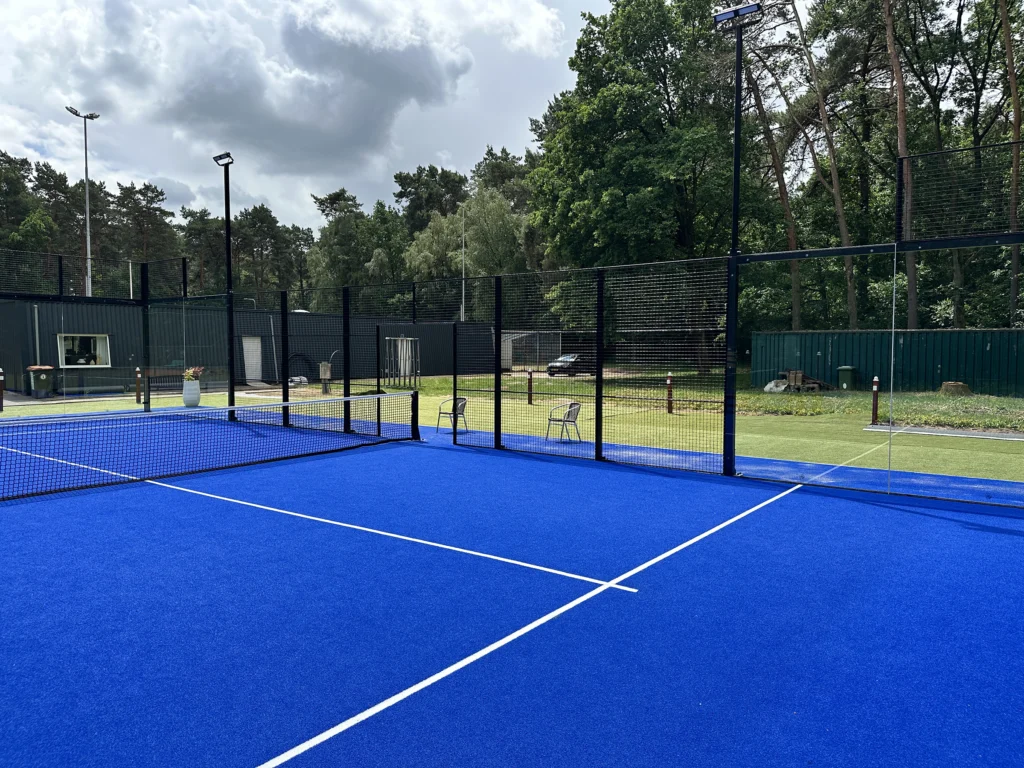
Installing a padel court may sound simple, but the permit process comes as a surprise to many entrepreneurs, associations and municipalities. The short version: for an outdoor padel court, you need an environmental permit in almost all cases. For an indoor padel court in an existing hall, it depends on the situation. In this article, we explain what applies to each situation, which documents you need and how to go through the process as smoothly as possible.
Do you always need a permit for a padel court?
No, not always, but in most cases you do. In the Netherlands, a padel court is considered a structure and therefore falls under building regulations. Whether a permit is mandatory depends on the location, the type of court and the impact on the surroundings. For outdoor padel courts, an environmental permit is almost always mandatory. For indoor installation in an existing hall, without structural modifications, this is not necessarily the case.
The fact that padel courts so often require a permit is related to three factors: noise, lighting and spatial impact. Padel produces more noise than tennis. Hitting the ball against glass and steel, combined with the cage structure that acts as a sound box, results in an average sound power level of approximately 91 dB. That is about 10 dB more than tennis. Municipalities want to have control over this, and that starts with the permit application.
In short: do not assume that you can start without a permit. Building without a permit when one is required can lead to work being stopped, fines, or even an obligation to remove the cage structure. It is always advisable to check this with the municipality in advance.
When is an environmental permit required for a padel court?
An environmental permit is required when the padel court is installed outdoors, when structural work is carried out, or when noise and lighting affect the surroundings. In practice, this applies to virtually all outdoor padel courts and to indoor projects where the existing hall is structurally modified.
Specifically, these are the situations in which you definitely need an environmental permit:
- The padel court is installed outdoors, regardless of the location.
- Structural work is carried out, such as installing a foundation.
- The padel court is located near or within residential development.
- LED lighting is installed that affects the surroundings.
- Noise barriers or other large structures are installed next to the court.
If in doubt: always contact the municipality before applying for anything or placing an order. Many municipalities offer a preliminary consultation in which you can have the plans assessed. This saves time and prevents surprises later in the process.
Are there situations in which you do not need a permit?
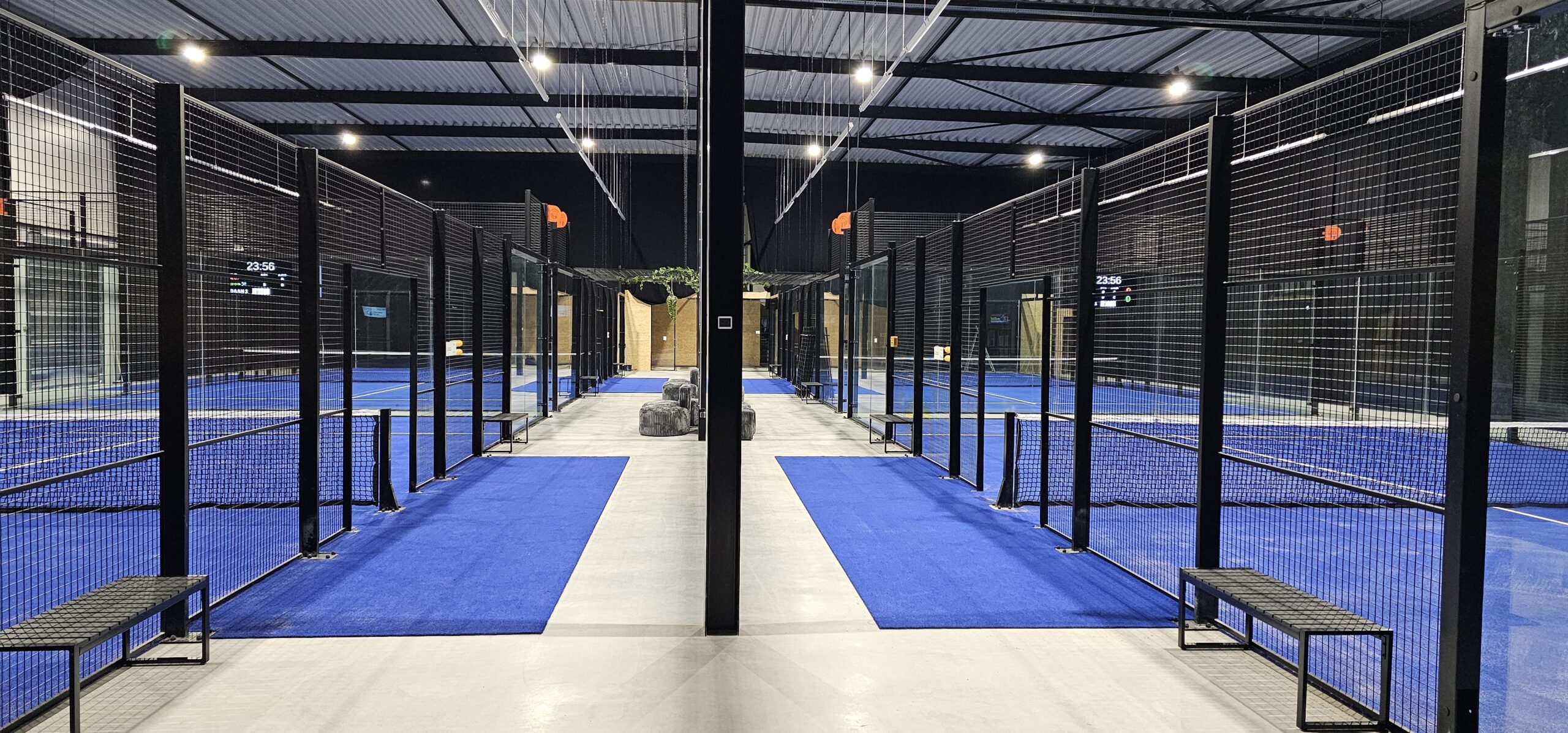
Yes, there are. An indoor padel court in an existing sports hall or existing building does not always require a separate building permit, provided that no structural modifications are made to the building. The court is then installed within the existing space, without changing the load-bearing structure or the exterior shell of the building.
Please note: even without a building permit, you still have to comply with other regulations. These include fire safety, use regulations and any notification requirements. And if the hall is extended or renovated to accommodate the padel courts, permit requirements will still apply.
The zoning plan also plays a role. Even if a building permit is not required, the use of the space must comply with the permitted zoning designation. Converting an office building into a padel facility may conflict with the zoning designation, even if you do not change anything structurally. Always check this in advance.
What rules apply to an outdoor versus an indoor padel court?
Stricter and more extensive rules apply to an outdoor padel court than to an indoor court. Outdoors, you always have to deal with an environmental permit, noise requirements, a lighting study and structural requirements related to wind loads. Indoors, in an existing hall without modifications, the requirements are more limited and mainly concern fire safety and use regulations.
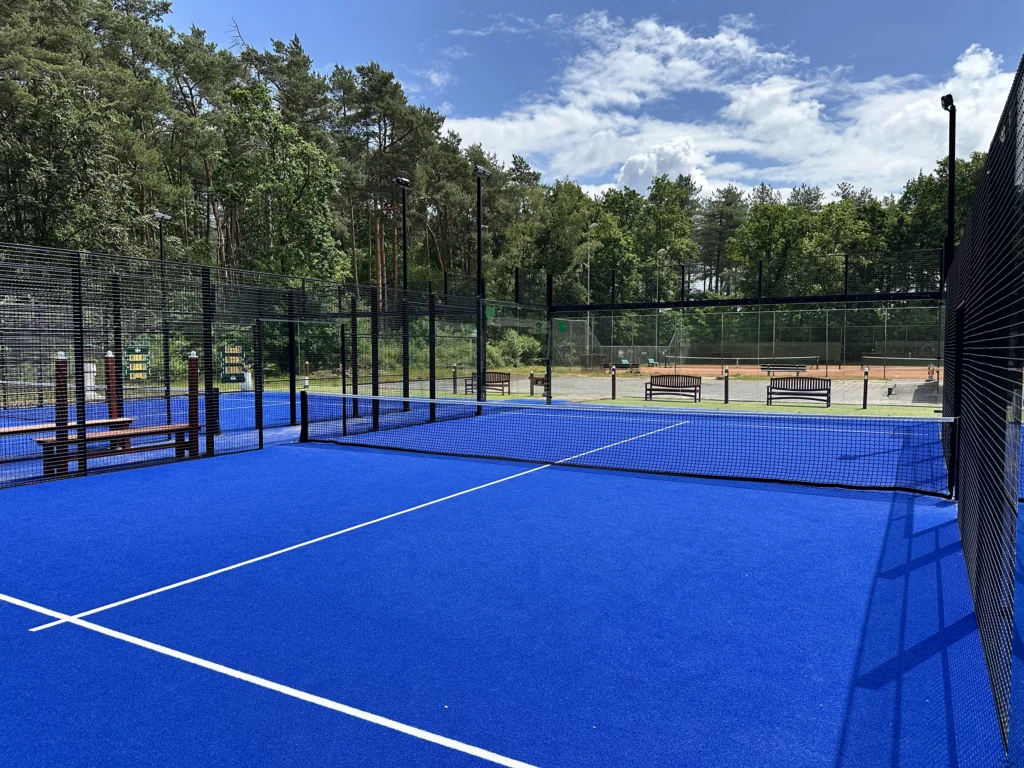
Outdoor padel courts
An outdoor padel court involves several disciplines. The steel structure must be designed more heavily due to wind loads. The Netherlands is divided into three wind areas, and each court is structurally calculated for the applicable wind area. The foundation also plays a major role: soil conditions, water drainage and load-bearing capacity determine which type of foundation is required.
Lighting is also an important consideration. LED lighting on outdoor padel courts affects the surroundings, especially when used in the evening. Municipalities may impose requirements regarding light intensity, the direction of the lighting and the times at which the courts may be illuminated.
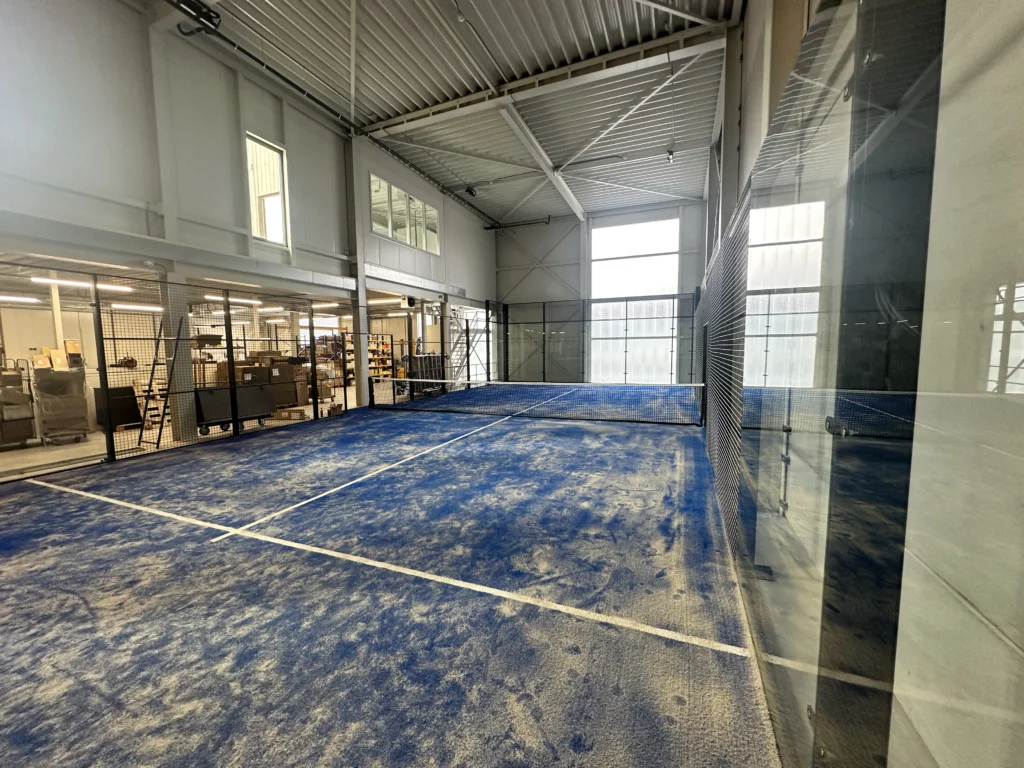
Indoor padel courts
Indoors, in an existing hall, the permit process is considerably simpler. There is no wind load or precipitation, the foundation is generally less complex, and noise is largely absorbed by the hall itself. Nevertheless, it is advisable to inform the municipality here as well, especially if the hall is used intensively or is located close to residential properties.
How do you apply for a permit for a padel court?
You apply for a permit for a padel court through the Omgevingsloket (omgevingsloket.nl). You submit an application to the municipality where the court will be installed. The application must be supported by a number of mandatory documents, depending on the location and the type of project.
The documents you generally need:
- Structural calculations in accordance with the Building Decree
- An acoustic study (almost always mandatory when located near residential properties)
- A lighting study for outdoor courts with LED lighting
- A site plan of the location
- An ecological study in some cases (for locations with protected flora or fauna)
The processing time for a permit application is on average 8 to 12 weeks, depending on the municipality and the complexity of the project. Take this into account in your planning. If you want to open in spring, you therefore need to submit the application well before winter.
A preliminary consultation with the municipality, before submitting the formal application, is strongly recommended. This way, you know in advance which documents are required and whether there are any objections related to the zoning plan or the surroundings.
What are the noise requirements for a padel court in the Netherlands?
Padel courts in the Netherlands must comply with the noise standards laid down in the Activities Decree or in the environmental permit. The standards differ by municipality and situation, but as a rule of thumb, noise at the façade of nearby residential properties may not exceed 50 dB(A) during the day and must be lower during the evening hours.
Because padel produces more noise than tennis, an acoustic study is almost always required for locations near residential development. This study maps out how much noise the courts produce, how that noise spreads and whether additional measures are required.
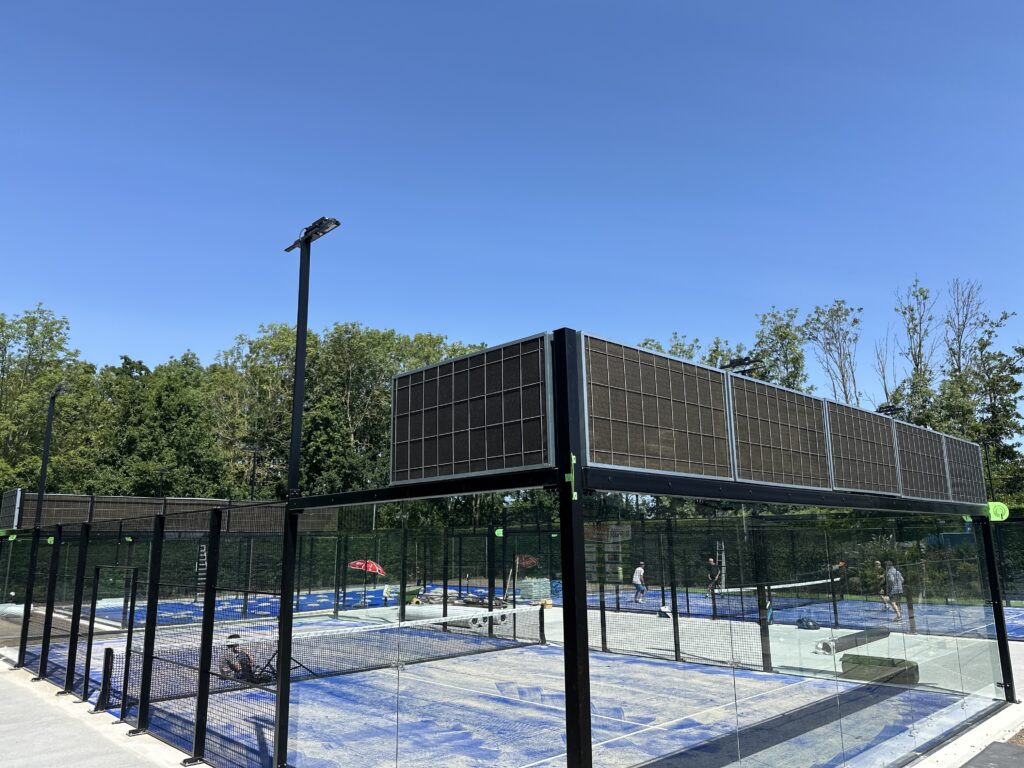
Noise reduction measures that municipalities may require
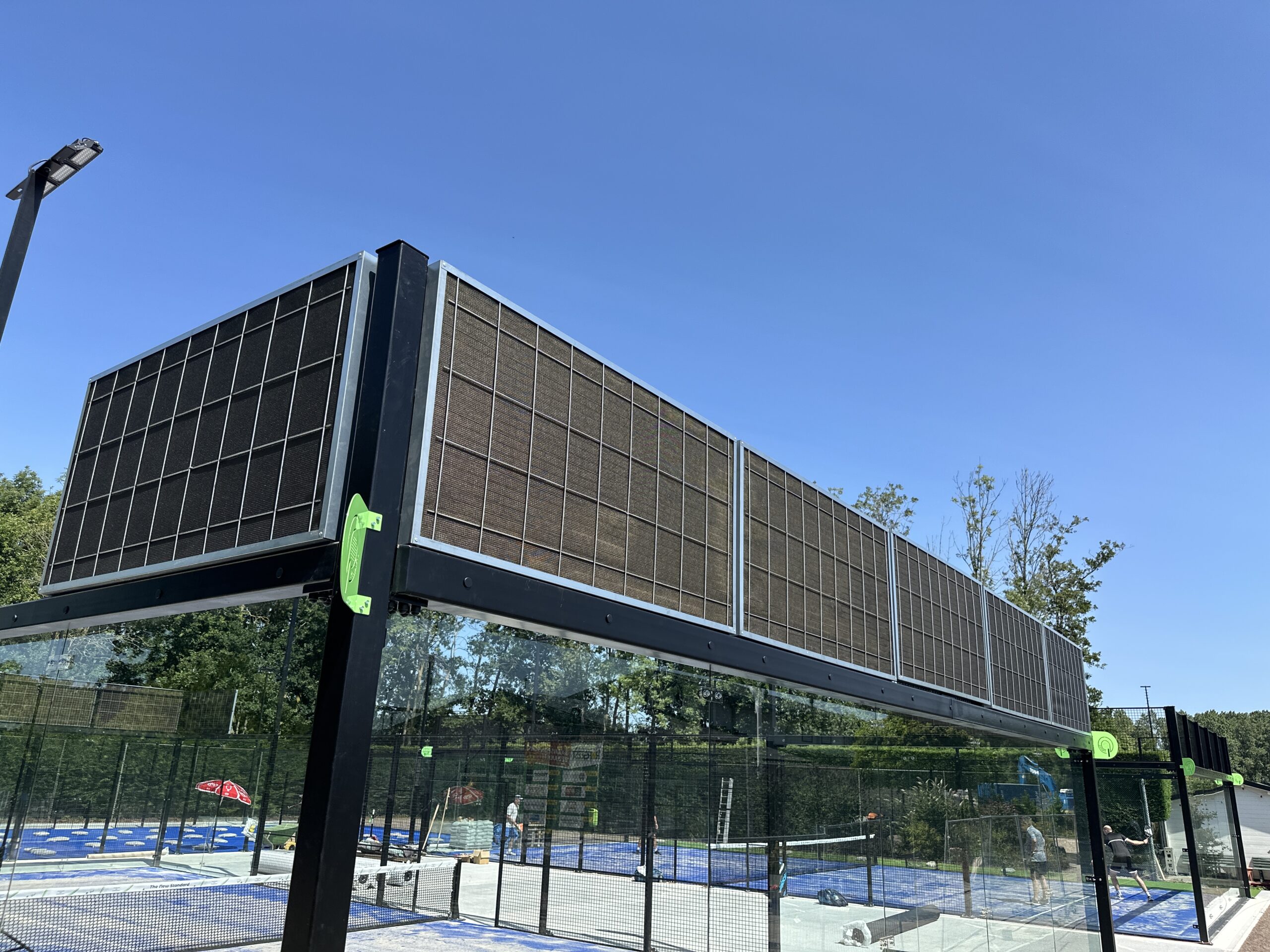
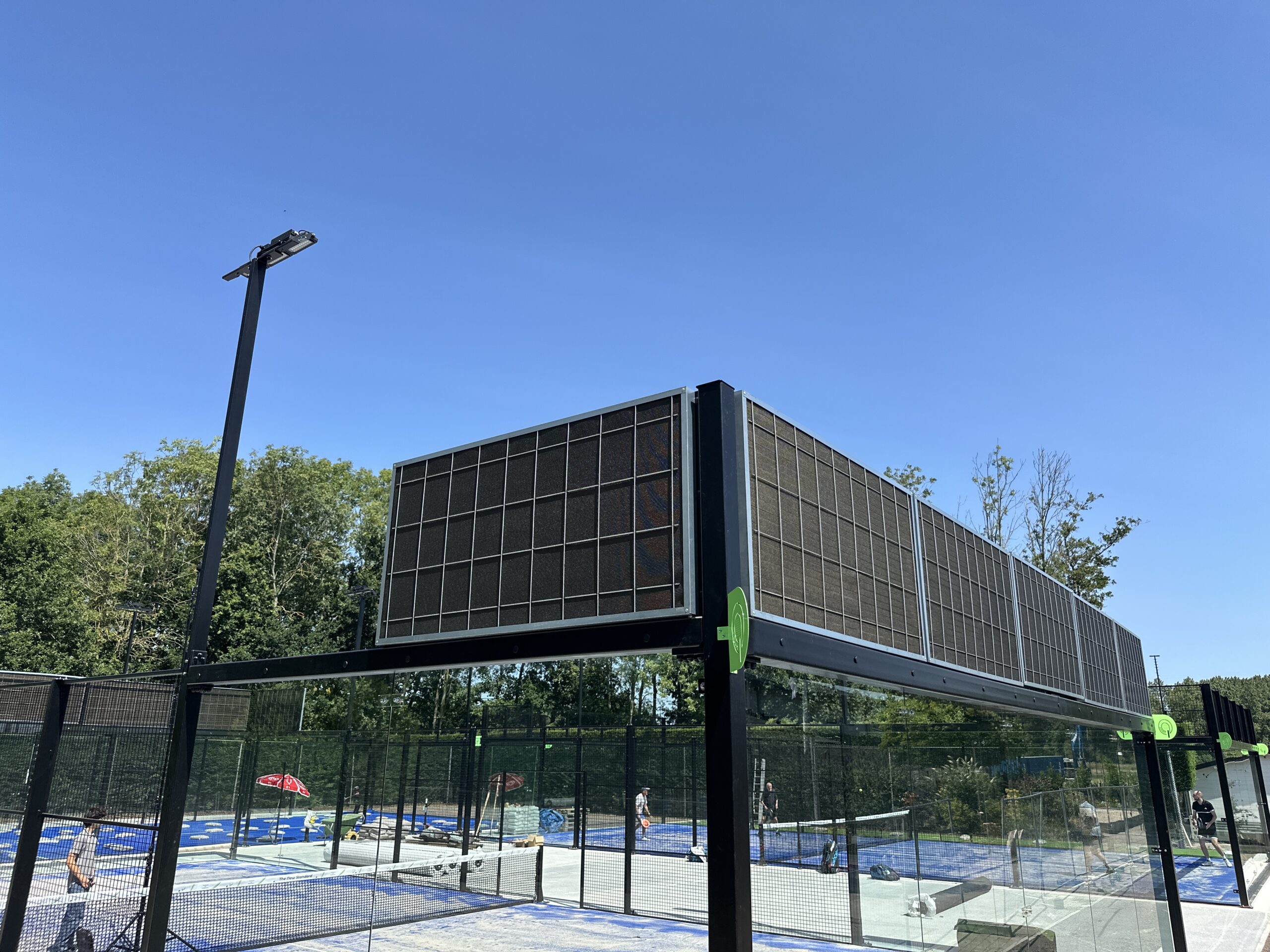
Municipalities may require noise reduction measures as a condition of the permit. These may include sound-absorbing panels on the outside of the cage structure or a freestanding noise barrier next to the courts. Sound-absorbing panels are attached directly to the mesh of the cage structure and absorb the noise at the source rather than reflecting it back.
Important to know: when panels reduce the wind permeability of the structure, the cage structure must be reinforced structurally. The wind load increases and this must be incorporated into the calculations. This is not something you can solve afterwards. It must be taken into account in the design.
A noise barrier works differently: it is placed next to the court and blocks the noise in the direction of residential properties. A noise barrier almost always requires a separate environmental permit because it is an independent structure. Here too, a structural calculation is mandatory, tailored to the wind area, height and soil conditions.
How much does applying for a permit for a padel court cost?
The costs of a permit application for a padel court consist of two parts: the municipal fees charged for processing the application and the costs of the required studies and documents. Municipal fees vary considerably between municipalities and are generally a percentage of the construction cost. For an outdoor padel court, these can quickly amount to several thousand euros.
The costs of the studies are often the largest expense:
- Acoustic study: depending on the size and complexity of the location
- Structural calculations: depending on the type of court and the location
- Lighting study: for outdoor courts with LED lighting
- Ecological or archaeological study: only if required by the municipality
Keep in mind that permit costs come on top of the construction costs. For an outdoor padel court, where the construction cost can quickly start at approximately €50,000 per court including the foundation, the total permit costs can represent a significant additional expense in your budget. Therefore, always include these costs in your financial overview.
After completion, there is also an inspection: for official competition use, an inspection by Kiwa ISA Sport is mandatory. Kiwa ISA Sport is the recognized body in the Netherlands that assesses whether padel courts meet the technical and sports safety requirements. All foundation components must be inspected by Kiwa ISA Sport to qualify for competition use. We work exclusively with certified materials that meet these requirements, so that you are not faced with surprises after completion.
At I-Padel, we guide the entire process: from checking the zoning plan and consulting with the municipality to coordinating noise and lighting studies and providing structural calculations. Would you like to know what is required for your location? Contact us for an initial assessment and we will look together at what is involved.
Frequently asked questions
How long does the entire process from permit application to completion of a padel court take?
In addition to the 8 to 12 weeks for the permit application itself, you also need to take into account the preparation time for the required studies (acoustic, structural and lighting), the preliminary consultation with the municipality and the actual construction. In total, an outdoor padel project can easily take 4 to 9 months, depending on the complexity of the location and the speed of the municipality. Therefore, plan well in advance and start the process at least six months before the desired opening date.
What happens if neighbors or local residents object to my padel court?
Objections from local residents are formally dealt with during the public participation procedure that forms part of the environmental permit application. The municipality takes these objections into account in its decision and may impose additional requirements, such as additional noise reduction measures or restrictions on opening hours. By having an acoustic study carried out in advance and, if necessary, already voluntarily including noise reduction measures in your application, you increase the chance that objections will be declared unfounded and that the process will proceed smoothly.
Can I place a padel court at a location with a sports designation, or are there exceptions?
A sports designation in the zoning plan covers use as a padel facility in most cases, but this is not guaranteed. Some zoning plans specify which sports or structures are permitted, and a cage structure with lighting does not always automatically fall within the permitted buildings. Check the zoning plan for your location via ruimtelijkeplannen.nl or ask the municipality — this is one of the first steps you should take, even before submitting an application.
Can I submit the permit application myself, or do I need a specialist?
Technically, you can submit the application yourself through the Omgevingsloket, but in practice, the required documentation — such as structural calculations, an acoustic study and a lighting study — is specialized work that must be prepared by qualified specialists. An incorrect or missing document can lead to a delay of weeks or even a rejection. Engaging a party that regularly handles this process, such as a specialized padel court developer, saves you time, costs and uncertainty.
Are there special rules if I want to install padel courts in a protected village or townscape?
Yes, locations within a protected townscape or village landscape are subject to stricter aesthetic requirements and additional assessment by the municipal aesthetics committee or heritage committee. The cage structure, lighting and any noise barriers must also visually fit within the character of the surroundings, which can sometimes affect the choice of materials or the design. In that case, contact the municipality as early as possible to determine which additional requirements apply.
What are the most common mistakes when applying for a permit for a padel court?
The most common mistakes are starting the application too late, making the desired opening date unachievable, skipping the preliminary consultation with the municipality, and submitting an incomplete application without all the required studies. The zoning plan is also regularly not checked in advance, which can lead to a rejection that is difficult to remedy afterwards. By going through the process step by step — zoning plan, preliminary consultation, studies, application — you can avoid most of these pitfalls.
Is a Kiwa ISA Sport inspection also mandatory if I only want to use the padel courts recreationally and do not organize competitions?
The Kiwa ISA Sport inspection is formally mandatory for official competition use and competitions, but even for recreational use, it is strongly recommended to use certified materials and a certified structure. An inspection provides certainty about the technical and sports safety of the court, which is also relevant to your liability as an operator. In addition, a certified court makes your location more future-proof should you decide to organize competitions later on.