
Building a padel court is one thing. But what does it cost afterward, year after year? For entrepreneurs, clubs, and real estate parties, the answer to that question is at least as important as the construction price itself. The operating costs of a padel court largely determine whether your investment pays off, and how quickly. In this article, we lay out all the recurring costs clearly, so you have a realistic picture before you decide.
As a general guideline: the annual operating costs of a padel court average between €3,000 and €8,000 per court, depending on the type of court, the location, and the intensity of use. This ranges from energy costs and maintenance to insurance and the longer-term replacement of materials. Below we work out each component in detail.
What exactly are operating costs for a padel court?
The operating costs of a padel court are all the recurring costs you incur after construction. These are the costs of keeping the court running: energy, maintenance, insurance, and eventually the replacement of wearing parts such as artificial turf and lighting. They are not one-time costs, but recur every year.
The distinction from construction costs is important. You pay construction costs once, for the foundation, the steel structure, the glass, the artificial turf, and the installation. You pay operating costs year in, year out. For a solid business case for a padel location, you need to map out both. A court that was cheap to build but expensive to run can be a worse investment in the long term than a court with a higher construction price but lower annual costs.
The main cost items in operations are:
- Energy consumption of LED lighting
- Regular maintenance of the artificial turf and structure
- Insurance for the facility
- Replacement of artificial turf (once every 8 to 12 years)
- Any repairs to glass or structure
- Management and cleaning of the location
What does maintenance of a padel court cost per year?
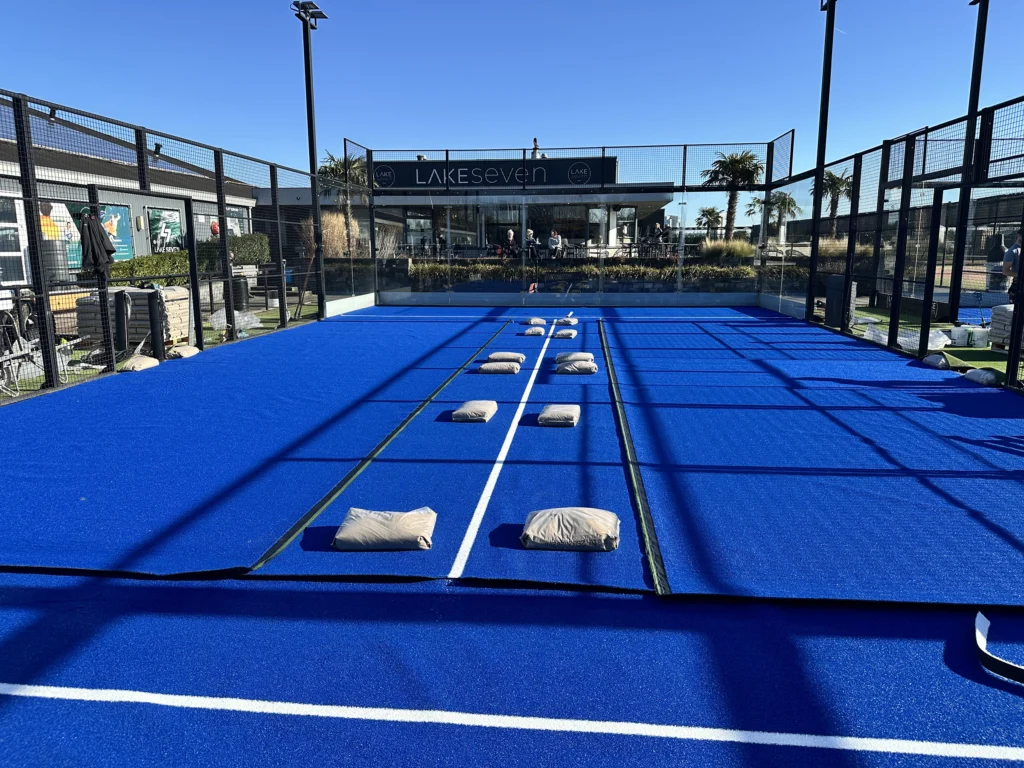
Annual maintenance of a padel court costs an average of between €500 and €2,000 per court, depending on use and court type. This includes regularly topping up and leveling the artificial turf, keeping the glass clean, and a visual inspection of the steel structure and fastening points.
Artificial turf requires the most attention. Intensive use causes the sand infill to become unevenly distributed, which affects ball bounce and playing comfort. Regular top-dressing and an annual machine cleaning keep the court in good condition. Glass is best cleaned several times a year, especially for outdoor courts, where dirt and algae build up faster.
The steel structure requires little active maintenance, but it’s wise to check annually for rust formation, loose fastenings, and whether the coating is still intact. With a quality structure and good coating, major repairs are rarely needed in the first years. Small damage to glass or mesh is the most common repair cost and typically ranges between €200 and €800 per incident.
How much energy does a padel court with LED lighting use?
A padel court with LED lighting consumes an average of 4 to 8 kWh per hour of play, depending on the number of fixtures, the lighting level, and the configuration. With average use of 8 to 10 hours per day, this adds up to 30 to 70 kWh per day per court.
LED lighting is the most energy-efficient option for padel courts. Compared to traditional halogen or fluorescent lighting, LED uses up to 60 percent less energy at the same light level. That makes a big difference annually, especially if the court is used intensively.
To calculate energy costs: at an average energy price of around €0.30 per kWh and a consumption of 50 kWh per day, the annual energy costs for one court are approximately €5,000 to €6,000 with daily use. With less intensive use, for example a court in use an average of 5 hours per day, costs are closer to €2,500 to €3,500 per year.
Practical tips to reduce energy costs:
- Install motion sensors or timers so the lighting switches off automatically
- Choose dimmable LED lighting that you can adjust to the time of day
- Consider solar panels as a supplement to the energy supply for larger locations
When does the artificial turf on a padel court need to be replaced?
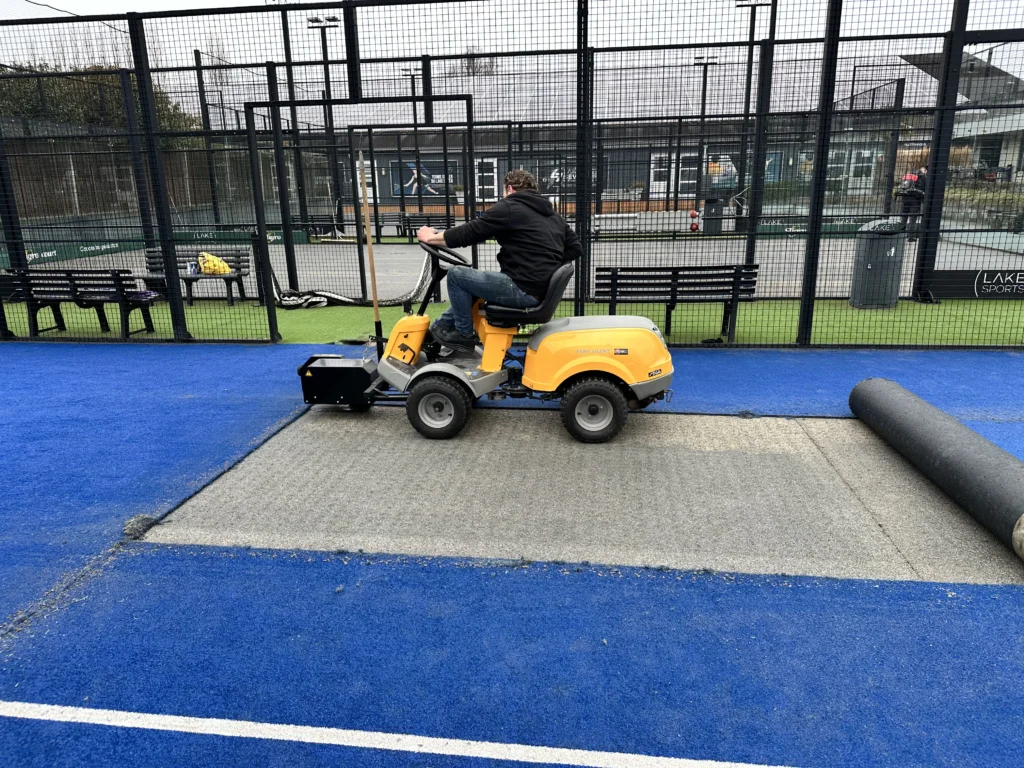
The artificial turf on a padel court lasts an average of 8 to 12 years under normal use. With intensive commercial use, this can be shorter. Replacement is needed when the fibers have become flattened, the sand infill is no longer even, or the ball bounce no longer meets sport-technical standards.
The lifespan of artificial turf depends heavily on intensity of use and maintenance. A court in use 12 hours a day wears faster than a court at a smaller club. Regular maintenance—top-dressing, cleaning, and checking—significantly extends the lifespan.
For official competition use, the KNLTB (Royal Dutch Tennis Association) sets requirements for the sport-technical quality of the surface. Artificial turf is assessed on properties such as ball bounce and surface levelness, measured at fifteen fixed measurement points on the court. If the artificial turf no longer meets the sport-technical regulations, no certificate can be obtained for competition use. Inspection by Kiwa ISA Sport is then mandatory for renewed certification.
The costs for replacing artificial turf typically range between €4,000 and €8,000 per court, including removal of the old material and reinstallation. This is a one-time cost item that you can plan for as a reserve in your operating budget. Budget around €500 to €800 per year as an annual reserve.
What are the insurance costs for a padel court?
Insurance costs for a padel court average between €500 and €1,500 per year, depending on the number of courts, the location, and the coverage. A standard insurance policy for a sports facility typically covers damage to the structure, liability, and fire.
Which insurance policies you need depends on the situation. A commercial operator has different needs than a tennis club. For a commercial location, business liability insurance is almost always necessary. In addition, building insurance for the structure itself is advisable, especially for outdoor courts exposed to storms, hail, and other weather influences.
Tennis clubs often fall under the umbrella of KNLTB insurance, but it’s wise to check whether padel courts are explicitly included. This is not always the case. Ask your insurer specifically whether the steel structure, the glass, and the LED lighting are covered, and up to what amount.
Does operating an indoor padel court differ from an outdoor one?
Yes, the operating costs of an outdoor padel court are structurally higher than those of an indoor padel court. Outdoor courts are more exposed to weather influences, require heavier maintenance, and have higher insurance costs. Indoor courts are protected, resulting in less wear and lower energy costs per hour of play.
-
Outdoor padel court operations
An outdoor padel court has to contend with rain, sun, frost, and wind. This places higher demands on the structure and maintenance. The artificial turf wears faster due to UV radiation and weather influences. Glass and mesh get dirty faster and need to be cleaned more often. The steel structure—which for outdoor courts is always hot-dip galvanized for weather resistance—needs less maintenance, but does require periodic inspection. -
Indoor padel court operations
An indoor padel court is protected from the elements. Artificial turf lasts longer, glass stays cleaner, and the structure is less stressed. Energy costs for LED lighting are comparable, but with a well-insulated hall, total energy costs can be lower. Moreover, an indoor court can be played on year-round without dependence on the weather, which increases the occupancy rate and therefore the return. For commercial operators, an indoor location is in most cases financially more attractive: a higher occupancy rate, less wear, and more control over the environment. This translates directly into a better ratio between investment and return in the long term.
How do you reduce the operating costs of a padel court?
You reduce the operating costs of a padel court by making smart choices during construction and by consistently performing maintenance. The biggest savings lie in energy management, preventive maintenance, and choosing durable materials that last longer.
Concrete measures with direct impact:
-
Choose quality LED lighting with smart management.
Timers and presence sensors prevent unnecessary energy consumption and noticeably lower the annual bill. -
Plan preventive maintenance.
Regular top-dressing and cleaning of artificial turf prevents premature wear and delays replacement. This saves thousands of euros in the long term. -
Reserve funds annually for replacements.
By building in a reserve for artificial turf and small repairs, you prevent large costs from disrupting your cash flow. - Invest in quality during construction. A sturdy steel structure with a good coating requires less maintenance and lasts longer. Cheap at construction often means expensive in use.
-
Use certified materials.
All foundation components must be inspected by Kiwa ISA Sport in the Netherlands. Working with certified materials prevents problems during inspection and protects you against unexpected replacement costs.
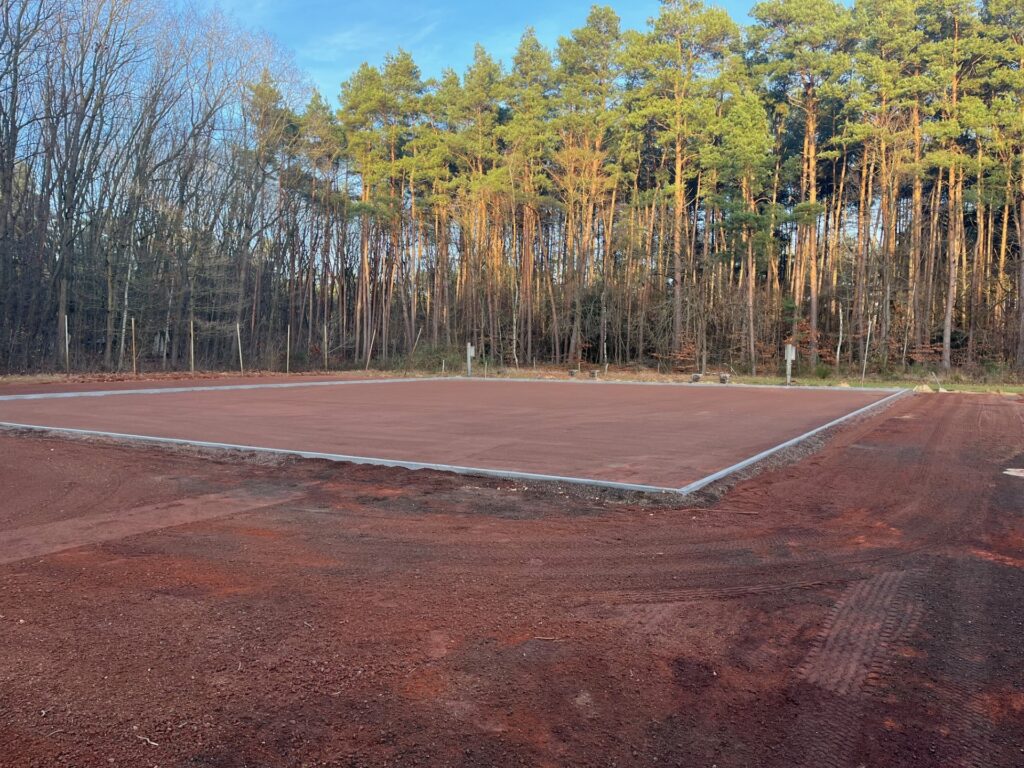
A point that is often overlooked: the choice of foundation type affects maintenance costs. A well-constructed foundation—drainage concrete or Supersub—has a lifespan of 25 to 40 years and requires little active maintenance. A foundation that subsides or cracks leads to higher repair costs and can damage the steel structure.
What are the total costs of a padel court over 10 years?
The total costs of a padel court over 10 years consist of the construction costs plus the cumulative operating costs. For an indoor padel court, you quickly arrive at a total amount of €50,000 to €80,000 over 10 years, including construction, energy, maintenance, insurance, and a reserve for artificial turf replacement.
An indicative breakdown for an indoor padel court over 10 years:
- Construction costs (turnkey): from approximately €23,000
- Energy costs (10 years, average use): €25,000 to €50,000
- Maintenance and cleaning (10 years): €5,000 to €15,000
- Insurance (10 years): €5,000 to €15,000
- Reserve for artificial turf replacement: €4,000 to €8,000
Construction costs are therefore far from the largest cost item over the entire lifespan. Energy costs dominate the operating expenses, followed by maintenance and insurance. This makes the choice for energy-efficient LED lighting and durable materials during construction extra relevant: these choices pay for themselves over the term.
For an outdoor padel court, total costs over 10 years are higher, partly due to higher construction costs (foundation, heavier structure), more maintenance, and faster wear of the artificial turf. Budget for a complete outdoor court a total amount of €80,000 to €130,000 over 10 years, depending on location and use.
Want to have a good padel court built while keeping a grip on operating costs? At I-Padel, we’re happy to think along with you, from construction costs to a realistic operating picture for your location. We work exclusively with certified materials that meet the requirements of Kiwa ISA Sport, so you won’t face surprises during inspection or use. Contact us for an initial exploration. We’re happy to take a look with you, without obligation.
Frequently Asked Questions
How do I set up a realistic operating budget for my padel location?
Start with an annual budget that covers all fixed cost items: energy costs, maintenance, insurance, and a monthly reserve for artificial turf replacement. Use the range of €3,000 to €8,000 per court per year as a starting point and refine this based on your expected usage intensity. It’s wise to track actual costs in the first year and adjust your budget after 12 months based on measured consumption figures.
What is the biggest mistake entrepreneurs make when estimating operating costs?
The most common mistake is underestimating annual energy costs—especially for locations with multiple courts that are used intensively every day. Many entrepreneurs calculate with too few usage hours or don’t account for rising energy prices. A second common mistake is not reserving funds for artificial turf replacement, causing those costs to arrive later as an unexpected major expense. Build both items structurally into your operating budget, even if they seem far off.
Is it worth installing solar panels at a commercial padel location?
For a location with multiple courts and a high occupancy rate, the payback period for solar panels can be attractive, especially since LED lighting has predictable, high energy consumption. The return is greatest if you consume most of the generated energy yourself—which is quite feasible at a busy indoor location during the day. Have an energy consultant make a specific calculation for your location and usage profile before investing.
Can I earn back the operating costs through court rental, and how quickly?
At an average court rental rate of €15 to €25 per hour and an occupancy rate of 50 to 70 percent, it’s quite possible to earn back the annual operating costs—and even have a margin left over. The payback period for the total investment (construction and operations) typically ranges between 4 and 8 years for a well-occupied commercial location. A higher occupancy rate and smart pricing policy—such as peak rates during evening hours—shorten that period considerably.
How do I know when the artificial turf really needs replacing, and not just extra maintenance?
There are three clear signals: the fibers are structurally flattened and no longer spring back after cleaning, the sand infill is uneven and can no longer be corrected by top-dressing, or the ball bounce no longer meets the KNLTB’s sport-technical standards. In the latter case, an official inspection by Kiwa ISA Sport is necessary to determine whether the court can still be certified. If in doubt, you can have a measurement carried out before deciding on full replacement.
Are there subsidies or tax benefits available for the construction or operation of padel courts?
For sports clubs, municipal or provincial subsidies are sometimes available for the construction or sustainability upgrades of sports facilities—think of subsidies for LED lighting or solar panels. Commercial operators may, in certain situations, be able to use the Energy Investment Allowance (EIA) when purchasing energy-efficient installations. Consult a tax advisor or contact your municipality to find out which schemes apply to your specific situation.
What should I ask a contractor to keep operating costs as low as possible?
Ask specifically about the expected lifespan of the artificial turf, the coating of the steel structure, and the energy performance of the LED lighting—and ask for substantiation with technical specifications or certifications. Also inquire about the foundation type and the associated maintenance frequency. A reliable contractor gives transparent answers and works exclusively with certified materials that meet Kiwa ISA Sport standards, so you won’t face unexpected costs later during inspection or use.