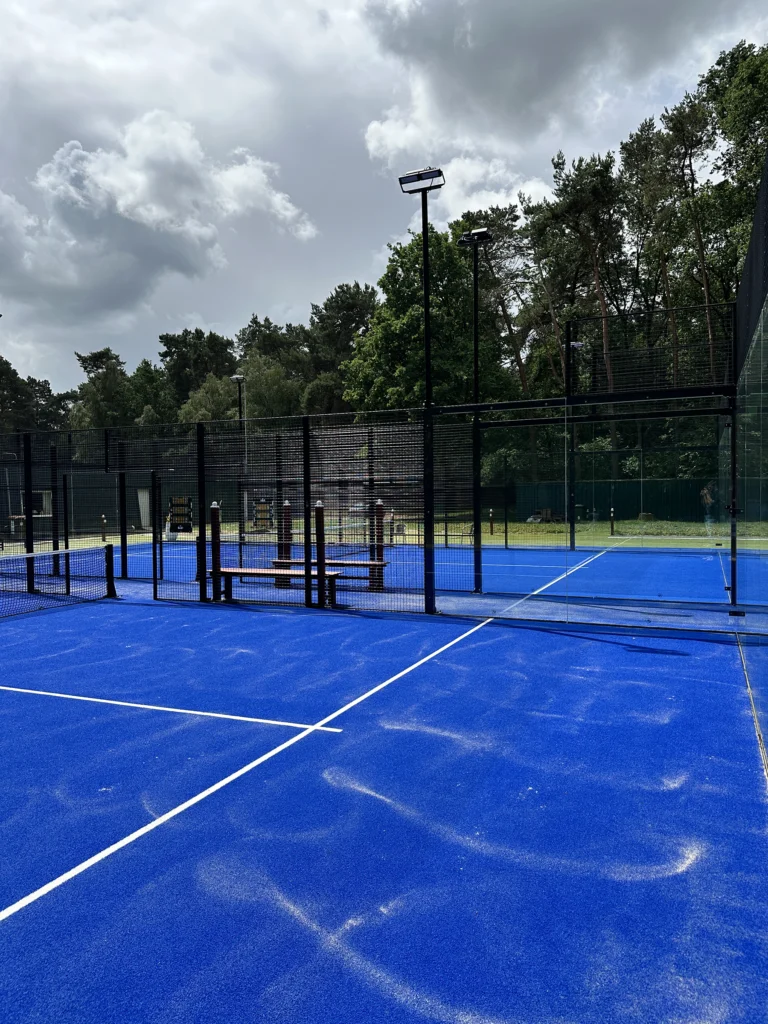
Building a padel court often starts with one question that determines everything: do I need a permit for this? In most cases, the answer is yes, especially if the court will be built outdoors. For an indoor court in an existing building, the situation may be different, but regulations still apply. In this article, we explain when a permit for a padel court is required in each situation, which documents you need, and what you can expect from the application process.
What is an environmental permit and what does it have to do with padel?
An environmental permit is an official authorization from the municipality to build, renovate, or change the use of a location. In the Netherlands, a padel court is considered a structure, which means that in most cases you need such a permit before you even break ground.
Padel is more than just a sport. A padel court is a permanent structure consisting of a steel frame, glass walls, artificial turf, LED lighting, and in many cases a drain concrete or Supersub foundation. Taken together, these components make it a structure in the eyes of the law. The municipality must be able to assess whether the structure is safe, whether it complies with the zoning plan, and whether it will cause nuisance to the surrounding area.
The last point is especially relevant for padel. Padel produces more noise than tennis. The sound of the ball striking glass and steel, combined with the cage structure acting as a resonance chamber, results in a sound power level of approximately 91 dB on average. That is roughly 10 dB higher than tennis. Municipalities are becoming increasingly aware of this and are therefore imposing more requirements regarding noise mitigation measures and playing hours during the permitting process.
Which factors determine whether your padel court requires a permit?
Whether a padel court requires a permit depends on four factors: the location (indoor or outdoor), the nature of the structure, the impact of noise and lighting, and the proximity of residential properties. An outdoor court almost always requires an environmental permit. For an indoor court in an existing building, it depends on the specific situation.
-
Outdoor court
An outdoor padel court almost always requires an environmental permit. The structure is permanent, the foundation is substantial, and the court has a visible impact on its surroundings. In addition, outdoor LED lighting requires a lighting assessment, and noise from outdoor play travels further than it does in an enclosed building. If the location is adjacent to a residential area or situated in an open environment, a permit requirement is virtually certain. -
Indoor court
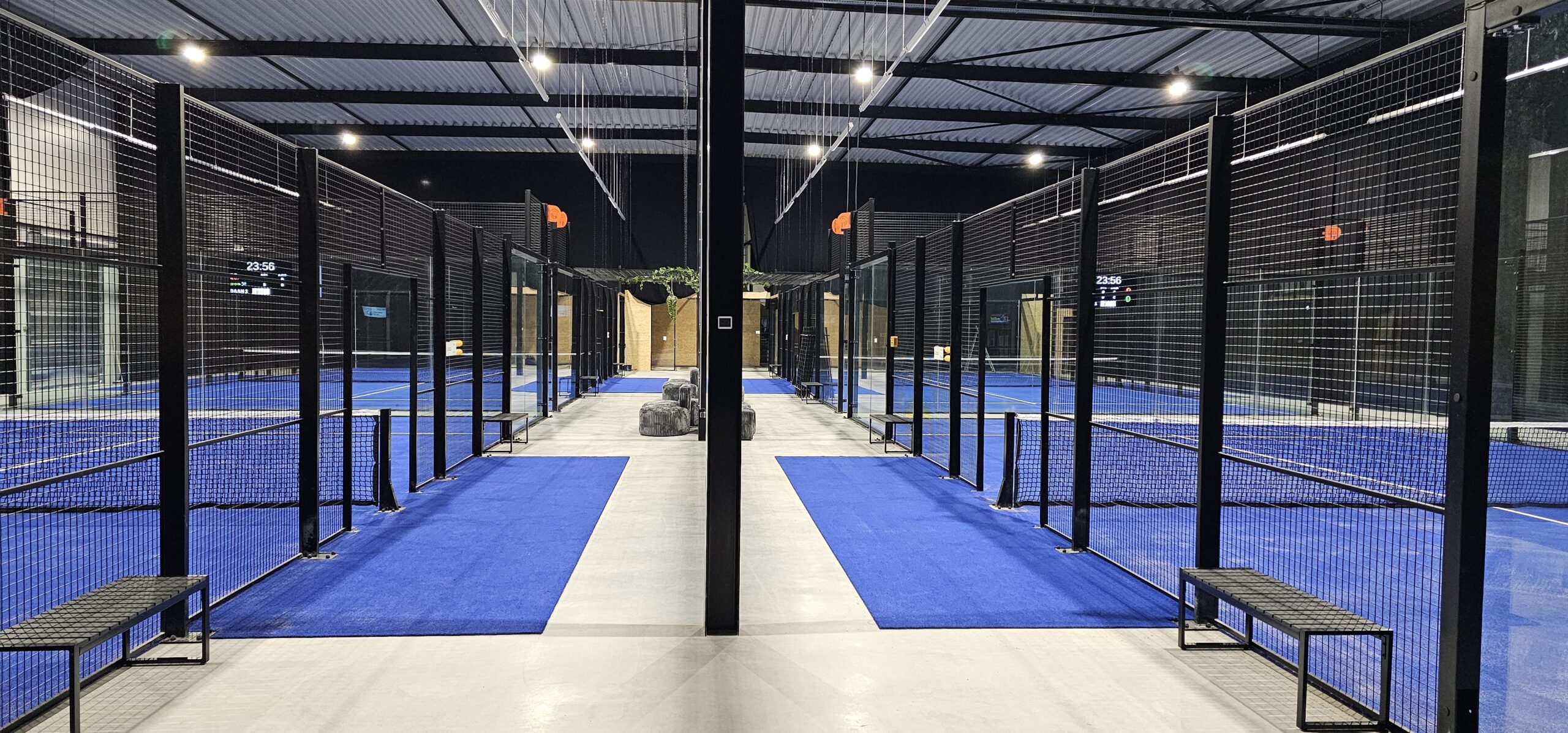
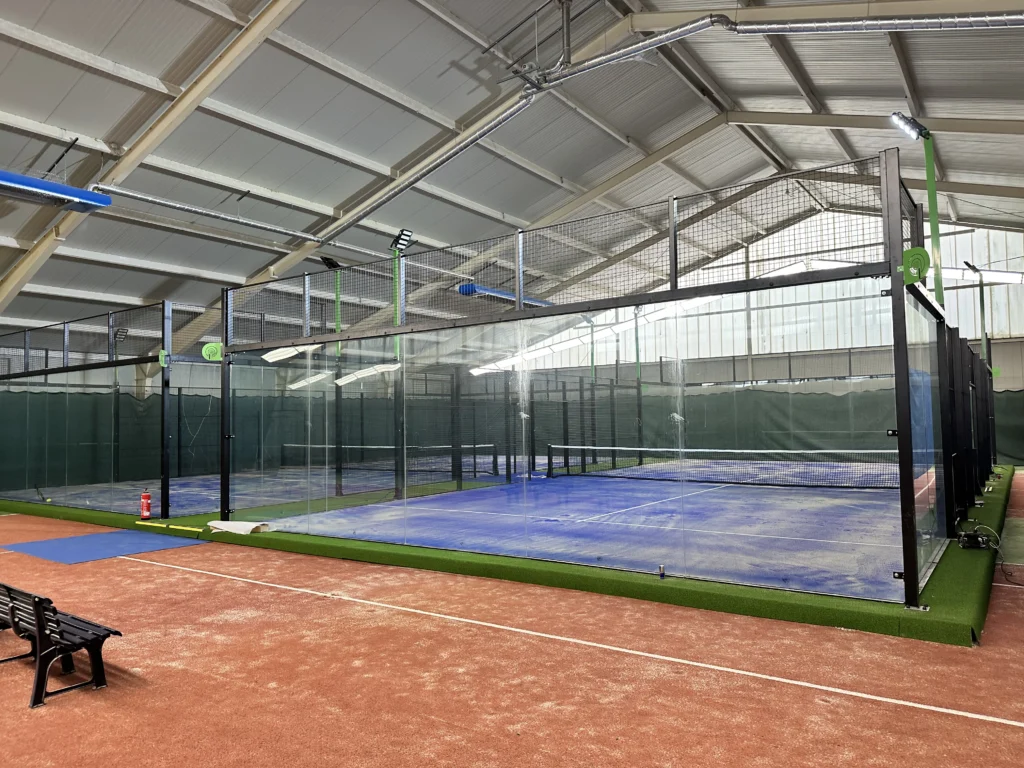
For a padel court in an existing building, without structural modifications to the building itself, a separate building permit is not always required. However, regulations still apply, including fire safety requirements, usage regulations, and sometimes adjustments to ventilation systems or emergency exits. Always check with the municipality whether a notification or permit is required, even if you believe it is a straightforward installation. -
Proximity to residential properties
Is the location close to residential housing? If so, an acoustic assessment is almost always required as part of the application. The municipality wants to know how much noise the court generates at the façades of nearby homes and whether this remains within the legal noise limits. This applies to both outdoor and indoor courts if the building borders a residential area.
How do you apply for a permit for a padel court?
You apply for a padel court permit through the municipality’s Environmental Permit Portal (Omgevingsloket). You submit an application with a set of mandatory documents, after which the municipality assesses it against the zoning plan, the Dutch Building Decree, and local policy regulations. The application must be complete. Missing documents almost always result in delays.
The documents required depend on the location and the type of court. For most projects, the following documents are required:
- Structural calculations in accordance with the Dutch Building Decree
- Acoustic assessment (noise levels at surrounding building façades)
- Lighting assessment (for outdoor LED lighting)
- Site plan of the location
- Ecological assessment where applicable (for locations in or near protected natural areas)
- Archaeological assessment where applicable (for groundworks at certain locations)
Good preparation starts with a zoning plan check. Verify whether padel as a sport is permitted at the intended location. If it is not, you will need not only an environmental permit but also a deviation from the zoning plan, which significantly extends the process. If you have any doubts, always contact the municipality before submitting a formal application. An informal preliminary consultation can save time and prevent unnecessary costs.
What are the noise requirements for a padel court and how do they affect the permit?
Noise requirements for a padel court are based on the Dutch Environmental Management Act (Wet milieubeheer) and the Activities Decree (Activiteitenbesluit). The municipality assesses whether the noise produced by the court at the façades of nearby homes remains within the applicable limit values. These are generally 50 dB(A) during the daytime, 45 dB(A) during the evening, and 40 dB(A) at night. If these limits are exceeded, the permit may be refused or additional conditions may be imposed.
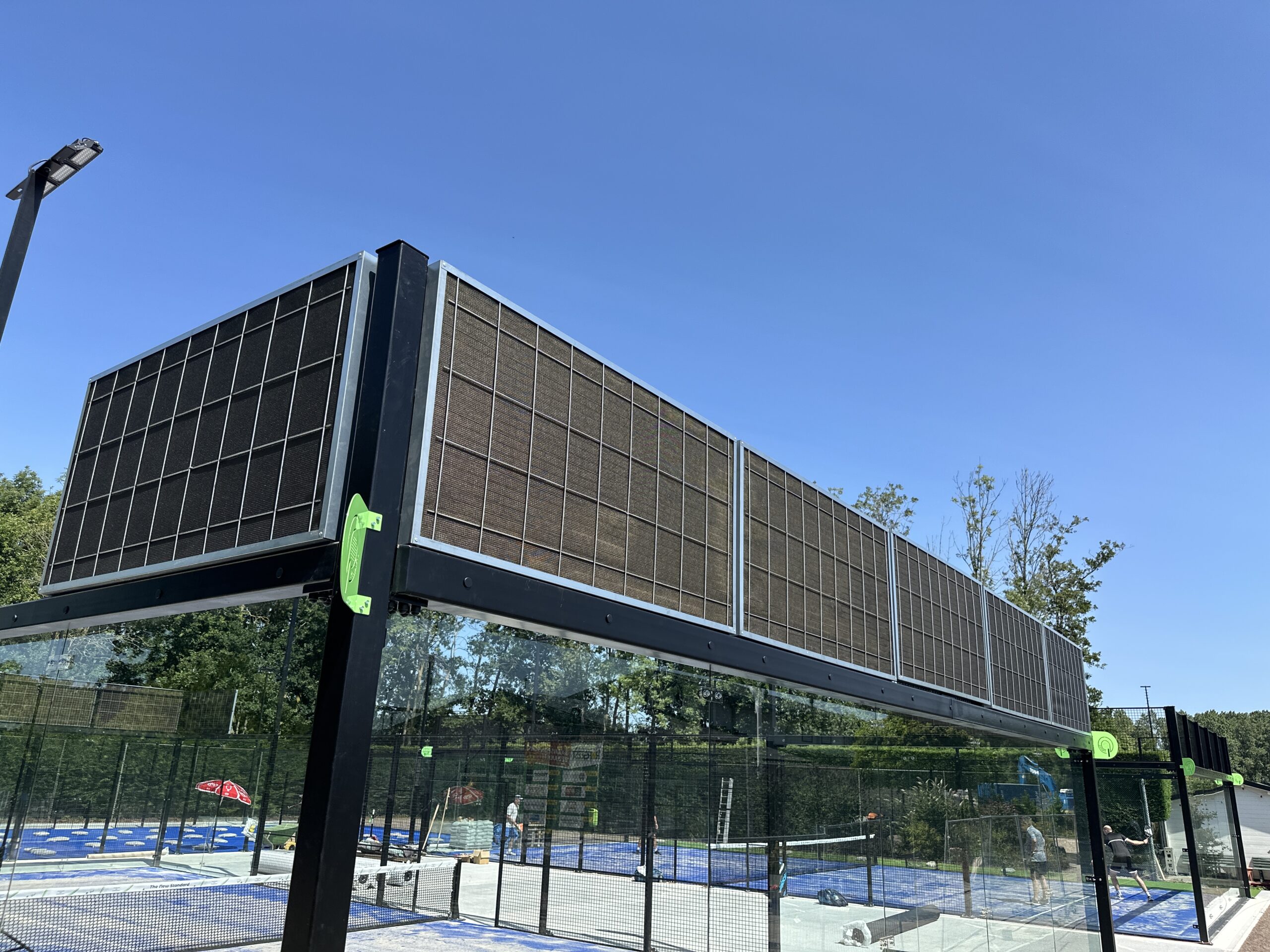
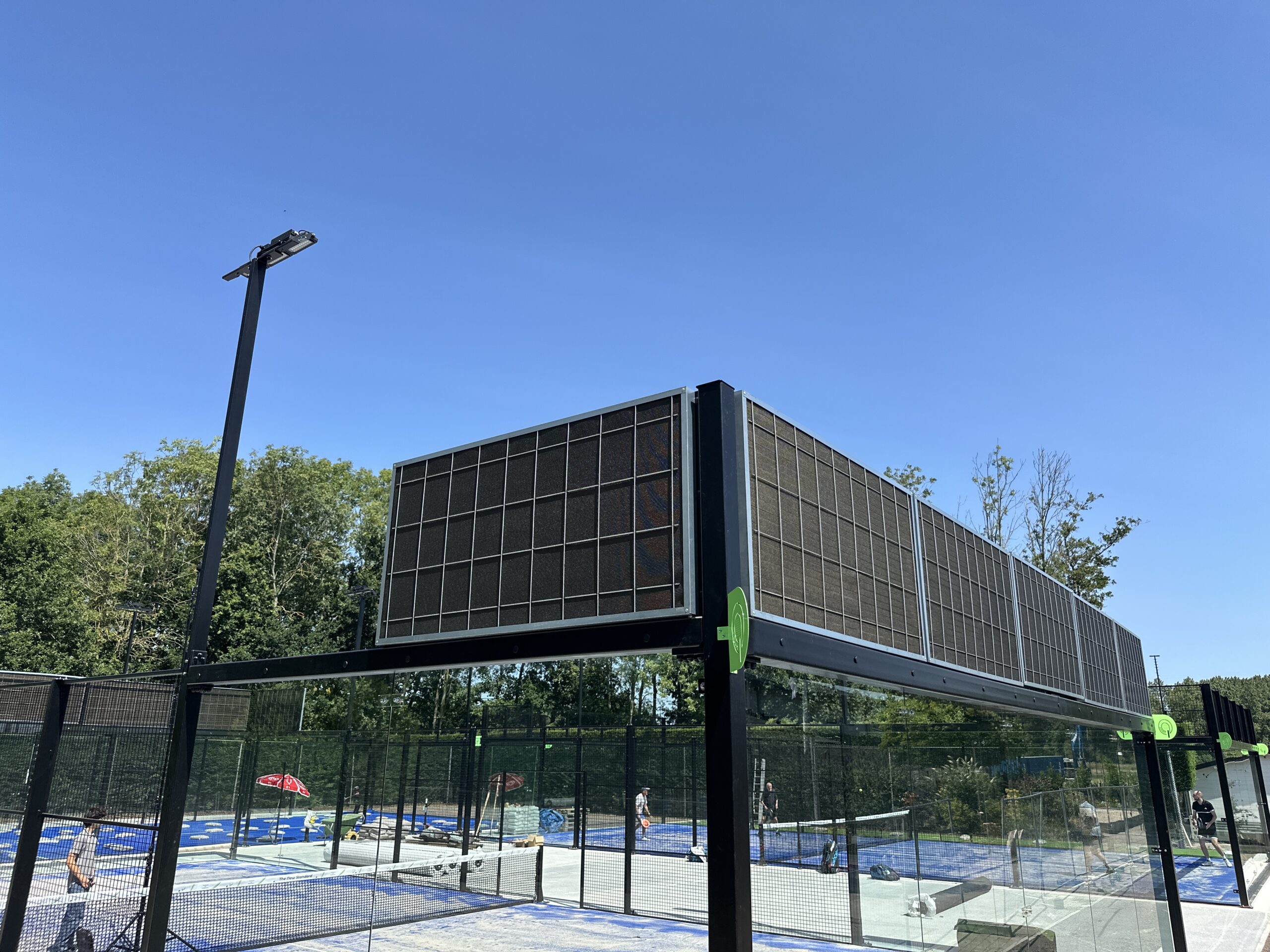
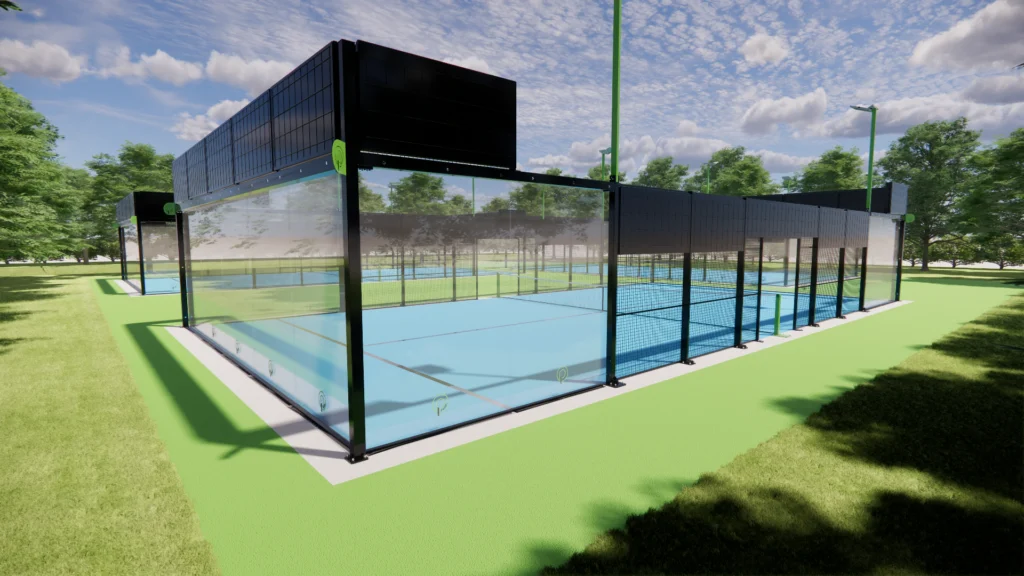
Because padel produces more noise than most other outdoor sports, an acoustic assessment is almost always mandatory as part of the permit application for an outdoor court. The assessment determines how much noise the court generates at various distances and whether additional mitigation measures are required. Examples include sound-absorbing panels on the outside of the cage structure or a freestanding noise barrier alongside the court.
Noise mitigation measures can also improve the likelihood of obtaining a permit. Municipalities are more likely to approve an application if the applicant demonstrates that active consideration has been given to reducing noise. Independent acoustic laboratory testing has shown that panels installed in the cage structure achieve a sound absorption coefficient of 0.80 (Class A) and a sound insulation index of 19 dB. This results in a noticeable difference at distances of 40 to 100 metres. However, installing these panels has structural consequences. The cage structure is exposed to greater wind loads and must therefore be reinforced with heavier uprights or additional columns. This is not an optional step but a technical requirement for safety and durability.
How long does it take to obtain a permit for a padel court?
The average processing time for a padel court permit application is 8 to 12 weeks from the moment a complete application has been submitted. For complex locations, objection procedures, or projects requiring a deviation from the zoning plan, this may increase to six months or more.
By law, the municipality has eight weeks to decide on a standard application, with a one-time extension of six weeks. In practice, the process takes longer if the application is incomplete upon submission. Missing reports or drawings will result in a request for additional information, and that period does not count toward the statutory decision period.
Plan the permitting process early in your project. If you want to start playing in spring, you should begin the application process during the preceding autumn. Also allow sufficient time for preparing the acoustic assessment, structural calculations, and lighting assessment. These documents take time to produce and must be completed before the application can be submitted.
What happens if you build a padel court without a permit?
Building without a permit is a serious risk. The municipality can halt the construction project, impose a penalty payment or fine, and even require the cage structure to be removed at your own expense. In that case, you will have paid for a court that you are not allowed to use and that you must also dismantle.
In addition to the immediate sanctions, there are practical consequences. A court without a permit cannot be used for official competitions. Competitive play requires an inspection by a recognised authority, and that inspection assumes the court has been legally constructed. Furthermore, an unpermitted court may create problems with insurance coverage and liability if something goes wrong.
Some people assume that a small court or a temporary outdoor installation falls outside the permit requirement. This is rarely the case for padel courts. The structure, weight, foundation, and societal impact mean that municipalities consistently treat these as structures requiring a permit. Do not take unnecessary risks and always verify the requirements in advance.
At I-Padel, we guide clients through the entire permitting process from start to finish. This includes the zoning plan check, preliminary consultation with the municipality, coordination of acoustic and lighting assessments, the preparation of structural calculations, and support with any objection procedures. We work exclusively with certified materials that comply with Kiwa ISA Sport requirements, protecting you against unintended non-conformities during the post-construction inspection. Want to know what is required for your location? Explore our approach to building padel courts or contact us for an initial consultation. We are happy to provide non-binding advice.
Frequently Asked Questions
Can I install a temporary padel court without a permit?
A temporary installation may seem like a solution, but in practice temporary padel courts almost always require a permit as well. The structure, foundation, and weight of a padel court mean that municipalities consider it a structure regardless of whether it is described as “temporary.” If you still intend to install a temporary court, always contact the municipality beforehand to determine which regulations apply.
What is a zoning plan check and how do I carry one out?
A zoning plan check is an initial assessment to determine whether the intended use of a location as a padel facility is permitted under the applicable zoning plan. You can do this through the online portal ruimtelijkeplannen.nl, where you can search by address to see the zoning designation of a location and which activities are permitted there. If sports facilities are not permitted at the location, you will need not only an environmental permit but also a zoning plan amendment or deviation, making the process significantly longer and more complex.
What should I do if the municipality rejects my permit application?
An acoustic assessment for a padel court is carried out by a certified acoustic consultancy and typically costs between €1,500 and €3,500, depending on the complexity of the location and the number of façades to be assessed. The assessment maps the noise levels affecting surrounding homes and provides recommendations for any required mitigation measures. Ensure that this assessment is carried out early in the process so that the results can still influence structural design decisions.
Do different rules apply if I want to build padel courts at an existing sports club?
If your application is rejected, you have six weeks to lodge an objection with the municipality. Always ask for the exact grounds for the rejection, as this determines whether an objection has a reasonable chance of success or whether an alternative approach, such as additional noise mitigation measures or a different location, would be more effective. In some cases, an informal discussion with the municipality after the rejection is more productive than immediately starting a formal objection procedure.
What about the permit if I want to add LED lighting to an existing padel court?
Adding LED lighting to an existing padel court at a later stage may constitute a new permit-requiring activity, even if the court itself has already been approved. For outdoor lighting, municipalities often require a lighting assessment demonstrating that light spill into the surrounding area remains within the applicable standards. Check with the municipality whether a notification or a full environmental permit is required before proceeding with the installation.
Can I combine the permitting process with construction planning to avoid delays?
Yes, and it is strongly recommended. Start the permitting process in parallel with the design phase so that the required assessments, such as the acoustic assessment and structural calculations, are completed by the time the application is submitted. Keep in mind that the average processing time is 8 to 12 weeks after a complete submission, while preparing all the required documentation can take an additional 6 to 10 weeks. For more complex projects, a realistic total planning horizon of 4 to 6 months for obtaining the permit is not uncommon.