
When is a permit for a padel court required?
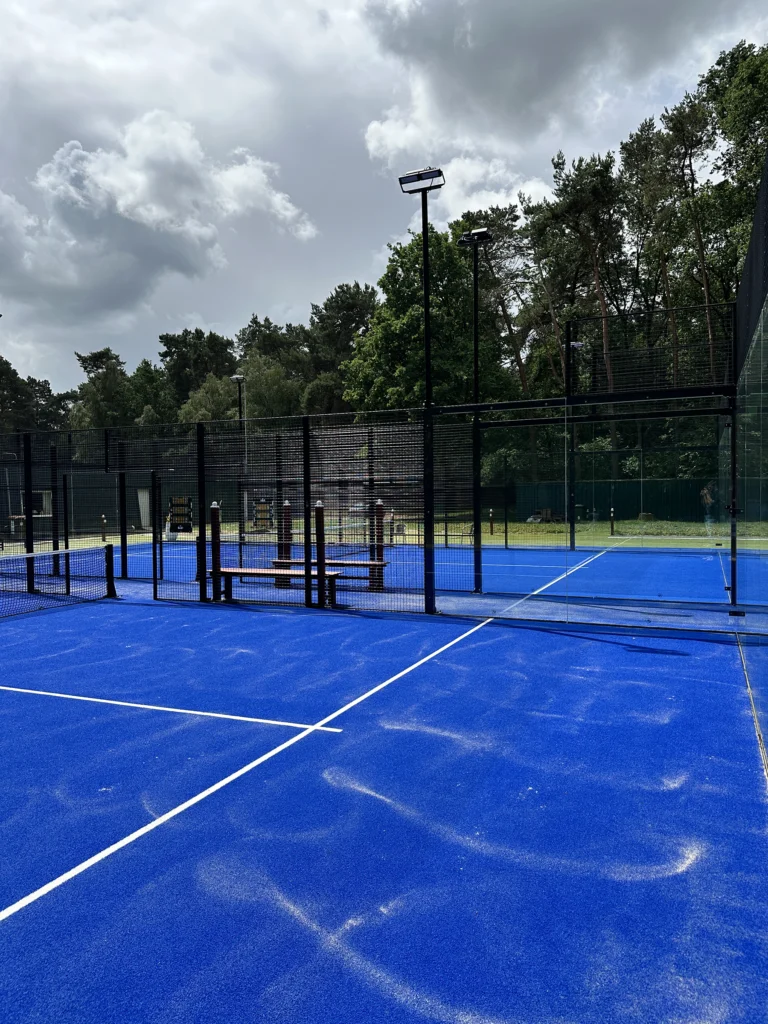
Building a padel court often starts with one question that determines everything: do I need a permit for this? In most cases, the answer is yes, especially if the court will be built outdoors. For an indoor court in an existing building, the situation may be different, but regulations still apply. In this article, we explain when a permit for a padel court is required in each situation, which documents you need, and what you can expect from the application process. What is an environmental permit and what does it have to do with padel? An environmental permit is an official authorization from the municipality to build, renovate, or change the use of a location. In the Netherlands, a padel court is considered a structure, which means that in most cases you need such a permit before you even break ground. Padel is more than just a sport. A padel court is a permanent structure consisting of a steel frame, glass walls, artificial turf, LED lighting, and in many cases a drain concrete or Supersub foundation. Taken together, these components make it a structure in the eyes of the law. The municipality must be able to assess whether the structure is safe, whether it complies with the zoning plan, and whether it will cause nuisance to the surrounding area. The last point is especially relevant for padel. Padel produces more noise than tennis. The sound of the ball striking glass and steel, combined with the cage structure acting as a resonance chamber, results in a sound power level of approximately 91 dB on average. That is roughly 10 dB higher than tennis. Municipalities are becoming increasingly aware of this and are therefore imposing more requirements regarding noise mitigation measures and playing hours during the permitting process. Which factors determine whether your padel court requires a permit? Whether a padel court requires a permit depends on four factors: the location (indoor or outdoor), the nature of the structure, the impact of noise and lighting, and the proximity of residential properties. An outdoor court almost always requires an environmental permit. For an indoor court in an existing building, it depends on the specific situation. Outdoor court An outdoor padel court almost always requires an environmental permit. The structure is permanent, the foundation is substantial, and the court has a visible impact on its surroundings. In addition, outdoor LED lighting requires a lighting assessment, and noise from outdoor play travels further than it does in an enclosed building. If the location is adjacent to a residential area or situated in an open environment, a permit requirement is virtually certain. Indoor court For a padel court in an existing building, without structural modifications to the building itself, a separate building permit is not always required. However, regulations still apply, including fire safety requirements, usage regulations, and sometimes adjustments to ventilation systems or emergency exits. Always check with the municipality whether a notification or permit is required, even if you believe it is a straightforward installation. Proximity to residential properties Is the location close to residential housing? If so, an acoustic assessment is almost always required as part of the application. The municipality wants to know how much noise the court generates at the façades of nearby homes and whether this remains within the legal noise limits. This applies to both outdoor and indoor courts if the building borders a residential area. How do you apply for a permit for a padel court? You apply for a padel court permit through the municipality’s Environmental Permit Portal (Omgevingsloket). You submit an application with a set of mandatory documents, after which the municipality assesses it against the zoning plan, the Dutch Building Decree, and local policy regulations. The application must be complete. Missing documents almost always result in delays. The documents required depend on the location and the type of court. For most projects, the following documents are required: Structural calculations in accordance with the Dutch Building Decree Acoustic assessment (noise levels at surrounding building façades) Lighting assessment (for outdoor LED lighting) Site plan of the location Ecological assessment where applicable (for locations in or near protected natural areas) Archaeological assessment where applicable (for groundworks at certain locations) Good preparation starts with a zoning plan check. Verify whether padel as a sport is permitted at the intended location. If it is not, you will need not only an environmental permit but also a deviation from the zoning plan, which significantly extends the process. If you have any doubts, always contact the municipality before submitting a formal application. An informal preliminary consultation can save time and prevent unnecessary costs. Requesting a permit What are the noise requirements for a padel court and how do they affect the permit? Noise requirements for a padel court are based on the Dutch Environmental Management Act (Wet milieubeheer) and the Activities Decree (Activiteitenbesluit). The municipality assesses whether the noise produced by the court at the façades of nearby homes remains within the applicable limit values. These are generally 50 dB(A) during the daytime, 45 dB(A) during the evening, and 40 dB(A) at night. If these limits are exceeded, the permit may be refused or additional conditions may be imposed. Because padel produces more noise than most other outdoor sports, an acoustic assessment is almost always mandatory as part of the permit application for an outdoor court. The assessment determines how much noise the court generates at various distances and whether additional mitigation measures are required. Examples include sound-absorbing panels on the outside of the cage structure or a freestanding noise barrier alongside the court. Noise mitigation measures can also improve the likelihood of obtaining a permit. Municipalities are more likely to approve an application if the applicant demonstrates that active consideration has been given to reducing noise. Independent acoustic laboratory testing has shown that panels installed in the cage structure achieve a sound absorption coefficient of 0.80 (Class A) and a sound insulation index of 19 dB. This results in a