
Does an indoor padel court cause noise nuisance to the surrounding area?
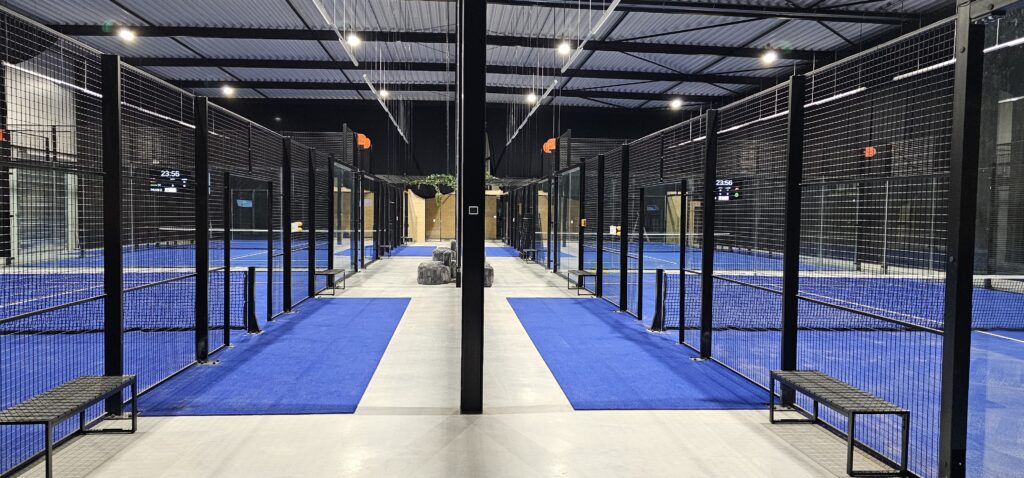
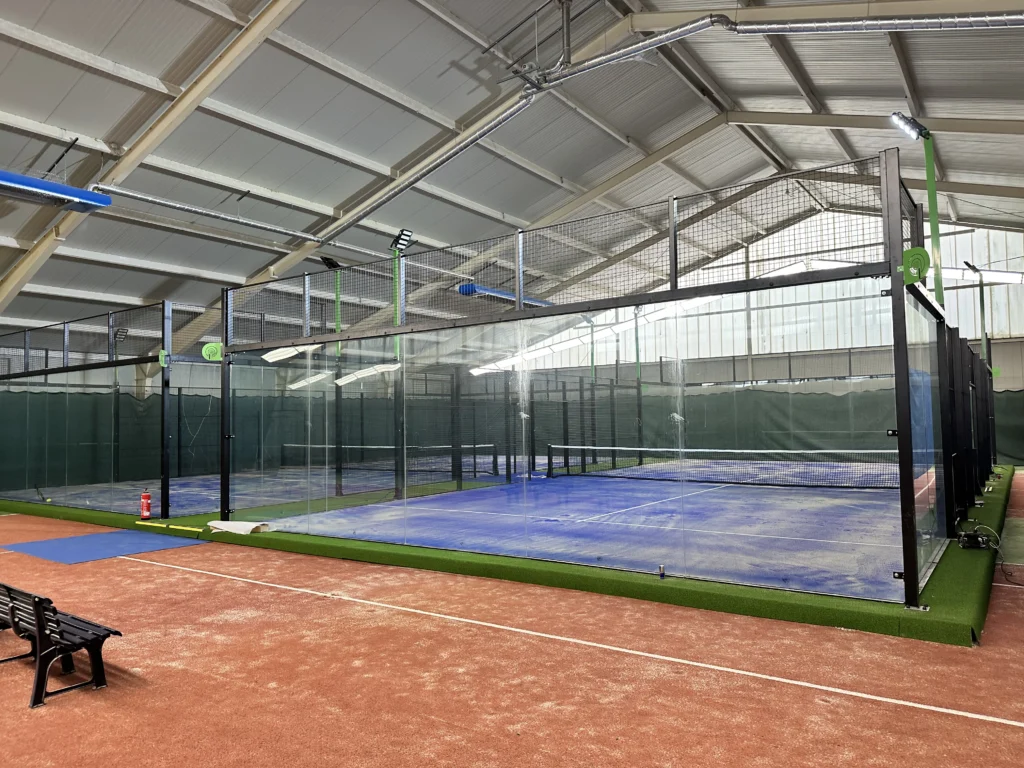
Noise nuisance is one of the most frequently asked questions when installing a padel court, and that’s understandable. Padel is a loud sport: the combination of a hard ball, glass walls, and a steel cage construction produces a recognizable sound that can carry far. Still, the situation with an indoor padel court is fundamentally different from an outdoor court. In this article we explain how much noise an indoor padel court produces, what the rules are, and which measures you can take to prevent noise complaints. How much noise does an indoor padel court produce? A padel court produces an average sound power of approximately 91 dB. That is roughly 10 dB more than a tennis court. The noise arises from two sources: the contact of the racket with the ball, and the contact of the ball with the glass and mesh of the cage construction. That second type of noise, the contact noise, is responsible for the largest part of the perceived nuisance. The cage construction amplifies this effect. Glass and steel reflect sound rather than absorbing it, which means the court functions as a kind of resonance chamber. With an indoor padel court, the hall itself also plays a role: the walls, ceiling, and floor partly determine how the sound spreads and whether it is audible outside the hall. Important to know: 91 dB is the source power at the court itself. At greater distances, the sound decreases quickly. Whether nearby residents experience nuisance from an indoor padel court depends heavily on the insulation value of the hall, the distance to homes, and the construction of the court. What are the legal noise standards for padel courts in the Netherlands? In the Netherlands, padel courts fall under the rules of the Activities Decree (Activiteitenbesluit milieubeheer) for environmental management. For sports activities, limit values apply for the long-term average assessment level (LAr,LT) and the maximum sound level (LAmax). The exact standards depend on the surroundings: stricter requirements apply in a residential area than in an industrial zone. As a guideline, the government applies the following limit values for sports facilities, measured at the facade of nearby homes: Daytime (07:00 to 19:00): maximum 50 dB(A) long-term average Evening (19:00 to 23:00): maximum 45 dB(A) long-term average Night (23:00 to 07:00): maximum 40 dB(A) long-term average For an indoor padel court in an existing, well-insulated hall, meeting these standards is often realistic without extra measures. For a new hall or a poorly insulated space, an acoustic study is almost always advisable and in many cases also required as part of the permit application. The municipality assesses per situation whether additional measures are needed. What is the difference in noise nuisance between indoor and outdoor padel courts? Indoor padel courts generally cause less noise nuisance for the surroundings than outdoor padel courts. The hall acts as a natural sound buffer: walls, roof, and insulation contain a large part of the sound. With an outdoor padel court, the sound spreads freely in all directions, without any damping from a building.
What noise control measures are mandatory for an outdoor padel court?
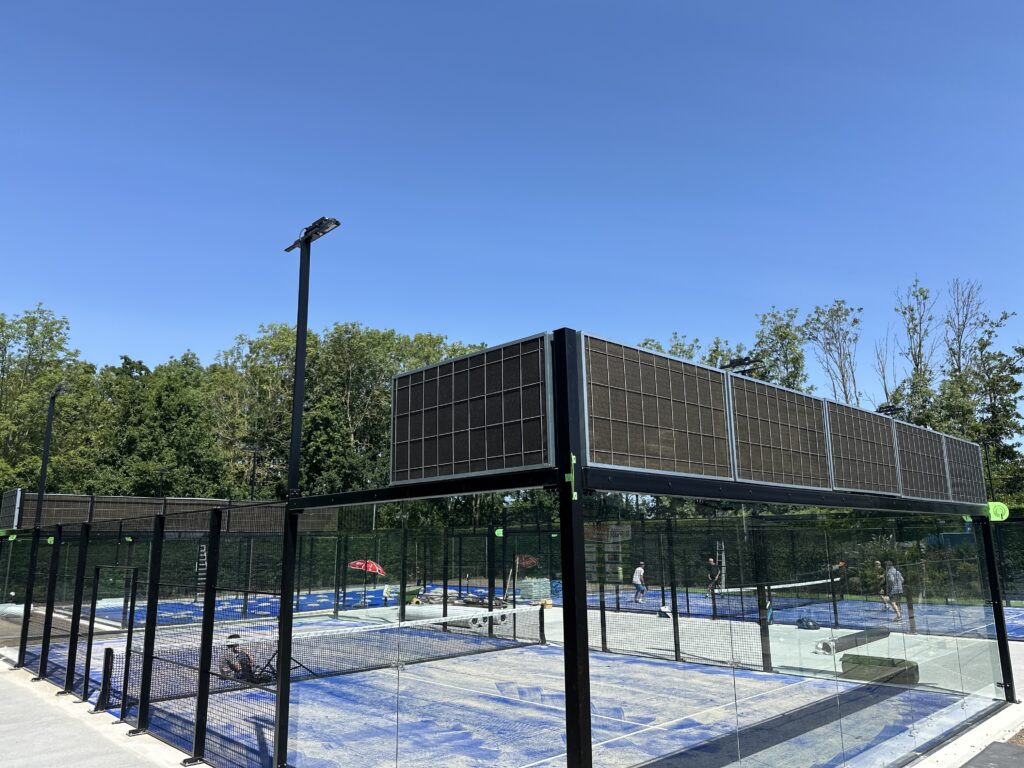
Noise nuisance at an outdoor padel court is one of the most common reasons why permit applications are delayed or rejected. The noise from a padel court is measurably louder than that of a tennis court, and municipalities are setting increasingly strict requirements for new outdoor courts. In this article we explain where that noise comes from, which standards apply, when you need a permit, and which measures you can take to limit noise nuisance. Why does an outdoor padel court cause noise nuisance? An outdoor padel court produces more noise than a tennis court, because the steel-and-glass cage structure functions as a sound box. The noise of the ball hitting the glass walls and the steel mesh is reflected back instead of being absorbed. That makes padel considerably louder than outdoor sports where no hard walls are present. The average sound power of a padel court is around 91 dB. By comparison, a tennis court produces on average about 10 dB less. That sounds like a small difference, but in acoustics 10 dB equals a doubling of perceived loudness. Two sound sources play a role here: The source noise of the racket hitting the ball The impact noise of the ball hitting the glass and mesh That second type of noise is responsible for the largest part of the experienced nuisance. The hard, reflective surfaces of the cage structure cause the sound to carry far, especially in open areas without natural shielding. An outdoor court also has no hall to absorb the sound. That makes the choice of location and the surrounding environment decisive for the degree of nuisance experienced by local residents. Which legal noise standards apply to an outdoor padel court? In the Netherlands, outdoor padel courts fall under the noise standards of the Activities Decree for Environmental Management (Activiteitenbesluit milieubeheer). For sports activities at clubs and commercial operators, limit values apply that depend on the time of day: during the day (07:00 to 19:00) higher noise levels are permitted than in the evening or at night. The municipality assesses whether the court meets these standards at the facade of the nearest home. The exact limit values are determined by the designated use of the location and the zoning plan (bestemmingsplan). A padel court at a sports park in an outer district has different standards than a court bordering a residential neighborhood or a quiet street. Municipalities use the guidelines of the VNG (Association of Netherlands Municipalities) for businesses and environmental zoning as a reference framework. Because padel is on average louder than most other outdoor sports, courts without measures exceed the applicable standards in many situations. This means that when applying for an environmental permit, you almost always have to submit an acoustic study. That study demonstrates whether the court meets the standards and which measures are needed if it does not. When is an environmental permit mandatory for a padel court? An environmental permit is almost always mandatory for an outdoor padel court. In the Netherlands, a padel court is considered a structure (bouwwerk), which means building regulations apply to it. Installing one without a permit is not an option: the municipality can halt the project, impose a fine, or even require the structure to be removed. A permit is mandatory in any case if: The padel court is placed outdoors Structural work takes place Noise or lighting affects the surroundings The location is within or near residential buildings For an indoor padel court in an existing hall without structural modifications, a separate building permit is not always required, but fire safety and usage rules still apply. For outdoor courts, the situation is almost always different: the spatial impact, the noise, and the lighting make a permit necessary. The average processing time for a permit application is 8 to 12 weeks, depending on the municipality and the complexity of the project. Prepare well: for the application you typically need structural calculations, an acoustic study, a lighting study, and a site plan. Sometimes the municipality also asks for an ecological or archaeological study. Read more about permits Which noise measures are permitted and effective? There are two proven measures to limit noise nuisance at an outdoor padel court: sound-absorbing panels attached to the cage structure, and freestanding noise barriers placed next to or around the court. Both measures are permitted and are recognized by municipalities as effective solutions, provided they demonstrably deliver sufficient reduction. Sound-absorbing panels Panels are placed on the outside of the mesh of the cage structure. They absorb the sound at the source instead of reflecting it back. The court remains visually open and the play dynamics do not change. Independently tested in an acoustic laboratory, the panels achieve sound absorption class A, with an absorption value of 0.80 and a sound insulation index of 19 dB. In practice this leads to a clearly audible reduction at distances of 40 to 100 meters. Noise barriers A noise barrier is a freestanding, noise-blocking structure placed next to the court that shields sound in the direction of homes. Barriers can be built up to 6 to 8 meters high and dozens of meters long. They are effective at greater distances and can be planted with climbing plants on coconut fiber or green mesh, which increases acceptance by the municipality and local residents. In many cases, a combination of panels and a noise barrier is the most effective. The panels reduce the noise at the source. The barrier blocks the remaining noise in the direction of the homes. Thanks to that combination, a noise barrier can sometimes be built lower, which saves costs and makes the permit process easier. Important to know: both measures must be structurally calculated and fit within the permit process. They are not standard solutions that can be applied without further consideration. Read more about sound solutions What is the difference between a noise screen and sound-absorbing panels? The main difference is the position relative to the court. Sound-absorbing panels are
When is a permit for a padel court required?
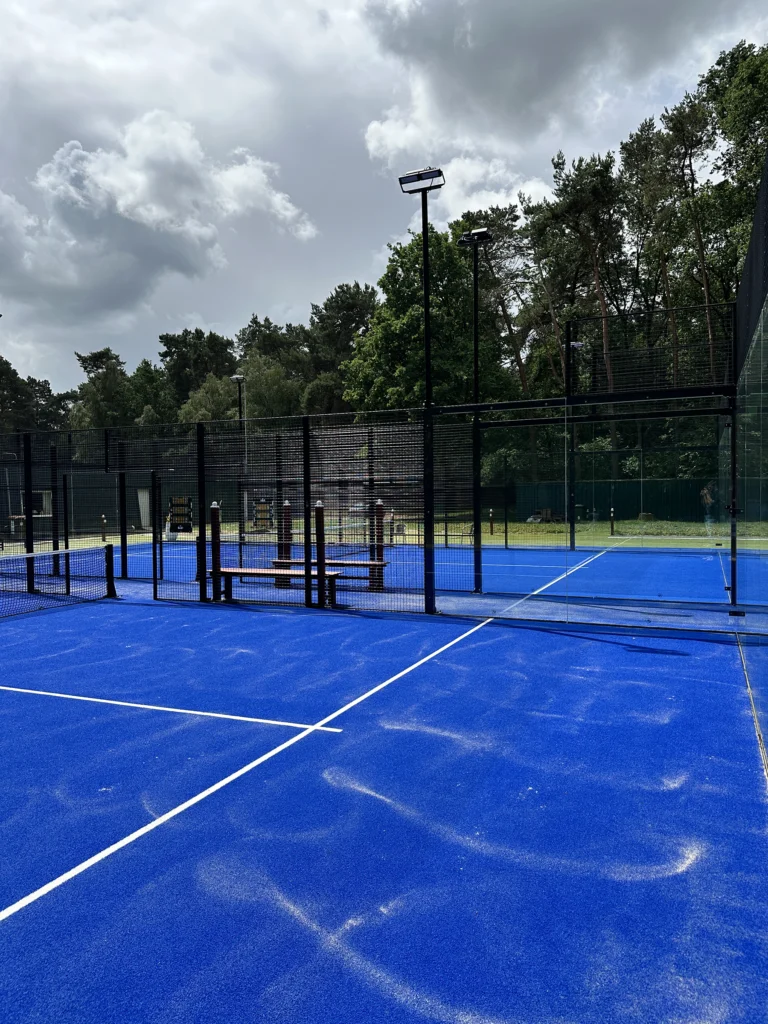
Building a padel court often starts with one question that determines everything: do I need a permit for this? In most cases, the answer is yes, especially if the court will be built outdoors. For an indoor court in an existing building, the situation may be different, but regulations still apply. In this article, we explain when a permit for a padel court is required in each situation, which documents you need, and what you can expect from the application process. What is an environmental permit and what does it have to do with padel? An environmental permit is an official authorization from the municipality to build, renovate, or change the use of a location. In the Netherlands, a padel court is considered a structure, which means that in most cases you need such a permit before you even break ground. Padel is more than just a sport. A padel court is a permanent structure consisting of a steel frame, glass walls, artificial turf, LED lighting, and in many cases a drain concrete or Supersub foundation. Taken together, these components make it a structure in the eyes of the law. The municipality must be able to assess whether the structure is safe, whether it complies with the zoning plan, and whether it will cause nuisance to the surrounding area. The last point is especially relevant for padel. Padel produces more noise than tennis. The sound of the ball striking glass and steel, combined with the cage structure acting as a resonance chamber, results in a sound power level of approximately 91 dB on average. That is roughly 10 dB higher than tennis. Municipalities are becoming increasingly aware of this and are therefore imposing more requirements regarding noise mitigation measures and playing hours during the permitting process. Which factors determine whether your padel court requires a permit? Whether a padel court requires a permit depends on four factors: the location (indoor or outdoor), the nature of the structure, the impact of noise and lighting, and the proximity of residential properties. An outdoor court almost always requires an environmental permit. For an indoor court in an existing building, it depends on the specific situation. Outdoor court An outdoor padel court almost always requires an environmental permit. The structure is permanent, the foundation is substantial, and the court has a visible impact on its surroundings. In addition, outdoor LED lighting requires a lighting assessment, and noise from outdoor play travels further than it does in an enclosed building. If the location is adjacent to a residential area or situated in an open environment, a permit requirement is virtually certain. Indoor court For a padel court in an existing building, without structural modifications to the building itself, a separate building permit is not always required. However, regulations still apply, including fire safety requirements, usage regulations, and sometimes adjustments to ventilation systems or emergency exits. Always check with the municipality whether a notification or permit is required, even if you believe it is a straightforward installation. Proximity to residential properties Is the location close to residential housing? If so, an acoustic assessment is almost always required as part of the application. The municipality wants to know how much noise the court generates at the façades of nearby homes and whether this remains within the legal noise limits. This applies to both outdoor and indoor courts if the building borders a residential area. How do you apply for a permit for a padel court? You apply for a padel court permit through the municipality’s Environmental Permit Portal (Omgevingsloket). You submit an application with a set of mandatory documents, after which the municipality assesses it against the zoning plan, the Dutch Building Decree, and local policy regulations. The application must be complete. Missing documents almost always result in delays. The documents required depend on the location and the type of court. For most projects, the following documents are required: Structural calculations in accordance with the Dutch Building Decree Acoustic assessment (noise levels at surrounding building façades) Lighting assessment (for outdoor LED lighting) Site plan of the location Ecological assessment where applicable (for locations in or near protected natural areas) Archaeological assessment where applicable (for groundworks at certain locations) Good preparation starts with a zoning plan check. Verify whether padel as a sport is permitted at the intended location. If it is not, you will need not only an environmental permit but also a deviation from the zoning plan, which significantly extends the process. If you have any doubts, always contact the municipality before submitting a formal application. An informal preliminary consultation can save time and prevent unnecessary costs. Requesting a permit What are the noise requirements for a padel court and how do they affect the permit? Noise requirements for a padel court are based on the Dutch Environmental Management Act (Wet milieubeheer) and the Activities Decree (Activiteitenbesluit). The municipality assesses whether the noise produced by the court at the façades of nearby homes remains within the applicable limit values. These are generally 50 dB(A) during the daytime, 45 dB(A) during the evening, and 40 dB(A) at night. If these limits are exceeded, the permit may be refused or additional conditions may be imposed. Because padel produces more noise than most other outdoor sports, an acoustic assessment is almost always mandatory as part of the permit application for an outdoor court. The assessment determines how much noise the court generates at various distances and whether additional mitigation measures are required. Examples include sound-absorbing panels on the outside of the cage structure or a freestanding noise barrier alongside the court. Noise mitigation measures can also improve the likelihood of obtaining a permit. Municipalities are more likely to approve an application if the applicant demonstrates that active consideration has been given to reducing noise. Independent acoustic laboratory testing has shown that panels installed in the cage structure achieve a sound absorption coefficient of 0.80 (Class A) and a sound insulation index of 19 dB. This results in a
What are the dimensions of a padel court compared to a tennis court?
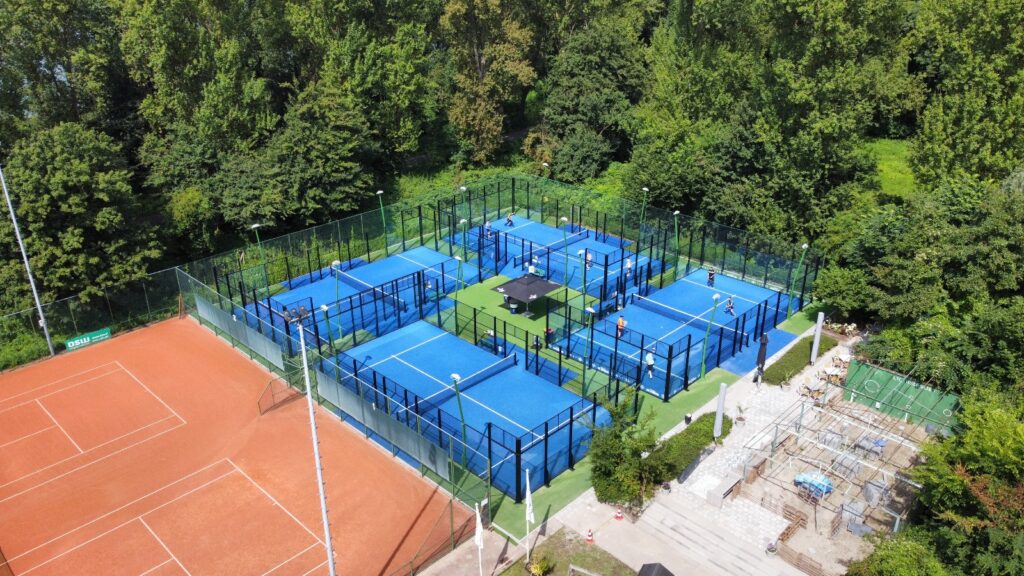
A padel court and a tennis court may look similar at first glance, but their dimensions differ considerably. A padel court measures 20 by 10 meters; a tennis court is roughly twice as large. That difference has major practical consequences, especially if you’re considering converting a tennis court into padel courts. Below you’ll find all the measurements at a glance, including the space, foundation, and custom work you’ll need. What are the official dimensions of a padel court? An official padel court measures 20 meters long and 10 meters wide. These are the international playing dimensions that apply to both competitive matches and recreational use. The playing field is enclosed by a cage structure of glass and mesh, which is part of the game itself. Besides the playing dimensions, there’s also an important distinction between the net playing area and the total space needed for the structure itself. The cage structure takes up slightly more room than just the playing field. For assembly and safety, you should plan for a minimum outer dimension of 21 by 11 meters. The cage’s standard height is 4 meters on the sides, with glass up to 3 meters high at the back wall, and the light mast reaches 6 meters at its highest point. For indoor padel courts, the hall’s clear height also plays a role. The minimum recommended clear height is 6 meters. The higher the hall, the better the playing quality, and the fewer restrictions players face on high balls. Read more about building padel courts How big is the difference between a padel court and a tennis court? A padel court has a playing surface of 200 m² (20 x 10 meters). A tennis court for doubles covers more than 260 m² of playing surface, but including the mandatory run-off zones, the total area quickly exceeds 600 m². The difference in required space is therefore two to three times as large in padel’s favor. This difference is exactly why padel is so appealing to tennis clubs and locations with limited space. In the space of one tennis court, multiple padel courts can fit, meaning you can achieve more playing capacity with the same amount of ground area. That translates directly into more playing hours, more members, and better utilization of the facility. Besides surface area, the playing experience also differs. Padel is played in an enclosed cage, where the walls are an active part of the game. Tennis is an open court without an enclosing structure. That fundamental difference in gameplay also explains why the courts differ so much in size. How much space do you need to build a padel court? To build one padel court, you need a minimum of 21 by 11 meters. This is the minimum assembly space including the cage structure. For an optimal playing experience with sufficient run-off space on the sides, 21 by 14 meters is recommended. That extra space on the sides, known as the run-off zones, is not only pleasant for players but also important for safety. At busy locations or for competitive use, sufficient space between two adjacent courts is also a point of attention. For indoor locations, the clear height also matters. A minimum of 6 meters is needed, but more is always better. When planning, also take into account access paths, emergency exits, and any technical spaces for lighting or electrical equipment. A thorough site assessment beforehand prevents surprises during construction. Can multiple padel courts fit in the space of one tennis court? Yes, two padel courts fit in the space of one tennis court, sometimes even more, depending on the exact dimensions of the tennis court and the available space around the field. This makes converting a tennis court into padel courts an attractive option for clubs looking to increase their capacity. A standard tennis court including run-off zones quickly covers 36 by 18 meters, which amounts to approximately 648 m². Two padel courts including run-off zones together take up approximately 21 by 28 meters, so 588 m². That fits in theory within the space of one tennis court, although the exact layout always depends on the location. When converting a tennis court to padel courts, the existing foundation also plays a role. In some cases, part of the substructure can be reused, which saves costs. Whether that’s possible depends on the condition of the existing foundation, the soil conditions, and the requirements set for the new courts. A structural assessment on site is always the first step in determining that. Converting 2 tennis courts into 4 padel courts — read about the possibilities here: Converting a tennis court into a padel court | I-Padel What are the dimensions of a padel court for custom work or special locations? The official playing dimensions of a padel court are fixed and always measure 20 by 10 meters. What can vary are the structural solutions around that fixed size: the height of the cage, the weight of the steel structure, the layout of glass and mesh, and the run-off zones. At special locations — such as a hall with a low ceiling height, a narrow strip of land, or a location with specific wind loads — the structural calculations are adjusted to the local conditions. Think of a coastal location with higher wind loads, or an indoor location with limited height where the light masts are configured differently. Sound-absorbing panels also require structural customization. When panels are attached to the outside of the cage, wind permeability decreases. The cage structure then needs to be reinforced with heavier uprights, additional columns, or adapted connections. This applies both to new courts and to existing courts where panels are added afterward. Without that adjustment, the structure is neither safe nor durable. In short: the playing dimensions are fixed, but the structure around those dimensions is always custom work per location. Read more about custom padel courts What type of foundation suits the dimensions and location of a padel court? The choice of
What does the Kiwa ISA Sport inspection for padel courts entail?
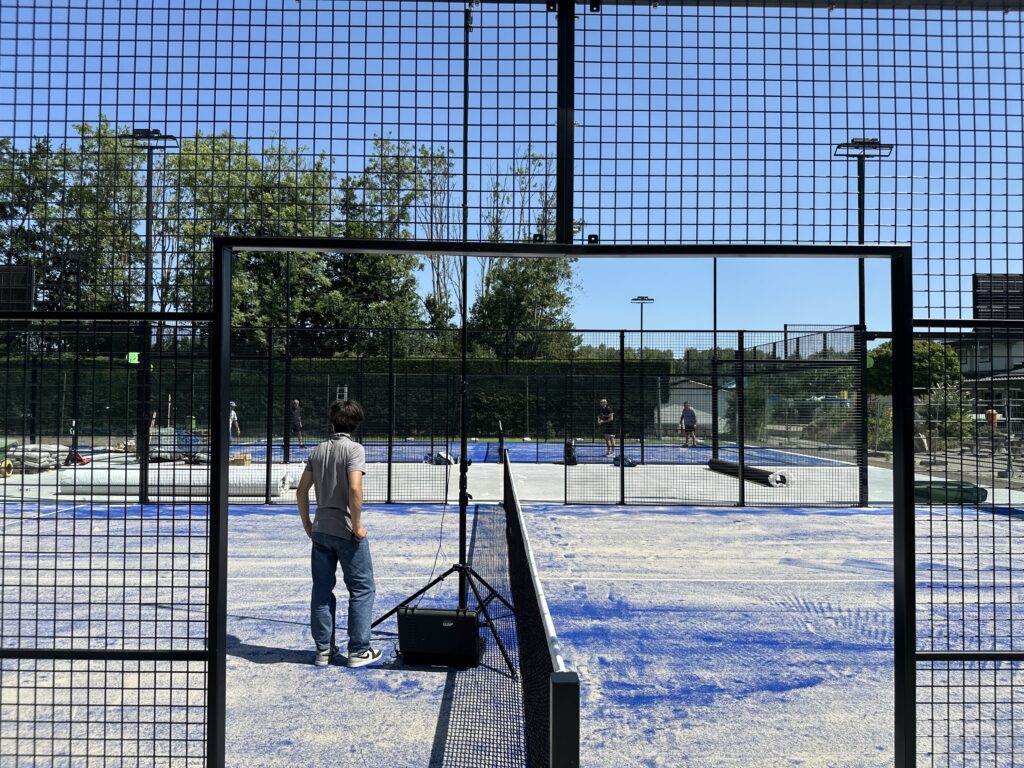
If you want to build a padel court for official use, sooner or later you’ll come across the name Kiwa ISA Sport. This is the body in the Netherlands responsible for the inspection and certification of padel court materials and sports surfaces. Without a valid Kiwa ISA Sport certificate, a padel court may not be used for official KNLTB (Royal Dutch Tennis Federation) competitions. Below we explain exactly what the certification involves, which components are assessed, and how you, as a client, can be sure you’re getting a Kiwa-certified padel court. What is the Kiwa ISA Sport certification for padel courts? The Kiwa ISA Sport certification is an independent product certification for sports surfaces and foundation components of padel courts in the Netherlands. Kiwa ISA Sport assesses whether materials meet the technical requirements of NOC*NSF and the KNLTB. Only products included on the official list of approved sports products may be used for courts intended for competition use. The certification focuses on the sport-technical properties of the court, such as the quality of the artificial turf, the foundation structure, and ball bounce. It is therefore not a general construction inspection, but specifically addresses whether the court meets the standards for fair and responsible play. Kiwa ISA Sport carries out these certifications as a recognized, independent body, separate from manufacturers or builders. Why is the Kiwa ISA Sport certification mandatory in the Netherlands? The Kiwa ISA Sport certification is mandatory because the KNLTB only permits official competitions on courts whose sports surface and foundation have been certified and included on the list of approved sports products. This applies to both new courts and renovated courts as of February 1, 2024. Without a certificate, a court cannot be registered for competition use. The requirement exists to safeguard the quality of play and to prevent courts with substandard materials from being used for official competitions. A padel court with poor ball bounce, insufficient flatness, or an unstable surface has a direct impact on playing quality and player safety. By making certification mandatory, the KNLTB ensures that all courts used for competition meet the same minimum standards. The requirement also protects clients. If a builder supplies materials that haven’t been certified, you, as an association or operator, run the risk that your court will not be approved afterward for official use. That’s a costly mistake you can easily avoid by checking in advance whether all materials are on the list of approved sports products. Which parts of a padel court need to be certified? The Kiwa ISA Sport certification primarily focuses on the sports surface and the foundation structure of a padel court. Specifically, this concerns the artificial turf including the infill material, the foundation on which the turf lies, and the combination of both layers. The steel structure itself falls outside the scope of this specific certification, but must still meet the structural requirements of the Dutch Building Decree (Bouwbesluit). Artificial turf and infill material A padel court uses sand-filled artificial turf: a short-pile, polymeric turf fiber with an effective length of 11 to 15 mm, filled with stabilization material to at least 75% of the fiber length. This applies to both indoor and outdoor courts. The turf is tested for sport-technical properties such as shock absorption, ball bounce, flatness, and friction. Only turf that meets these requirements and is included on the list of approved sports products may be used. Foundation The foundation is assessed as part of the overall system. Foundation components must be certified by Kiwa ISA Sport in the Netherlands before they may be used for a certified padel court. This applies to all commonly used foundation types, such as drainage concrete, Supersub, and ZOAB asphalt (porous asphalt). Each foundation variant has its own technical properties and is assessed separately for suitability for padel. How does the certification process for padel court materials work? The certification process for padel court materials runs through a licensing process at Kiwa ISA Sport. A manufacturer or supplier submits samples of the turf and foundation. These are tested in a laboratory according to international standards, including ISO and EN standards. If a product meets all sport-technical requirements, it is added to the list of approved sports products. Samples of sand-filled artificial turf are conditioned in advance: after filling with infill material, the mat is spread using a rake or brush, so that the test conditions match real-world practice. The measurement methods are laid down in international standards and NOC*NSF measurement methods. For every measurement result, the average must meet the specified requirements, and each individual measurement result must also fall within the standards. As a client, you don’t need to go through this process yourself. Your responsibility is to check whether the materials used by your supplier are already certified and included on the list of approved sports products. Always ask about this explicitly when requesting a quote, and don’t settle for vague assurances. What are the risks of a padel court without Kiwa ISA Sport certification? A padel court without Kiwa ISA Sport certification may not be used for official KNLTB competitions. This means an association or operator can still use the court for recreational purposes, but competitive players may not play official matches on it. For tennis clubs and associations that want their members to take part in competitions, this is a serious problem. Besides the loss of competition opportunities, there are also financial risks. If it turns out afterward that the materials used were not certified, it may be necessary to replace the sports surface or foundation in order to still meet the requirements. Those costs come on top of the investment already made. In the worst case, a newly built court may have to be partially demolished and rebuilt. There is also a safety aspect. The Kiwa ISA Sport standards are not only meant to ensure fair play, but also to protect players. A sports surface that doesn’t meet the shock absorption or friction standards increases the risk
What is the minimum height for a padel hall?
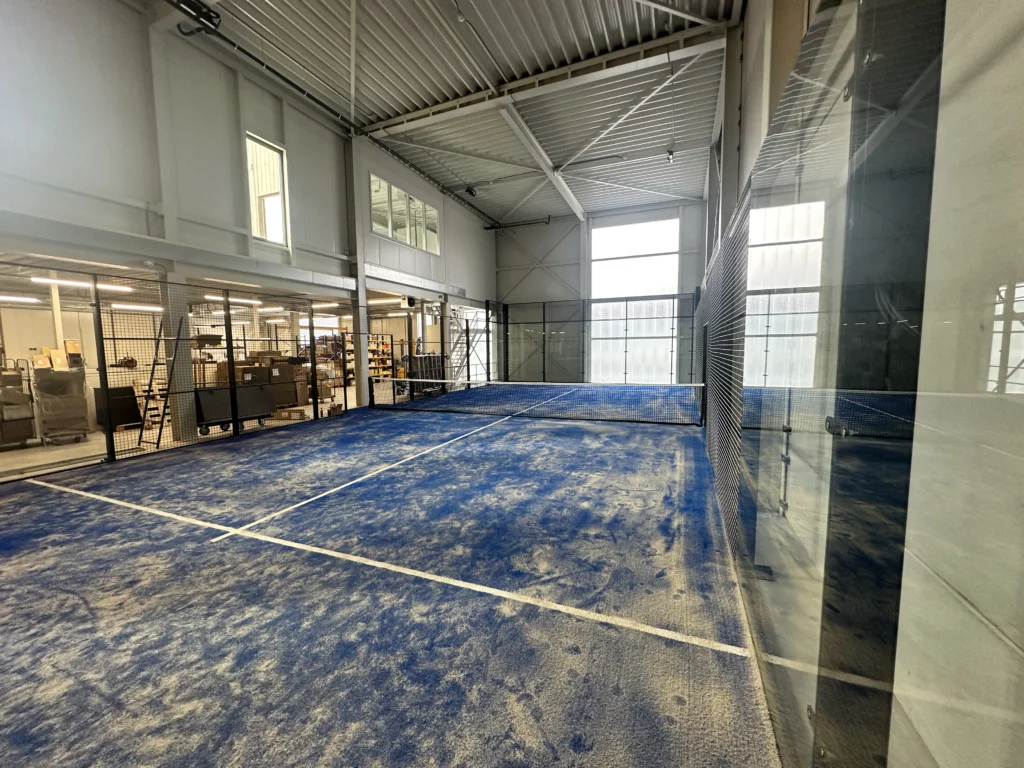
The minimum clear height for a padel hall is 6 meters. That is the minimum needed to play padel responsibly, without the ball constantly bouncing off the ceiling. For professional use, matches, or a more comfortable playing experience, the rule is: the higher, the better. Do you have a hall in mind and want to know if it’s suitable? Then the dimensions of the padel court are the starting point of every good plan. In this article we answer the most frequently asked questions about the height and dimensions of a padel hall, so you know exactly what to pay attention to when planning your location. Does the same minimum height apply to every spot in the hall? The minimum clear height of 6 meters applies to the entire playing field, including the space directly above the court. This concerns the clear height: the distance from the floor to the lowest obstruction above the playing field, such as a roof beam, a light fixture, or an installation pipe. That 6 meters must be achieved everywhere above the playing surface. In practice, we see that halls with steel structures often have roof beams or purlins that hang lower at regular intervals. So it is not enough to only measure the ridge or the highest point of the hall. Always check the lowest point above the playing field itself. If in doubt, an on-site measurement is the only reliable way to be certain. Also take the LED lighting above the court into account. The light masts of a padel court are standard 6 meters high. If the lighting is integrated into the roof structure, there must be enough room for both the fixtures and the clear playing space beneath them. A hall of exactly 6 meters is tight in that case and requires custom lighting arrangements. What happens if the hall just falls short of the minimum height? If the clear height comes in just under 6 meters, recreational play is sometimes still possible, but professional use and official matches are then not allowed. A court that does not meet the height requirements cannot receive certification from Kiwa ISA Sport, which is mandatory for competition use under the KNLTB. That has concrete consequences. Without valid certification, the court may not be used for official competition. For commercial operators or clubs wanting to organize matches, that is a serious limitation. Tenants or buyers who later still want to apply for certification then run into a wall. Practically speaking, solutions are sometimes possible depending on the exact situation. Think of lowering the floor, adjusting the roof structure, or choosing a different court layout within the hall. But these are drastic and costly adjustments. The wisest approach is to always check the height of a hall first, before making further plans. What other dimensions are required for an indoor padel court? Besides the minimum height of 6 meters, fixed dimensions apply for the playing field and the necessary space around it. The playing surface of a padel court is always 20 x 10 meters. For assembly of the cage structure you need at least 21 x 11 meters. The recommended space, including run-off zones, is 21 x 14 meters. Those run-off zones exist for a reason. They ensure the safety of players who end up behind the court and noticeably improve the playing experience. In a hall with multiple courts side by side, those extra meters add up quickly, so factor them into your space planning. Playing field: 20 x 10 meters Minimum assembly space: 21 x 11 meters Recommended space including run-off zones: 21 x 14 meters Minimum clear height: 6 meters For a hall with multiple courts, you add up the width per court, including the space between courts. An aisle of at least 1 to 2 meters between two courts is common and also advisable from a safety standpoint. When planning, always take emergency exits, escape routes, and local fire department requirements into account. What is the difference between an indoor and outdoor padel court in terms of construction requirements? The biggest difference lies in the steel structure. An outdoor padel court is exposed to wind, rain, frost, and sunlight. That requires a heavier steel structure, better protection of the steel, and a foundation calculated for wind load and weather influences. With an indoor padel court, a large part of those requirements no longer applies, because the hall protects the court. Concretely, this means outdoor courts are standardly built with hot-dip galvanized steel as protection against rust and corrosion. The structure is also dimensioned more heavily to absorb wind forces, especially in open areas or coastal regions. This is not necessary for indoor courts, which makes the structure simpler and cheaper. The foundation also differs. For outdoor courts, the foundation is a major and location-dependent cost item. Drainage concrete and Supersub are commonly used foundation types for outdoor use, where rainwater is drained directly through the foundation. For indoor courts, water drainage through the foundation is less relevant, and the build-up is tailored to the indoor environment. The exact foundation choice always depends on the soil conditions and the specific location. Finally, permits play a different role. An indoor padel court in an existing hall does not always require a separate building permit, depending on the situation. An outdoor padel court requires an environmental permit in almost all cases due to noise, lighting, and spatial impact. How much does it cost to have an indoor padel court built? As an indication, a standard indoor padel court, including cage structure, glass, artificial turf, LED lighting, and installation, may be possible from approximately €23,000 per court. The exact price always depends on the type of court, the number of courts, the accessibility of the location, and the chosen specification. A common mistake is looking only at the lowest price. In practice, this often leads to higher costs in the long run, due to lower-quality materials, limited warranty, or technical limitations that are
What are the annual maintenance costs of a padel court?
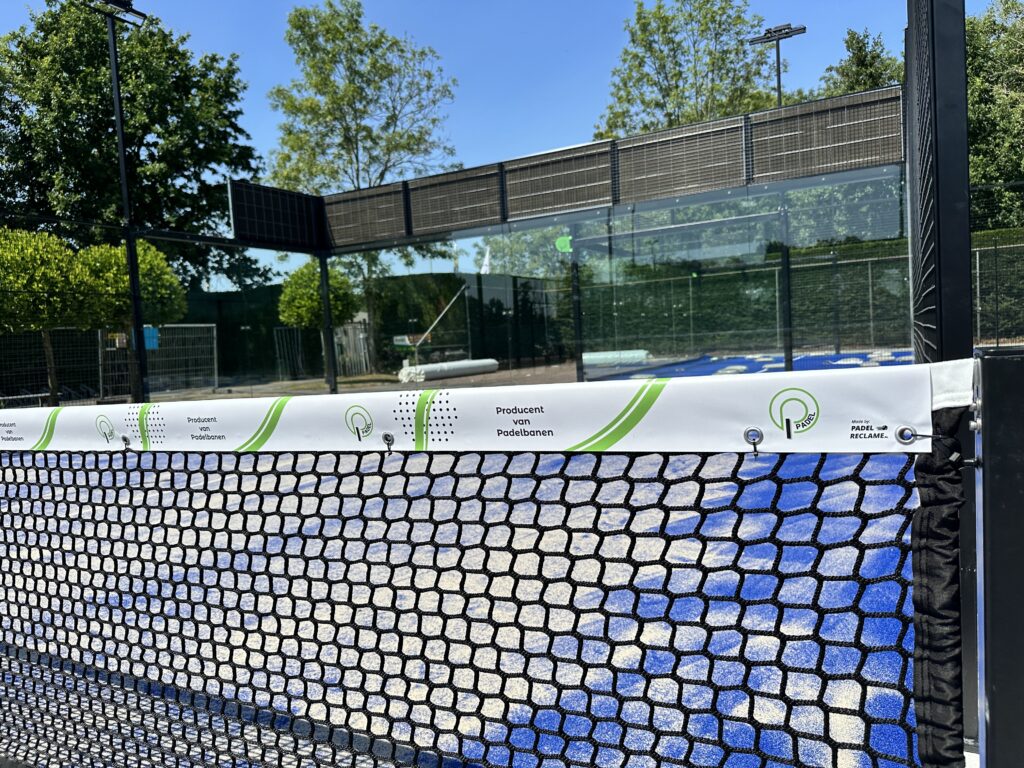
Anyone planning to build a padel court naturally looks at the purchase price first. But annual maintenance costs are regularly underestimated when weighing a padel court’s investment return. Yet it’s precisely these recurring costs that largely determine whether a court is profitable in the long run. As a general guideline: budget annual maintenance costs of between €500 and €2,000 for an indoor padel court, depending on usage and construction. For an outdoor padel court, these costs are higher due to additional wear from weather exposure. In this article, we’ve laid out the key maintenance questions so you have a realistic picture of what a padel court will cost you after construction. What are the average annual maintenance costs of a padel court? The average annual maintenance costs of a padel court range between €500 and €2,000 for an indoor court. For an outdoor padel court, costs are higher: budget €800 to €2,000 per year, depending on usage, location, and weather conditions. These are costs for regular maintenance, excluding major replacements. That range is wide, and rightly so. An indoor padel court in a sports hall that’s used intensively for ten hours a day requires more maintenance than a court used two evenings a week. The biggest cost items are the artificial turf, the lighting, and, occasionally, glass or structural maintenance. What helps many operators is to plan maintenance as a fixed annual budget rather than treating it as an unexpected expense. This prevents minor upkeep from growing into costly repairs. Which parts of a padel court require the most maintenance? The three components that require the most maintenance are the artificial turf, the LED lighting, and the glass. The artificial turf has the shortest lifespan and also requires regular interim care. The LED lighting and glass are more durable, but do need attention if damage occurs. Artificial turf The artificial turf is the most labor-intensive part of a padel court. The sand used as infill material shifts with intensive use. Regular replenishing and leveling is needed to guarantee consistent ball bounce and to meet the KNLTB’s sport-technical requirements. Budget for at least two to three professional maintenance sessions per year. Glass The glass surrounding the court is generally very durable. Still, a hard impact from a ball or racket can damage a pane. Replacing a single glass panel typically costs a few hundred euros. Inspect the glass annually for small hairline cracks, since these can grow into larger damage during frost, particularly on outdoor courts. LED lighting Quality LED lighting lasts a long time, but fixtures and mounting structures require periodic inspection. On outdoor courts, moisture plays a bigger role. Replace faulty fixtures promptly, since uneven lighting reduces playing quality and can pose a safety risk. Steel structure The steel structure requires relatively little active maintenance, provided the coating is in good condition. Check annually for rust, loose connections, or damage to the coating. This is more important for outdoor courts than indoor ones, since weather exposure degrades the coating faster. How often does the artificial turf on a padel court need to be replaced? The artificial turf on a padel court needs to be replaced on average every 8 to 12 years under normal intensive use. With very intensive use, such as at a commercial location with multiple hours of play per day, the lifespan can be shorter. With careful maintenance and less intensive use, you can sometimes exceed 12 years. How do you know when replacement is needed? There are a few clear signs: The turf fibers lie flat and no longer recover after play. The infill material (sand) has become structurally too thin and can no longer be topped up adequately. Ball bounce is inconsistent, which leads to rejection during a Kiwa ISA Sport inspection. There are visible wear spots near the service line or back wall. All artificial turf for padel courts in the Netherlands must comply with NOC*NSF sport-technical regulations and be certified via the sports products list. Only certified turf qualifies for competition use under KNLTB auspices. Keep this in mind when replacing turf: always choose a product that appears on that list and has been inspected by Kiwa ISA Sport. The costs for turf replacement average between €4,000 and €8,000 per court, depending on the chosen product and installation conditions. Read more about replacing artificial grass What’s the difference in maintenance costs between an indoor and outdoor padel court? Outdoor padel courts have structurally higher maintenance costs than indoor courts. The main difference lies in the influence of weather conditions: rain, frost, UV radiation, and wind wear down materials faster. Budget for an outdoor court’s annual maintenance costs to run roughly one-and-a-half to two times higher than for a comparable indoor court. Specifically, there are a few cost differences you’ll notice quickly: Artificial turf: Outdoor turf wears faster due to UV radiation and the combination of dryness and precipitation. The fibers become more brittle, and infill material partially washes away during heavy rain. Steel structure: Outdoor structures are hot-dip galvanized as standard protection, but the coating requires more frequent inspection. Damage from weather conditions or vandalism occurs more often. Foundation: The foundation of an outdoor court, often drainage concrete or Supersub, requires periodic inspection for subsidence or cracking. Drainage concrete has an average lifespan of 25 to 40 years, but interim repairs can’t be ruled out. Cleaning: Outdoor courts collect leaves, moss, and algae. Periodic cleaning is needed to maintain playability and safety. Indoor courts benefit from a stable climate. Temperature fluctuations are minimal, there’s no precipitation, and UV exposure barely plays a role. That makes indoor courts considerably cheaper to maintain over their full lifespan, which contributes to a better ratio between padel court investment and return. Which maintenance costs are often forgotten when purchasing a padel court? The most commonly forgotten maintenance costs for a padel court are periodic inspections, topping up infill material, cleaning costs, and the replacement of small parts such as mesh panels, door hinges, or lighting
What type of artificial grass is used on padel courts?
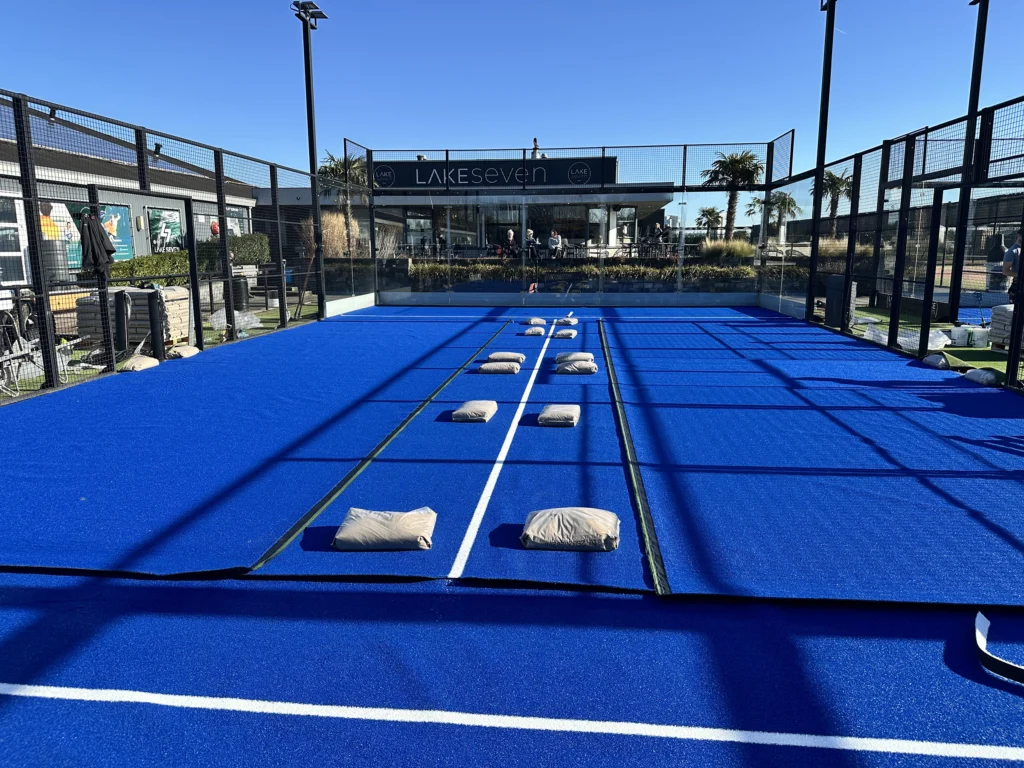
When installing a padel court, choosing the right artificial turf is one of the most important practical decisions you’ll make. The turf doesn’t just determine how the ball bounces and how players move, but also how long the court lasts and what maintenance will cost. Whether you’re planning an indoor padel court or an outdoor court, the choice of artificial turf deserves serious attention. In short: padel courts use short-pile artificial turf made of polyethylene (PE) or polypropylene (PP), infilled with silica sand. Fiber height is typically between 10 and 13 millimeters. Below we explain everything you need to know about artificial turf for padel courts. What exactly is artificial turf for a padel court? Artificial turf for a padel court is a synthetic playing surface consisting of synthetic fibers tufted into a backing mat and infilled with silica sand. This sand bed ensures proper ball bounce characteristics and provides grip for players’ shoe soles. The turf sits directly on the foundation and forms the top layer of the complete court system. This isn’t decorative grass like you’d see in a garden. Padel-specific turf is developed for intensive sports use: it must behave consistently with every ball bounce, be wear-resistant, and remain safe for players who change direction quickly. The fibers are typically short, stiff, and evenly distributed across the mat. Without the right sand bed, the turf doesn’t function properly, since the sand keeps the fibers upright and regulates ball response. What types of artificial turf are used for padel courts? Three fiber types are used for padel courts: fibrillated fibers, monofilament (straight) fibers, and curled fibers. Each type has different playing characteristics. Fibrillated fibers are the most common in padel and provide a consistent ball bounce. Monofilament fibers are smoother and more durable but require a higher stitch density. Curled fibers are used less often but offer a softer playing feel. Fibrillated fibers Fibrillated fibers are thin, ribbon-like fibers that split slightly with use. This creates a dense, closed surface that guides the ball well. This type is popular in padel because it gives a reliable, predictable ball bounce. According to current inspection standards, fibrillated fibers require a minimum stitch density of 42,000 stitches per square meter. Monofilament fibers Monofilament fibers are round, single-strand threads that stay firmly upright. They’re more wear-resistant than fibrillated fibers and retain their shape longer under intensive use. Monofilament turf requires a higher minimum stitch density of 52,000 stitches per square meter, which contributes to a more even surface. Curled fibers Curled fibers are used occasionally and provide a softer, more resilient playing feel. They’re less common in padel than in other sports but can be a good choice in specific situations. The minimum stitch density is the same as for fibrillated fibers: 42,000 stitches per square meter. Read more about different kinds of artificial grass What’s the difference between indoor and outdoor artificial turf for padel? The biggest difference between indoor and outdoor artificial turf for padel is weather resistance. Outdoor turf must withstand UV radiation, frost, rain, and temperature fluctuations without discoloring or degrading. Indoor turf doesn’t need to meet these requirements, but it must be suitable for use on a hard indoor surface without affecting ball bounce. In an indoor padel court, the environment is more stable: no direct sunlight, no rain, and fewer temperature fluctuations. This means the turf grays and wears less quickly due to weather influences. The fibers stay in good condition longer and the sand bed remains more stable. For an outdoor court, using UV-stabilized fibers is an absolute requirement. Without this stabilization, the fibers break down faster and the surface loses its playing characteristics. Water drainage also plays a role for outdoor turf. Outdoor courts always combine the turf with a water-permeable foundation, such as drainage concrete or Supersub. The turf itself is then installed so that rainwater can drain away quickly, preventing puddle formation and allowing the court to be playable again shortly after rain. How long does artificial turf on a padel court last? Artificial turf on a padel court lasts an average of 8 to 12 years, depending on usage intensity, turf quality, and maintenance. At commercial venues with daily intensive use, the lifespan tends toward the shorter end. At club courts with more limited occupancy, the turf can last longer. Wear occurs most heavily in the most-played zones: the service boxes and the areas directly behind the net. Here the fibers flatten faster and the sand bed loses its even distribution. When ball bounce becomes noticeably less consistent or the fibers are visibly flattened, replacement is warranted. A good foundation indirectly extends the lifespan of the turf. A flat, stable base ensures the turf is evenly loaded and prevents local subsidence. Such subsidence can mechanically damage the turf and negatively affect playing characteristics. Does artificial turf for padel courts need to be certified? Yes. Artificial turf used for padel courts intended for official matches must meet the standards of Kiwa ISA Sport and the KNLTB (Royal Dutch Tennis Association). Kiwa ISA Sport is the recognized certification body in the Netherlands that tests sports products for technical and sport-technical properties. Without certification, a court may not be used for official matches. The inspection includes material-technical examination of the turf mat, including the number of stitches per square meter, fiber height, distance between stitch rows, and the composition of the infill material. Field samples of at least 1 by 1 meter undergo laboratory testing and are checked against the specifications stated by the manufacturer. Only when all measurement results fall within the permitted product margins is the certificate issued. As a buyer, it’s important to verify that the artificial turf being offered is actually certified for use in the Netherlands. Not all products on the market meet the Kiwa ISA Sport requirements. Inexperienced buyers who don’t check this may unknowingly have non-compliant material installed, which causes problems at handover and during any subsequent inspections. What does artificial turf for a padel court
What are the operating costs after the construction of a padel court?

Building a padel court is one thing. But what does it cost afterward, year after year? For entrepreneurs, clubs, and real estate parties, the answer to that question is at least as important as the construction price itself. The operating costs of a padel court largely determine whether your investment pays off, and how quickly. In this article, we lay out all the recurring costs clearly, so you have a realistic picture before you decide. As a general guideline: the annual operating costs of a padel court average between €3,000 and €8,000 per court, depending on the type of court, the location, and the intensity of use. This ranges from energy costs and maintenance to insurance and the longer-term replacement of materials. Below we work out each component in detail. What exactly are operating costs for a padel court? The operating costs of a padel court are all the recurring costs you incur after construction. These are the costs of keeping the court running: energy, maintenance, insurance, and eventually the replacement of wearing parts such as artificial turf and lighting. They are not one-time costs, but recur every year. The distinction from construction costs is important. You pay construction costs once, for the foundation, the steel structure, the glass, the artificial turf, and the installation. You pay operating costs year in, year out. For a solid business case for a padel location, you need to map out both. A court that was cheap to build but expensive to run can be a worse investment in the long term than a court with a higher construction price but lower annual costs. The main cost items in operations are: Energy consumption of LED lighting Regular maintenance of the artificial turf and structure Insurance for the facility Replacement of artificial turf (once every 8 to 12 years) Any repairs to glass or structure Management and cleaning of the location What does maintenance of a padel court cost per year? Annual maintenance of a padel court costs an average of between €500 and €2,000 per court, depending on use and court type. This includes regularly topping up and leveling the artificial turf, keeping the glass clean, and a visual inspection of the steel structure and fastening points. Artificial turf requires the most attention. Intensive use causes the sand infill to become unevenly distributed, which affects ball bounce and playing comfort. Regular top-dressing and an annual machine cleaning keep the court in good condition. Glass is best cleaned several times a year, especially for outdoor courts, where dirt and algae build up faster. The steel structure requires little active maintenance, but it’s wise to check annually for rust formation, loose fastenings, and whether the coating is still intact. With a quality structure and good coating, major repairs are rarely needed in the first years. Small damage to glass or mesh is the most common repair cost and typically ranges between €200 and €800 per incident. Read more about artificial grass How much energy does a padel court with LED lighting use? A padel court with LED lighting consumes an average of 4 to 8 kWh per hour of play, depending on the number of fixtures, the lighting level, and the configuration. With average use of 8 to 10 hours per day, this adds up to 30 to 70 kWh per day per court. LED lighting is the most energy-efficient option for padel courts. Compared to traditional halogen or fluorescent lighting, LED uses up to 60 percent less energy at the same light level. That makes a big difference annually, especially if the court is used intensively. To calculate energy costs: at an average energy price of around €0.30 per kWh and a consumption of 50 kWh per day, the annual energy costs for one court are approximately €5,000 to €6,000 with daily use. With less intensive use, for example a court in use an average of 5 hours per day, costs are closer to €2,500 to €3,500 per year. Practical tips to reduce energy costs: Install motion sensors or timers so the lighting switches off automatically Choose dimmable LED lighting that you can adjust to the time of day Consider solar panels as a supplement to the energy supply for larger locations When does the artificial turf on a padel court need to be replaced? The artificial turf on a padel court lasts an average of 8 to 12 years under normal use. With intensive commercial use, this can be shorter. Replacement is needed when the fibers have become flattened, the sand infill is no longer even, or the ball bounce no longer meets sport-technical standards. The lifespan of artificial turf depends heavily on intensity of use and maintenance. A court in use 12 hours a day wears faster than a court at a smaller club. Regular maintenance—top-dressing, cleaning, and checking—significantly extends the lifespan. For official competition use, the KNLTB (Royal Dutch Tennis Association) sets requirements for the sport-technical quality of the surface. Artificial turf is assessed on properties such as ball bounce and surface levelness, measured at fifteen fixed measurement points on the court. If the artificial turf no longer meets the sport-technical regulations, no certificate can be obtained for competition use. Inspection by Kiwa ISA Sport is then mandatory for renewed certification. The costs for replacing artificial turf typically range between €4,000 and €8,000 per court, including removal of the old material and reinstallation. This is a one-time cost item that you can plan for as a reserve in your operating budget. Budget around €500 to €800 per year as an annual reserve. Read more about replacing artificial grass What are the insurance costs for a padel court? Insurance costs for a padel court average between €500 and €1,500 per year, depending on the number of courts, the location, and the coverage. A standard insurance policy for a sports facility typically covers damage to the structure, liability, and fire. Which insurance policies you need depends on the situation. A commercial operator has
Padel court maintenance: how to extend their lifespan and select the right playing qualityPadel court maintenance: how to extend their lifespan and select the right playing quality
Padel Court Maintenance: How to Extend Lifespan and Playing Quality Padel Court Maintenance A well-maintained padel court ensures safety, consistent playing conditions, and lower long-term costs. Daily, weekly, and periodic routines keep synthetic turf fibers resilient, glass walls secure, and the structure solid. This isn’t a detail, but the foundation of a court that performs at its best all year round—as various maintenance guides emphasize—focusing on regular brushing, sand distribution, inspections of glass and metal fittings, and drainage control. Why Maintenance Is Essential Maintenance prevents sand compaction, hardening of the top layer, and uneven play surfaces. It also reduces fiber wear and lowers the risk of injuries caused by slipping or unexpected irregularities. Authoritative guidelines recommend daily cleaning and weekly brushing, periodic deep cleaning, and timely sand refilling to keep bounce and grip consistent. When to Perform Maintenance Daily and Weekly: What Works in Practice Remove debris daily using a soft brush or blower; brush the turf and level the sand weekly; and check fittings, net tension, lighting, and drainage each month. This routine aligns with international best practices and helps maintain warranty conditions—especially for covered courts, where insufficient maintenance can affect both safety and warranty coverage. Periodic Deep Cleaning Periodic professional deep cleaning lifts turf fibers, redistributes and renews the infill sand as needed, and removes organic matter from the mat. This keeps the surface permeable and playable, with noticeable improvements in speed and consistency. Several sources recommend deep maintenance at least once a year, and every six months for intensive use, along with inspections of glass, net posts, fencing, and bolts. When to Replace the Artificial Grass Even with proper upkeep, artificial grass has a lifespan. Depending on usage, weather, and maintenance discipline, the replacement range is typically between four and seven years. Signs that replacement is due include bare or dark patches, fibers that no longer stand up despite brushing, reduced drainage, and unsafe grip—all indicators that the mat has reached the end of its technical life. Industry guides emphasize that timely replacement is more cost-effective than continuing with an overly worn surface, as it prevents repeated repairs, excessive sand loss, and reductions in play quality and safety. Replacement as an Opportunity for Improvement Replacement provides a moment to optimize—consider the right turf type for your usage, adjust the sand infill, improve drainage, clean the glass, and perform structural checks. The right combination of suitable turf, correct sand level, and a maintenance log demonstrably improves return on investment. Read more about artificial turf In Conclusion With a consistent maintenance routine, timely deep cleaning, and clear replacement scheduling, your court will remain safe, fast, and enjoyable. If you’d like help setting up a maintenance plan or advice on replacement, we’re happy to assist. Want to know more? We’re happy to help! Contact details: +31 52 72 100 40 info@i-padel.nl Hoornse Hop 10, 8321 WX, URK Frequently Asked Questions Why is regular maintenance of a padel court so important? Regular maintenance keeps the playing surface safe and consistent. It prevents sand compaction, hardening of the top layer, and unnecessary fiber wear. Sources recommend a daily, weekly, and periodic schedule with inspections of glass, fencing, fittings, and drainage so the court performs properly year-round. What does daily maintenance involve, and what can I do myself? Remove leaves and debris with a soft brush or blower, lightly redistribute the sand with a broom or drag mat, and visually inspect for loose parts. This aligns with recommendations from artificial turf and padel court maintenance guides. How often should I check or refill the infill sand? Check the sand distribution weekly and refill periodically to maintain play quality and fiber posture. The benchmark for infill sand is around 12 kilograms per square meter, depending on turf type and usage intensity. What is surface hardening, and how can it be fixed? Hardening occurs when sand becomes compacted and contaminated, making the surface firm and poorly permeable. Professional revitalization removes dirty sand, cleans the turf, and replenishes it—restoring elasticity and drainage. When is it wise to replace the turf mat? Typical lifespan for padel turf is around four to seven years, depending on usage, weather, and maintenance. Warning signs include dark or bare spots, fibers that no longer stand up, and poor water drainage. Timely replacement prevents higher costs and unsafe conditions. What key monthly checks should I perform besides the surface? Check glass and fencing, bolts, and net posts for looseness; inspect lighting and drainage; and schedule deep cleaning or sand refilling when needed. This matches structural and periodic inspection guidelines. How should you deal with seasonal influences like autumn leaves or winter snow? Keep the court free of leaves and organic debris, ensure drainage works properly, remove snow carefully without damaging the turf or glass, and avoid ice buildup whenever possible. Seasonal attention helps prevent damage and slipping hazards. Do I always need to outsource deep cleaning, and how often? No, you can also perform it yourself with professional equipment costing around €7,000. Plan at least one professional session per year, or twice annually for heavy use. During this process, fibers are lifted, sand redistributed, contamination removed, and structural components checked for lasting play quality and safety. Regular maintenance keeps the playing surface safe and consistent. It prevents sand compaction, hardening of the top layer, and unnecessary fiber wear. Sources recommend a daily, weekly, and periodic schedule with inspections of glass, fencing, fittings, and drainage so the court performs properly year-round. Remove leaves and debris with a soft brush or blower, lightly redistribute the sand with a broom or drag mat, and visually inspect for loose parts. This aligns with recommendations from artificial turf and padel court maintenance guides. Check the sand distribution weekly and refill periodically to maintain play quality and fiber posture. The benchmark for infill sand is around 12 kilograms per square meter, depending on turf type and usage intensity. Hardening occurs when sand becomes compacted and contaminated, making the surface firm and poorly permeable. Professional revitalization removes dirty