
Padel court maintenance: how to extend their lifespan and select the right playing qualityPadel court maintenance: how to extend their lifespan and select the right playing quality
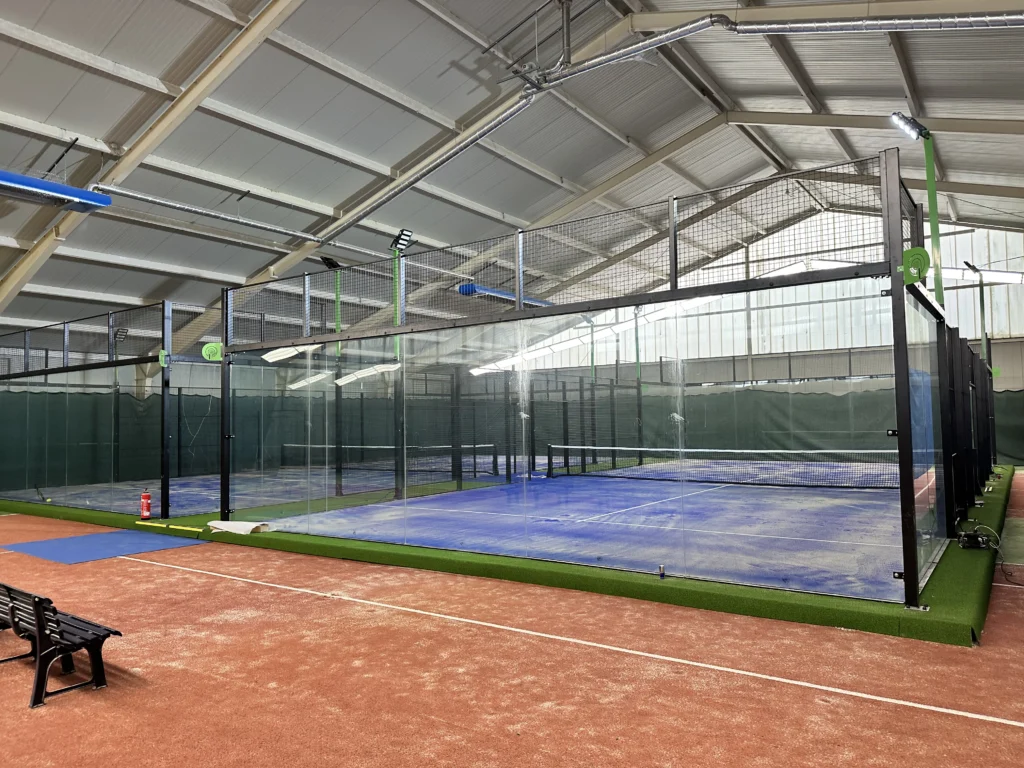
Padel Court Maintenance: How to Extend Lifespan and Playing Quality Padel Court Maintenance A well-maintained padel court ensures safety, consistent playing conditions, and lower long-term costs. Daily, weekly, and periodic routines keep synthetic turf fibers resilient, glass walls secure, and the structure solid. This isn’t a detail, but the foundation of a court that performs at its best all year round—as various maintenance guides emphasize—focusing on regular brushing, sand distribution, inspections of glass and metal fittings, and drainage control. Why Maintenance Is Essential Maintenance prevents sand compaction, hardening of the top layer, and uneven play surfaces. It also reduces fiber wear and lowers the risk of injuries caused by slipping or unexpected irregularities. Authoritative guidelines recommend daily cleaning and weekly brushing, periodic deep cleaning, and timely sand refilling to keep bounce and grip consistent. When to Perform Maintenance Daily and Weekly: What Works in Practice Remove debris daily using a soft brush or blower; brush the turf and level the sand weekly; and check fittings, net tension, lighting, and drainage each month. This routine aligns with international best practices and helps maintain warranty conditions—especially for covered courts, where insufficient maintenance can affect both safety and warranty coverage. Periodic Deep Cleaning Periodic professional deep cleaning lifts turf fibers, redistributes and renews the infill sand as needed, and removes organic matter from the mat. This keeps the surface permeable and playable, with noticeable improvements in speed and consistency. Several sources recommend deep maintenance at least once a year, and every six months for intensive use, along with inspections of glass, net posts, fencing, and bolts. When to Replace the Artificial Grass Even with proper upkeep, artificial grass has a lifespan. Depending on usage, weather, and maintenance discipline, the replacement range is typically between four and seven years. Signs that replacement is due include bare or dark patches, fibers that no longer stand up despite brushing, reduced drainage, and unsafe grip—all indicators that the mat has reached the end of its technical life. Industry guides emphasize that timely replacement is more cost-effective than continuing with an overly worn surface, as it prevents repeated repairs, excessive sand loss, and reductions in play quality and safety. Replacement as an Opportunity for Improvement Replacement provides a moment to optimize—consider the right turf type for your usage, adjust the sand infill, improve drainage, clean the glass, and perform structural checks. The right combination of suitable turf, correct sand level, and a maintenance log demonstrably improves return on investment. Read more about artificial turf In Conclusion With a consistent maintenance routine, timely deep cleaning, and clear replacement scheduling, your court will remain safe, fast, and enjoyable. If you’d like help setting up a maintenance plan or advice on replacement, we’re happy to assist. Want to know more? We’re happy to help! Contact details: +31 52 72 100 40 info@i-padel.nl Hoornse Hop 10, 8321 WX, URK Frequently Asked Questions Why is regular maintenance of a padel court so important? Regular maintenance keeps the playing surface safe and consistent. It prevents sand compaction, hardening of the top layer, and unnecessary fiber wear. Sources recommend a daily, weekly, and periodic schedule with inspections of glass, fencing, fittings, and drainage so the court performs properly year-round. What does daily maintenance involve, and what can I do myself? Remove leaves and debris with a soft brush or blower, lightly redistribute the sand with a broom or drag mat, and visually inspect for loose parts. This aligns with recommendations from artificial turf and padel court maintenance guides. How often should I check or refill the infill sand? Check the sand distribution weekly and refill periodically to maintain play quality and fiber posture. The benchmark for infill sand is around 12 kilograms per square meter, depending on turf type and usage intensity. What is surface hardening, and how can it be fixed? Hardening occurs when sand becomes compacted and contaminated, making the surface firm and poorly permeable. Professional revitalization removes dirty sand, cleans the turf, and replenishes it—restoring elasticity and drainage. When is it wise to replace the turf mat? Typical lifespan for padel turf is around four to seven years, depending on usage, weather, and maintenance. Warning signs include dark or bare spots, fibers that no longer stand up, and poor water drainage. Timely replacement prevents higher costs and unsafe conditions. What key monthly checks should I perform besides the surface? Check glass and fencing, bolts, and net posts for looseness; inspect lighting and drainage; and schedule deep cleaning or sand refilling when needed. This matches structural and periodic inspection guidelines. How should you deal with seasonal influences like autumn leaves or winter snow? Keep the court free of leaves and organic debris, ensure drainage works properly, remove snow carefully without damaging the turf or glass, and avoid ice buildup whenever possible. Seasonal attention helps prevent damage and slipping hazards. Do I always need to outsource deep cleaning, and how often? No, you can also perform it yourself with professional equipment costing around €7,000. Plan at least one professional session per year, or twice annually for heavy use. During this process, fibers are lifted, sand redistributed, contamination removed, and structural components checked for lasting play quality and safety. Regular maintenance keeps the playing surface safe and consistent. It prevents sand compaction, hardening of the top layer, and unnecessary fiber wear. Sources recommend a daily, weekly, and periodic schedule with inspections of glass, fencing, fittings, and drainage so the court performs properly year-round. Remove leaves and debris with a soft brush or blower, lightly redistribute the sand with a broom or drag mat, and visually inspect for loose parts. This aligns with recommendations from artificial turf and padel court maintenance guides. Check the sand distribution weekly and refill periodically to maintain play quality and fiber posture. The benchmark for infill sand is around 12 kilograms per square meter, depending on turf type and usage intensity. Hardening occurs when sand becomes compacted and contaminated, making the surface firm and poorly permeable. Professional revitalization removes dirty
Sound-absorbing panels around padel courts

Sound-absorbing panels around padel courts Noise Disturbance at Padel Courts: A Growing Challenge Noise disturbance around padel courts is one of the most discussed topics in padel sports. Sports parks located near residential areas particularly face complaints from residents, stricter municipal requirements, and extensive permit procedures. Padel noise is intensive and frequent, making measures often necessary to continue practicing the sport. Sound-absorbing panels around the padel court provide a proven solution to demonstrably reduce this noise disturbance without compromising the playing enjoyment. Where does padel noise originate? Padel court noise consists of several components: Source noise from racket and ball; Impact noise from balls against glass and mesh. The impact noise against the mesh and open parts of the padel cage plays a major role in the perceived disturbance. By equipping these parts with sound-absorbing panels, the noise is absorbed rather than reflected back. Sound-absorbing panels behind the mesh The sound-absorbing panels are placed on the outside of the padel cage mesh. This preserves the playing dynamics and keeps the court visually open, while effectively dampening the disturbing noise.The panels consist of a high-quality sound-absorbing system mounted in a robust construction. This construction is suitable for outdoor use and designed for long-term exposure to weather and wind. Demonstrable noise reduction – independently tested The performance of the sound-absorbing panels has been independently tested in an acoustic laboratory according to applicable standards.These values show that the panel absorbs a large portion of incoming sound, particularly in the frequencies characteristic of padel noise. In practice, this results in a clearly audible noise reduction toward the surroundings. Key measurement results: Sound absorption class: : A Sound absorption value (αw): 0,80 Sound absorption index (DLα): 8 dB Airborne sound insulation (Rw): 22 dB Sound insulation index (DLR): 19 dB Reinforcement of the padel structure with sound-absorbing panels An important but often underestimated aspect of applying sound-absorbing panels is the structural load on the padel cage.When panels are mounted on or behind the mesh, the wind permeability of the structure changes. Where mesh normally allows wind through, sound-absorbing panels form a closed surface that catches wind load. This directly affects the forces acting on the padel structure.Therefore, the padel structure must be structurally reinforced in such cases, tailored to: The applicable wind zone; The height and position of the panels; The extent to which wind permeability is reduced. This reinforcement includes, among other things, heavier posts, additional columns, or modified connections. The calculations for this are performed according to applicable standards and are essential to ensure the safety and lifespan of the court.A noise solution is therefore never just an acoustic choice, but also a structural one. This combination ensures that a solution is technically sound and also accepted by municipalities. Flexibly applicable per location Not every location requires the same solution. Sound-absorbing panels can be applied, among others: On one side of the padel court (toward homes); In the lower and/or upper meters of the cage; Across multiple sides or multiple courts; In combination with glass walls or other noise measures. The final configuration is tailored to the noise report and the specific local situation. Alternative or supplement: sound barriers next to the padel court In situations where additional noise reduction is needed, a sound barrier can be a good supplement or alternative. Sound barriers are placed next to the padel court and can be tens of meters long, with heights up to 8 meters.This solution is often used when homes are located at short distances from the court or when noise reduction is required in one specific direction. Want to know more about sound barriers around padel courts? Click here to read more. Benefits for clubs and municipalities Sound-absorbing panels often form one part of a broader approach. In many cases, we combine this solution with: Noise measurements and noise reports; Structural modifications to the padel cage; Any additional sound walls; This creates a complete solution that is acoustically, structurally, and administratively sound. Sound-absorbing panels as part of a complete solution Applying sound-absorbing panels around padel courts offers clear benefits: Less noise disturbance for residents Greater chance of permit approval More playing hours, also in the evening Preservation of playing enjoyment and sightlines Sustainable and low-maintenance solution Additionally, it contributes to a better relationship between the club, municipality, and surroundings. Need advice for your situation? Every location is different. Therefore, we are happy to think along non-bindingly about the right noise solution for your padel courts, tailored to the surroundings, wind zone, and applicable regulations.Feel free to contact us for an initial exploration. Contact details: +31 52 72 100 40 info@i-padel.nl Hoornse Hop 10, 8321 WX, URK Frequently asked questions What is the difference between sound-absorbing panels and a sound barrier? Panels are applied in/behind the mesh of the padel cage and dampen noise at the source. A sound barrier stands next to the court and blocks noise toward homes. Sometimes a combination is most effective. Is a permit needed for a sound barrier? Usually yes. Sound barriers often fall under “structure other than a building” and typically require an environmental permit, plus structural calculations. Does the padel structure need reinforcement with panels? Yes, usually. Panels reduce wind permeability and increase wind load. Therefore, the structure is adapted according to the wind zone. Can sound barriers be covered with vegetation? Yes. This is often desired due to appearance, acceptance, and landscape integration. Can these solutions also be installed afterwards? Yes, both panels and sound barriers can also be applied to existing courts. We first assess the structure, space, and permit feasibility. Panels are applied in/behind the mesh of the padel cage and dampen noise at the source. A sound barrier stands next to the court and blocks noise toward homes. Sometimes a combination is most effective. Usually yes. Sound barriers often fall under “structure other than a building” and typically require an environmental permit, plus structural calculations. Yes, usually. Panels reduce wind permeability and increase wind load. Therefore, the structure is adapted
Sound Barriers Around Padel Courts

Sound Barriers Around Padel Courts Noise Disturbance at Padel Courts Padel is a sport that has become extremely popular in a short period of time. However, that popularity also brings challenges, especially regarding noise disturbance. The characteristic sound of balls hitting rackets, glass, and fencing — combined with intensive court use — can be experienced by nearby residents as disruptive. Particularly at sports parks bordering residential areas, this often leads to complaints, objection procedures, and stricter municipal requirements. A sound barrier around the padel court is, in many cases, a very effective measure to reduce this noise and ensure the courts can be used sustainably for the future. What is a sound barrier at a padel court? A sound barrier is a freestanding, noise-reducing structure placed next to or around the padel court. Unlike solutions integrated into the padel cage itself, a sound barrier operates from a greater distance and blocks noise directed toward nearby homes or other sensitive areas. Sound barriers can: Extend tens of meters in length; Reach heights of up to 6 to 8 meters; Be tailored to specific directions where noise reduction is required. How does a sound barrier work? Sound barriers are built using noise-absorbing and noise-blocking materials. These materials ensure that sound waves are not freely transmitted into the environment but are instead absorbed and partially blocked. The effectiveness of a sound barrier depends on: The height of the wall; Its length and positioning; The distance from the padel court and nearby homes; En de akoestisThe acoustic properties of the panels.che eigenschappen van de panelen. Based on an acoustic report, exact dimensions can be determined to meet applicable noise standards. When is a sound barrier the right solution? A sound barrier is often the best choice when: Homes are located close to the padel courts; Noise reduction is required in one specific direction; Sound-absorbing panels inside the cage are insufficient; Municipalities require additional measures as part of the permit process. In some cases, a sound barrier complements other measures, such as installing sound-absorbing panels behind the padel cage. More information about sound-absorbing panels around padel courts can be found on our dedicated page. Construction, wind load, and permits A sound barrier must withstand significant wind forces. It is therefore always custom-engineered and designed in accordance with the applicable wind zone. Because these barriers are often higher than 3 meters, the permit process is an important part of planning. Installation of a sound barrier generally requires: Structural calculations (wind and stability analysis); Ground investigation data (cone penetration tests); An environmental permit, as a sound barrier is classified as a structure. Green sound barriers: functional and aesthetic Increasingly, sound barriers are designed to support vegetation. This offers several advantages: A natural appearance that blends into residential surroundings; Higher acceptance by municipalities and residents; A contribution to biodiversity and CO₂ capture; Reduced susceptibility to graffiti. Green barriers are typically built using coconut-fiber or green mesh layers, allowing climbing plants to grow over time. The result is a living green wall that is both functional and visually appealing. Alternative or combined noise control measures A sound barrier is not always the sole solution. Depending on the situation, other approaches may include: Sound-absorbing panels in or behind the padel cage mesh; A combination of panels and sound barriers; Additional organizational measures. Combining different solutions often results in the most effective and practical outcome, both technically and administratively. Advantages of a sound barrier at padel courts Applying a sound barrier offers clear benefits: Significant reduction in noise disturbance for nearby residents; Greater likelihood of obtaining permits; Retention or extension of playing hours; A future-proof solution for intensive usage; Possibility of greening and landscape integration. Sound barriers as part of an integrated approach Every location is unique. That’s why we never assess sound barriers in isolation, but always as part of a complete solution. We consider: The location and orientation of the padel courts; The acoustic report; The applicable wind zone; The expectations of the local municipality and community. This ensures a solution that is technically sound, permit-compliant, and supported by all stakeholders. Need advice about sound barriers for padel? Would you like to know whether a sound barrier is necessary or beneficial for your location, and how it can best be designed? We are happy to offer initial, non-binding advice based on your site and plans. Contact details: +31 52 72 100 40 info@i-padel.nl Hoornse Hop 10, 8321 WX, URK Frequently asked questions What is a sound barrier at a padel court? A sound barrier is a freestanding noise-reducing structure placed next to or around a padel court. It absorbs and blocks sound produced during play, reducing sound propagation toward nearby homes and surroundings. When is a sound barrier required for padel courts? A sound barrier is often needed when courts are close to residential areas, when the municipality requires additional measures, or when sound-absorbing panels alone do not meet noise limits. This is typically determined through an acoustic report. How high and long should a sound barrier be? Required height and length depend on the court’s location, distance to houses, and desired noise reduction. In practice, barriers can vary from a few to several dozen meters in length and reach heights of up to 6–8 meters. These parameters are established by an acoustic consultant. Is a sound barrier more effective than sound-absorbing panels? It depends on the situation. Panels inside the cage reduce noise at the source, whereas barriers operate farther away to block sound toward the environment. Often, a combination of both is most effective. Is a permit required to install a sound barrier? Yes, almost always. Because a sound barrier is considered a “structure other than a building,” an environmental permit is typically required. This usually involves structural analysis, wind load calculations, and sometimes soil data. Can a sound barrier be covered with vegetation? Yes, sound barriers can easily be designed for vegetation growth. Often, coconut-fiber or green mesh is used, allowing climbing plants to develop
Replacing artificial grass on padel courts – everything you need to know about lifespan, maintenance and renovation
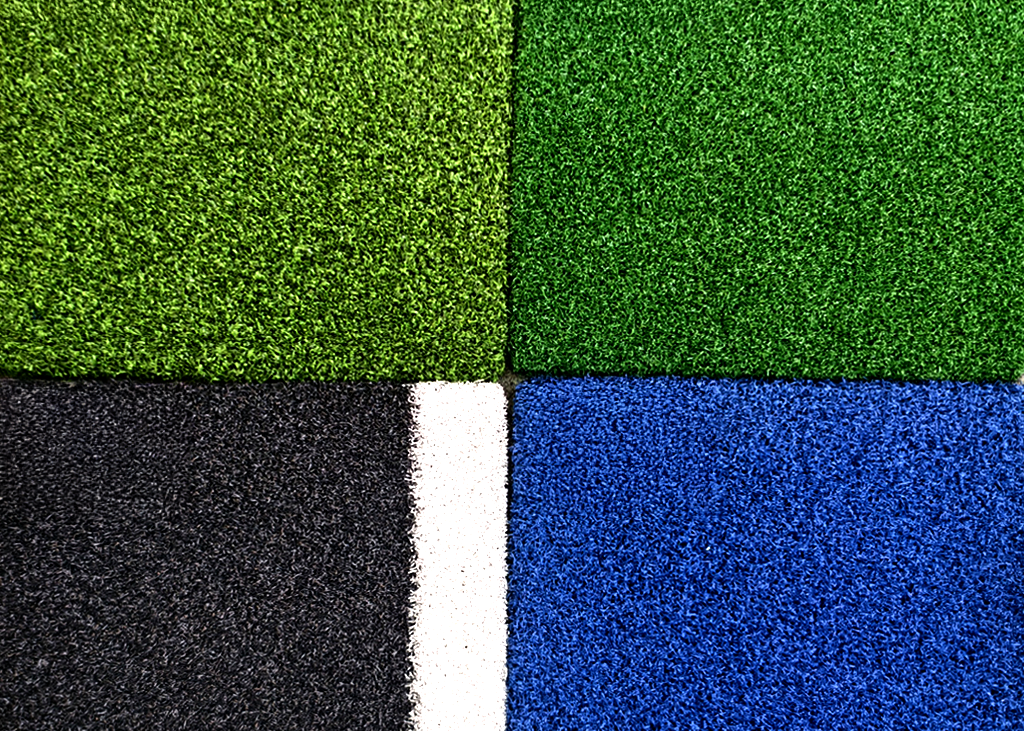
Artificial grass on a padel court doesn’t last forever.Due to intensive use, weather conditions and improper maintenance, the surface gradually wears out —causing less grip, a slippery surface, and higher injury risk. At I-Padel, we help clubs and commercial operators renovate or replace their padel court turf safely, sustainably, and to the highest quality standards. Contact us When should the artificial grass be replaced? The average lifespan of padel court turf is 6–8 years outdoors and 4–7 years indoors.It depends on usage intensity, surface type, and maintenance frequency. If players start to slip or notice that sand stays on top rather than settling into the fibers,it’s time to consider replacement. Why timely replacement matters A worn-out surface means lower performance and safety.New turf provides: Optimal grip and player mobility Consistent ball bounce and control Reduced injury risks A professional and inviting appearance How does the replacement process work? At I-Padel we manage the entire process from start to finish: 1. Inspection and analysis of the current surface, 2. Safe removal and disposal of old turf, 3. Surface cleaning and leveling, 4. Installation of new turf with precision fitting, Maintenance extends turf lifespan Regular brushing and re-sanding prevent compaction and slipperiness.Proper care can extend turf life by up to three years. Choose quality and reliability I-Padel manufactures multiple types of padel turf,from competition-grade surfaces with built-in lines to recreational versions with more cushioning. We produce in-house and work with certified installers to ensure long-lasting quality and play performance. Request a price indication Want to know more? We’re happy to help! Contact details: +31 52 72 100 40 info@i-padel.nl Hoornse Hop 10, 8321 WX, URK
How much does an outdoor padel court cost?

How much does an outdoor padel court cost? An outdoor padel court is an investment that depends not only on the construction itself, but also on the location, the surface, wind load, and any extras such as ball guards or lockable doors. In this article, we’ll give you a clear overview of the expected costs and what to consider when choosing a high-quality outdoor padel court. Foundation: the basis of every job The most common foundation method for outdoor padel courts is a ring beam with permeable concrete. This construction creates a stable, durable base suitable for intensive use and all weather conditions. The average cost of a foundation is between €20,000 and €40,000, depending on the location, accessibility, and the required civil engineering work. Do you already have an existing tennis court? Then you can save money: part of the substructure can often be reused, reducing the cost. Wind load determines the construction In the Netherlands, three wind zones are defined. That’s why we at I-Padel have developed three different versions: for wind zones 1, 2, and 3.Each version has its own profile strength and is designed for the appropriate wind load. We always use chemical anchoring. This is essential for safety, but unfortunately, it’s often overlooked or incorrectly applied during installation. Our courts are specifically designed for each wind zone in the Netherlands and come standard with a calculation and materials that enable KIWA certification. Extra options: from ball catcher to sliding door Looking for a little more functionality or security? Several extras are available: Short side ball catchers – average €1,200 per side Sliding doors – lockable sliding doors for outdoor use Our outdoor courts are also hot-dip galvanized as standard using the duplex system. This is the best way to protect steel long-term against weather influences such as rain, wind, and salt in the air. Permit and noise Please note: in many cases, a permit is required to install an outdoor padel court. In addition, different noise standards apply than for indoor courts. In some situations, it may be necessary to install a soundproof wall and have a report drawn up. How much does an outdoor padel court cost? The price of an outdoor padel court depends largely on the chosen configuration and location, but you can assume: Specification Starting price Outdoor padel court (excl. foundation) from €30.000 Complete project (incl. foundation) from €50.000 Pro or Panorama? A panoramic track is visually open at the back and slightly more expensive than a standard pro track. Although the frame appears lighter, the tubes used are actually heavier to meet safety requirements. This makes production more expensive, despite the lighter design. View our Outdoor Padel Courts Do you want to know exactly what your outdoor padel court will cost? The exact price depends on your location, surface and wishes. We only supply KIWA-certified padel courts Fully compliant with Dutch standards Including anchoring, calculations and delivery Request a price indication Want to know more? We’re happy to help! Contact details: +31 52 72 100 40 info@i-padel.nl Hoornse Hop 10, 8321 WX, URK
What does an indoor padel court cost?
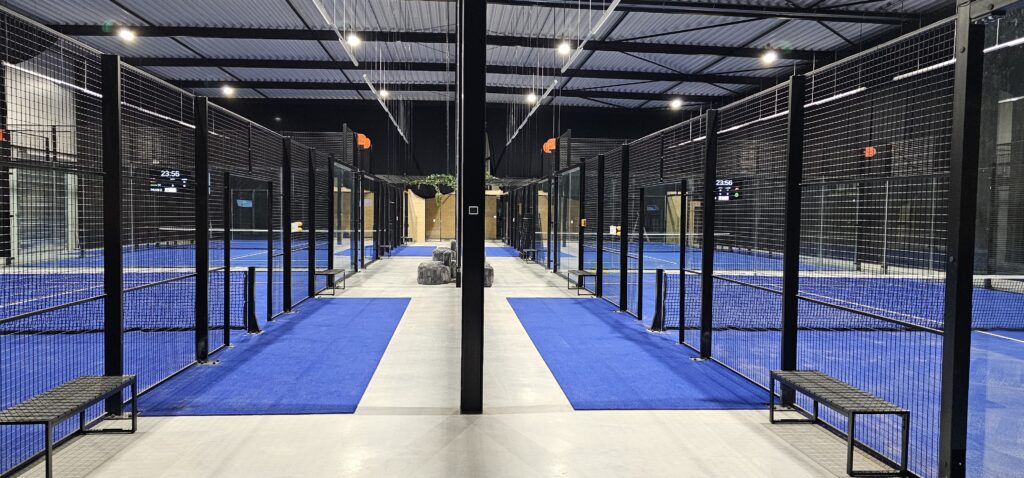
What does a padel court cost? The cost of a padel court can vary greatly depending on your preferences, location, and the type of court. On this page, we give you a clear overview of the key factors that influence the price — and why choosing I-Padel can be more cost-effective in the long term than you might think. Dutch quality with years of experience I-Padel is the Dutch manufacturer of padel courts. We produce in our own factory and have over 40 years of experience in steel processing. We supply indoor padel courts throughout Europe and distinguish ourselves through reliability, customization, and short communication lines. No intermediaries, but direct contact with the manufacturer. Get to know more about us Misconceptions about pricing A common assumption is that “a padel court is just a padel court” or that you should only look at the lowest price. In practice, many clients later regret choosing based solely on price. At I-Padel, you have the freedom to choose from different quality levels and styles. We can even build a padel court that matches the style of an existing brand or complex. What does an indoor padel court cost at I-Padel? For example: a standard indoor padel court with glass, LED lighting, and curled artificial grass, including installation, starts from €25,000. Of course, this depends on several factors. By adding extra options — such as line lighting instead of standard fixtures, extensions, or artificial grass around the court — you give your project a unique character, which also impacts the price. Check out our indoor padelcourts Which factors influence the price? For this overview, we focus on indoor projects. The price is influenced by, among other things:• The type of padel court (Pro, Panorama, or Single)• The number of courts (economies of scale)• The accessibility of the location• The desired artificial grass and lighting options The exact price is always custom work. Want to know what you can expect? Feel free to request a quote or schedule a visit at our headquarters in Urk. We’d be happy to think along with you. Request a price indication Who is a padel court from I-Padel suitable for? Our solution is suitable for, among others:• Sports clubs• Entrepreneurs• Municipalities• Associations• Property owners with an empty hall Are you exploring possibilities? Feel free to visit us in Urk for a tour. We’d love to show you what’s behind I-Padel and what we can offer for your location or initiative. Advice: don’t blindly choose the lowest price A common mistake is choosing the cheapest party without knowing who is behind it. We recommend getting to know the company first. Our clients choose certainty, quality, and service. And if problems arise, at I-Padel you won’t be left on hold — action will be taken. Curious about the possibilities for your location? Contact us for tailored advice. Want to know more? We are happy to help you! Contact details: +31 52 72 100 40 info@i-padel.nl Hoornse Hop 10, 8321 WX, URK
Semipermanent Padel Courts: The Future of Flexible and Sustainable Sports Infrastructure

Padel Court Construction
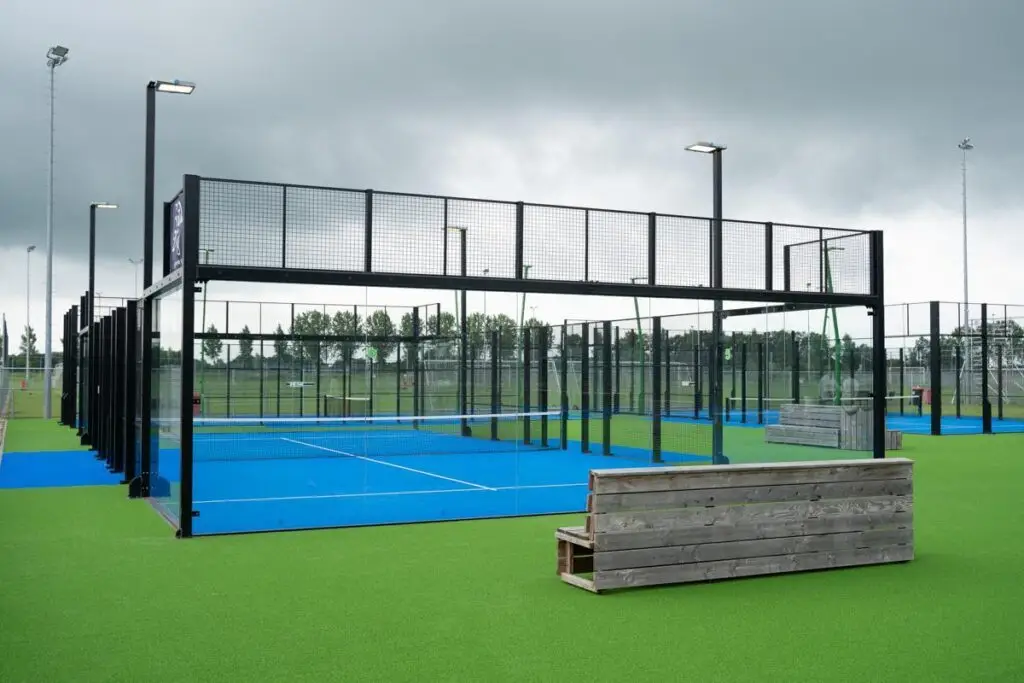
Building a padel court with I-Padel – from idea to completion Building a padel court requires more than just a good idea—it demands experience, precision, and quality. At I-Padel, we handle the entire process: from consultation and design to production, delivery, and installation. As a Dutch manufacturer of high-quality padel courts, we ensure that every court meets the highest quality standards. Whether it’s an indoor or outdoor project, we’ll guide you from start to finish, collaborating with you on location, permits, foundations, lighting, and finishing. Our working method step by step 1. Orientation & first contact We start with a personal consultation to discuss your needs. Do you want an indoor or outdoor track? How many tracks do you have in mind? We’ll map out the location and provide an initial cost estimate. 💡 Curious about the costs? Read all about the cost of an outdoor padel court here. 2. Site survey & foundation A stable foundation is essential. That’s why we’ll work with you to determine whether the existing subsurface is suitable. If not, we’ll advise you on the correct construction – from a sand pack to a permeable concrete layer or ring foundation. 📎 Want to know more about the right foundation? Check out our page on foundations and surfaces for padel courts. 3. Design & production Once the location and specifications have been determined, we begin design and production in our own factory in the Netherlands. Here, we produce everything in-house: steel structures, glass, and fasteners – fully compliant with European standards and with a 15-year warranty. 4. Delivery & installation After production, we’ll plan delivery and installation together. Our experienced installation teams ensure a flawless installation – from placing the steel structure to laying the artificial grass and installing the LED lighting. 5. Delivery & maintenance After installation, we’ll inspect the court with you. You’ll receive a final report and maintenance instructions, ensuring your padel courts last for years – both technically and visually. Timeline: the journey at a glance Fase Description Average duration 1. Orientation & advice Introductory meeting, wishes & location analysis 1 week 2. Technical preparation Soil research & foundation advice 2–3 weeks 3. Design & production Steel construction, glass and installation preparation 8–10 weeks 4. Transport & assembly Installation of tracks, lighting & finishing 2–3 weeks 5. Delivery Final inspection & delivery document 1 week Why choose I-padel? Own production in the Netherlands – no intermediaries or foreign factories. 15-year warranty on steel structures and glass. Complete care: from design to delivery. Fast delivery times thanks to our stock and efficient production. Customisation possible – from panoramic tracks to single tracks. Considering a fully indoor venue? Then also read our article: Why a steel hall is the best choice for your padel project.Waarom een stalen hal de beste keuze is voor jouw padelproject. Are you ready to start your padel project? Contact us for a no-obligation consultation. We’ll explore the possibilities together, create a suitable proposal, and schedule a site visit if desired. 📞 Call us directly or 📩 Fill out the contact form – we will contact you within one business day. Want to know more? We are happy to help you! Contact details: +31 52 72 100 40 info@i-padel.nl Hoornse Hop 10, 8321 WX, URK